
Medically Verified & Evidence-Based | Authored by Dr. Sumaiya Petiwala, RD, BUMS, CDE (Registered Clinical Dietitian & Preventive Health Specialist) | Aligned with ICMR-NIN & FSSAI Standards | Last Updated: October 2026
Walk down any supermarket aisle in India, and every package promises health. Boxes scream “Multigrain”, “Diet Friendly”, and “Zero Cholesterol”. Yet millions of families eating these foods struggle with rising blood sugar and stubborn weight. Learning to read food labels exposes the truth behind shiny marketing claims.
How Should You Read a Packaged Food Label in India?
Direct Clinical Answer: To read an Indian food label, check the ingredient list first, which lists items in descending order of weight. Look past front-of-pack claims and scrutinize serving sizes. Watch out for cheap palm oil, maltodextrin, and hidden sugars disguised under 50 different names that spike your blood glucose.
The Top 5 Food Label Traps in Indian Supermarkets
Food companies spend millions to design packages that look healthy. Here are the most common tricks:
- 1. The “100% Atta” Bread Trap: Most commercial brown bread in India is 80% refined maida. Brands add caramel color to make it look dark. Always check that whole wheat flour is the very first ingredient.
- 2. The “Diabetic & Digestive” Biscuit Scam: Digestive biscuits sound healthy. But reading the back label reveals cheap palm oil, invert sugar syrup, and refined flour. Two biscuits pack as many calories as a home phulka.
- 3. Fifty Names for Hidden Sugar: Brands hide sugar under scientific names. Look out for maltodextrin, high-fructose corn syrup, liquid glucose, and rice syrup. These drive up postprandial (occurring after a meal) sugar surges.
- 4. The “Zero Cholesterol” Oil Myth: Cholesterol comes only from animal foods. All plant oils are naturally cholesterol-free. Printing “Zero Cholesterol” on refined oil hides the fact that it is 100% calorie-dense fat.
- 5. Microscopic Serving Sizes: A small bag of namkeen may list nutrition for a tiny 15g serving. Most people eat the whole 100g pack. That quietly multiplies the calories and sodium by six.
Comparison: Front-of-Pack Claims vs Back-Label Reality
See how everyday grocery items look on the front versus what is hidden on the back:
| Supermarket Item | Front Marketing Claim | Hidden Ingredients on Back | Health Impact | Doctor Whole-Food Swap |
|---|---|---|---|---|
| Commercial Brown Bread | “High Fiber Whole Wheat” | Maida, caramel color, palm oil | Spikes blood glucose rapidly | Home jowar or whole wheat phulka |
| Digestive Biscuits | “Goodness of Wheat & Fiber” | Palm oil, invert sugar, maltodextrin | Causes insulin spikes and fat gain | Roasted chana or handful of almonds |
| Packaged Fruit Juice | “100% Real Fruit Goodness” | Concentrate, liquid sugar, zero fiber | Overloads liver with fructose | Whole apple, guava, or fresh orange |
| Breakfast Muesli / Granola | “Heart Healthy Morning Fuel” | Brown sugar syrup, honey, palm oil | Adds 15g sugar per small cup | Plain rolled oats with fresh curd and seeds |
Confused by Supermarket Labels or Stalled on Weight Loss?
Processed “diet” foods secretly sabotage your metabolic health. Work with Dr. Sumaiya Petiwala for a clinical nutrition plan that replaces ultra-processed groceries with nourishing Indian whole foods.
Book Clinical Consultation on WhatsApp →Medical Hazards of Chemical Emulsifiers and Hidden Sugars
Consuming ultra-processed grocery foods daily takes a heavy toll on Indian metabolic health:
- Visceral Fat Buildup: Liquid sugars flood the liver. The liver rapidly converts this surplus energy into visceral fat (deep abdominal fat surrounding internal organs). This accelerates fatty liver (a condition where excess fat accumulates in liver cells exceeding 5% of liver weight).
- Metabolic Resistance: Repeated sugar rushes worsen insulin resistance (where cells do not absorb glucose efficiently) and drive up fasting insulin (a morning blood test measuring baseline insulin levels).
- Systemic Gut Damage: Packaged food gums and emulsifiers thin out your protective gut lining. This causes systemic inflammation (cellular immune stress that hinders recovery) and daily bloating.
The 50/25/25 Whole-Food Indian Plate (Zero Labels Required)
The healthiest food does not come with a barcode. Structure your daily meals using fresh market staples:
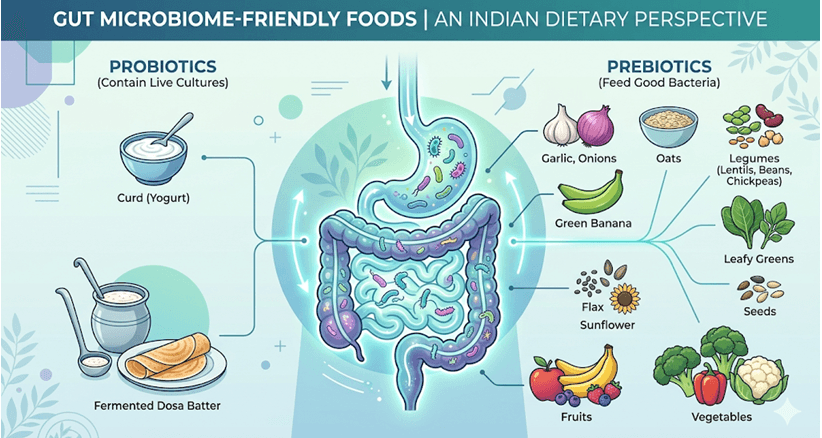
- 50% High-Fiber Sabzi & Salad: Fill half your plate with cucumber, bottle gourd, spinach, methi, and carrots. They provide gentle prebiotic (non-digestible plant fibers that nourish healthy gut bacteria) bulk that keeps you full.
- 25% Clean Protein First: Eat your protein first. Have paneer, boiled eggs, curd, sprouts, chicken, or fish. Protein shields your muscles and tames hunger.
- 25% Unrefined Complex Carbs: Fill the last quarter with jowar roti, brown rice, or daliya. These grains carry a moderate glycemic index (a numerical scale measuring how quickly foods raise blood sugar) to give lasting energy.
Key Blood Tests to Check Metabolic Health
If packaged foods have formed part of your diet for years, evaluate these medical markers:
- Long-Term Blood Sugar: Track HbA1c (a 3-month average blood glucose marker) to see your real glycemic control.
- Metabolic Pacing: Check your thyroid (the butterfly-shaped neck gland regulating body metabolism) and test TSH (thyroid-stimulating hormone, a blood marker of metabolic pacing) to rule out low basal burn.
- Fasting Blood Chemistry: Test fasting insulin and lipid ratios to detect early metabolic strain.
The Dr. Sumaiya 3-Step Grocery & Pantry Reset Protocol
At Dr. Sumaiya NutriCare Clinic, we help families clean up their kitchens safely:
- Step 1: 3-Day Pantry & Label Audit: We inspect photos of your home pantry items, cooking oils, and daily packaged snacks.
- Step 2: Whole-Food Replacement Blueprint: We replace factory ultra-processed foods with delicious, grocery-accessible Indian kitchen ingredients.
- Step 3: Bi-Weekly Clinical Follow-Up: We monitor your waist size, blood markers, and energy levels to make healthy eating effortless.
🌟 Transform Your Health Today
Takes only 60 seconds to get personalized clinical insights.
"Lost 4kgs in one month... plans are simple and effective! She
responds to queries promptly."
– Payal J.
Frequently Asked Questions About Reading Food Labels in India
How do I identify hidden sugars in Indian packaged snacks?
Read the ingredient list carefully for words ending in -ose (dextrose, fructose, sucrose) and terms like maltodextrin, invert syrup, liquid glucose, corn syrup solids, and fruit juice concentrate. If any of these appear in the first three ingredients, the product is predominantly sugar.
Are digestive biscuits really healthy for people with diabetes?
No. Most commercial digestive biscuits in India contain refined wheat flour (maida), palm oil, and added sugar syrup. They spike post-meal blood glucose rapidly and should not be considered a diabetic-friendly snack. Opt for roasted chana or almonds instead.
What is the rule of thumb for evaluating cooking oil on a food label?
Check the ingredient list for the specific type of fat used. Avoid products listing palm oil, hydrogenated vegetable oil, or interesterified fat, as these promote arterial inflammation and fatty liver. Prefer items cooked in cold-pressed mustard, sesame, or groundnut oil.
Is packaged brown bread truly healthier than white bread in India?
Usually no. Most mass-market brown bread sold in India contains 60% to 80% refined white flour (maida) with caramel color (INS 150a) added to give a brown appearance. Only buy bread if the ingredient list explicitly specifies 100% whole wheat flour as the primary ingredient.
What does ‘per serving’ mean on Indian nutrition facts panels?
‘Per serving’ reflects the portion size determined by the manufacturer, not the entire contents of the packet. A 100g biscuit pack might list nutritional values for a 15g serving (two biscuits). Always calculate the total calories and sugars based on how much of the packet you actually eat.