
Medically Verified & Evidence-Based | Authored by Dr. Sumaiya Petiwala, RD, BUMS, CDE (Registered Clinical Dietitian & Metabolic Health Specialist) | Aligned with ICMR-NIN Clinical Standards | Last Updated: October 2026
When people in India try to lose weight, they often cut their food in half. They skip dinner, drink black coffee, and eat only fruit. Within two weeks, the scale drops by three kilograms. But most of that loss is water and muscle. Your body enters starvation mode. Your hair begins to shed. Your daily energy crashes.
How Do You Lose Fat Without Losing Nutrients?
Direct Clinical Answer: To lose body fat without losing nutrients, keep a small calorie deficit of 300 to 500 calories. Eat 1.2 to 1.5 grams of protein per kilogram of body weight. Choose whole Indian foods like lentils, eggs, paneer, and greens. Severe starvation forces your body to burn muscle, slowing your metabolism and causing fast weight regain.
The Biological Danger of Crash Dieting
Your body views extreme starvation as an emergency famine:
- Muscle Breakdown: When you starve, your body converts active muscle into fuel. Losing muscle slows your daily calorie burn permanently.
- Hunger Hormones: Severe food cuts drop leptin and raise ghrelin. This sparks intense cravings for sugary foods.
- Neck Gland Slowdown: A slow thyroid (the butterfly-shaped neck gland regulating body metabolism) slows your resting burn. Test TSH (thyroid-stimulating hormone, a blood marker of metabolic pacing) to check your gland health.
- Nutrient Depletion: Extreme diets slash iron, vitamin B12, vitamin D, and zinc. This causes brittle nails, fatigue, and hair loss.
Comparison: Crash Diets vs Clinical Sustainable Fat Loss
See how fad diets compare with clinical nutrition therapy:
| Weight Loss Strategy | What You Actually Lose | Metabolic Rate Impact | Nutrient & Muscle Risk | Long-Term Outcome |
|---|---|---|---|---|
| Crash Starvation Diet (Under 900 kcal/day) | Water and skeletal muscle | Severe slowdown (adaptive drop) | High risk of anemia, hair loss, fatigue | 95% regain all lost weight plus extra fat |
| Uncalibrated Low-Carb (Cutting all grains) | Glycogen stores and water | Moderate drop due to low energy | Gut dysbiosis and severe constipation | Hard to sustain in Indian households |
| Fruit-Only or Juice Fast | Lean muscle tissue | Significant drop from protein lack | Fructose overload worsens liver fat | Triggers intense sugar binge cycles |
| Doctor-Led Nutrition Therapy | True body fat reserves | Preserved via high protein and fiber | 100% daily vitamins and minerals met | Permanent metabolic correction |
Tired of Crash Diets That Ruin Your Energy?
Starvation is not a weight loss strategy. Work with Dr. Sumaiya Petiwala to design an evidence-based Indian meal plan that fuels your body while shedding abdominal fat permanently.
Book Clinical Consultation on WhatsApp →Hormonal Drivers of Abdominal Fat Storage
Fat loss depends directly on your body hormones:
- High Morning Hormone Levels: When blood sugar stays high, your body secretes excess fasting insulin (a morning blood test measuring baseline insulin levels). High insulin triggers insulin resistance (where cells do not absorb glucose efficiently) and locks fat inside cells.
- Deep Belly Fat: Extra simple carbs turn into visceral fat (deep abdominal fat surrounding internal organs). This directly drives fatty liver (a condition where excess fat accumulates in liver cells exceeding 5% of liver weight).
- Chronic Stress: Crash diets spike stress hormones. This fuels cellular inflammation (cellular immune stress that hinders recovery) and holds belly fat.
The 50/25/25 Indian Fat-Loss Plate Formula
Use this simple plate rule at lunch and dinner:
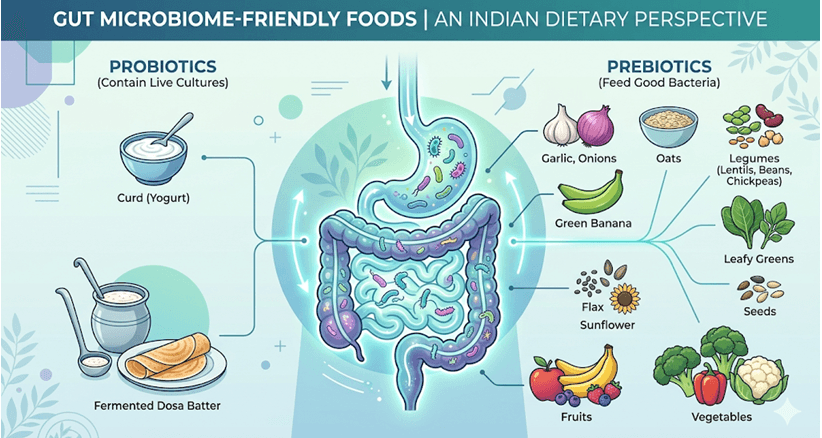
- 50% High-Fiber Greens & Salad: Fill half your plate with cucumber, tomato, bhindi, palak, methi, or cabbage. These give you prebiotic (non-digestible plant fibers that nourish healthy gut bacteria) fuel and keep you full.
- 25% Clean Protein First: Eat your protein first. Choose paneer, curd, boiled eggs, fish, chicken, or sprouts. Protein protects muscle and burns calories.
- 25% Smart Complex Carbs: Finish with jowar roti, daliya, or brown rice. These carry a moderate glycemic index (a numerical scale measuring how quickly foods raise blood sugar) to stop postprandial (occurring after a meal) sugar surges.
Add fresh curd for probiotic (beneficial living bacteria that colonize the digestive tract) gut support. Use turmeric and mild spices for antioxidant (compounds that defend cells against oxidative stress) benefits.
Key Blood Tests to Track During Weight Loss
Blood tests tell the true clinical story:
- Long-Term Sugar Control: Test HbA1c (a 3-month average blood glucose marker) to track insulin handling.
- Vessel Health: Check hs-CRP (high-sensitivity C-reactive protein, a blood marker of systemic vascular inflammation) to monitor stress levels.
- Iron and Blood Count: Check iron to prevent fatigue and hair loss.
- Vitamins D3 and B12: Low vitamin levels slow down cellular energy production.
The Dr. Sumaiya 3-Step Medical Correction Process
At Dr. Sumaiya NutriCare Clinic, we eliminate guesswork through structured clinical care:
- Step 1: Biomarker Analysis & Metabolic Audit: We analyze your complete blood panel, current body composition, and daily nutritional deficiencies.
- Step 2: Personalized Indian Nutritional Prescription: We create a customized home meal plan using familiar Indian foods, calculated precisely for safe fat loss.
- Step 3: Weekly Doctor-Led Monitoring: We evaluate your body measurements, adjust portions dynamically, and ensure you feel energized every day.
🌟 Transform Your Health Today
Takes only 60 seconds to get personalized clinical insights.
"Lost 4kgs in one month... plans are simple and effective! She
responds to queries promptly."
– Payal J.
Frequently Asked Questions About Healthy Fat Loss
How fast should I lose weight to make sure it is fat and not muscle?
A safe rate of fat loss is 0.5 to 1 kilogram per week. That equals 2 to 4 kilograms per month. Losing weight faster burns away skeletal muscle and water. That slowdown hurts your metabolic rate. It leads to quick rebound weight gain.
How much protein do I need daily while trying to lose body fat in India?
Eat 1.2 to 1.5 grams of protein per kilogram of body weight each day. If you weigh 65 kilograms, aim for 78 to 98 grams daily. Spread this protein across your main meals. Good sources include paneer, curd, eggs, chicken, fish, and sprouts.
Why do I feel exhausted and dizzy when I cut calories?
Crash diets deplete liver energy stores quickly. They drop key mineral salts like sodium and potassium. This triggers dizziness, brain fog, and low blood pressure. Starvation also strips away iron and B vitamins. Your cells need these to make daily energy.
Can I lose stubborn belly fat without cutting out roti and rice completely?
Yes, you can eat roti and rice. You do not need to cut out whole foods. Swap white flour for traditional millets like jowar, bajra, or ragi. Keep grains to one quarter of your plate. Always eat your salad and protein first to keep insulin steady.
What is the single most common dietary mistake Indians make when dieting?
The biggest mistake is eating too little protein while snacking on fruit and juices. This spikes blood sugar and burns away muscle tissue. People end up looking thin but carry high belly fat. You must eat real protein at every meal.