

Obesity and Obstructive Sleep Apnea: Metabolic Links & Doctor’s Protocol
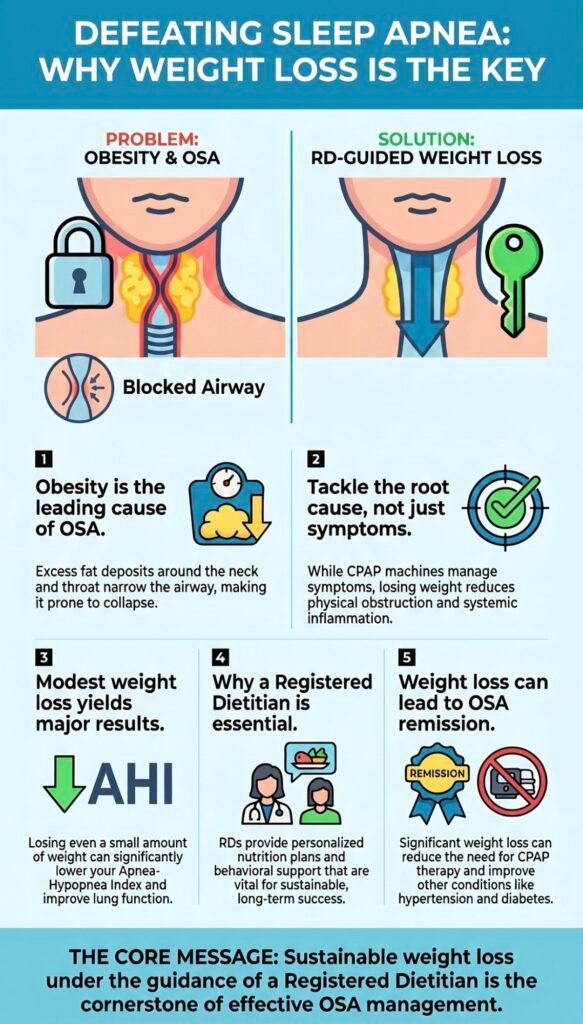
Obesity causes obstructive sleep apnea when excess fat settles around the neck and tongue. This extra tissue collapses upper airways during deep sleep. Breathing pauses drop blood oxygen and spike nocturnal stress hormones. This vicious cycle blocks fat loss and fuels metabolic dysfunction.
The Hidden Biological Link: Neck Fat and Airway Collapse
Obstructive sleep apnea (OSA) is far more than loud snoring. It is a serious metabolic condition. In OSA, throat muscles relax and airway tissues collapse during sleep. Breathing stops for ten seconds or longer many times each night.
Excess weight is the single biggest driver of sleep apnea. When you gain visceral fat (internal organ belly fat), fat also gathers in the neck and tongue base. This added tissue narrows the upper breathing passage.
While awake, active throat reflexes keep your airway open. But during deep sleep, throat muscles go limp. The heavy neck tissues press down and choke airflow. Blood oxygen plunges, forcing your brain to wake you up with a gasp.
The Vicious Cycle: How Sleep Apnea Blocks Weight Loss
Many patients struggle to lose weight despite eating less. Poor sleep directly disrupts key metabolic hormones:
- Nocturnal Stress Surges: Each breathing pause triggers an adrenaline and cortisol surge. High nighttime cortisol keeps liver glucose production active.
- Cellular Sugar Block: Broken sleep causes acute insulin resistance (where cells do not absorb glucose well). Your cells refuse to take in sugar, forcing the body to store calories as fat.
- Spiking Storage Hormones: High cortisol raises fasting insulin (the morning blood hormone that controls fat storage). This spike prevents your body from burning stored fat for fuel.
- Rising Long-Term Sugar: Chronic nocturnal stress also elevates HbA1c (average blood sugar over three months), even in non-diabetic adults.
- Immune and Gland Strain: Dropping oxygen levels trigger body-wide inflammation (tissue swelling and immune irritation). This strain slows your thyroid (the butterfly neck gland controlling metabolism).
- Hunger Hormone Chaos: Low sleep boosts ghrelin (the hunger hormone) and lowers leptin (the fullness hormone). You wake up with intense cravings for sugary tea and refined carbs.
Together, these interlocking hormonal breakdowns create metabolic syndrome (a cluster of belly fat, high blood sugar, and high blood pressure).
Clinical Biomarkers: Sleep Apnea Versus Metabolic Markers
Track these key health markers to understand how weight loss restores breathing:
| Clinical Metric | High-Risk OSA Level | Healthy Target Level | Metabolic Impact | Doctor’s Nutrition Goal |
|---|---|---|---|---|
| Neck Circumference | > 40 cm (Men) / > 35 cm (Women) | < 37 cm (Men) / < 32 cm (Women) | Direct airway tissue pressure | Lose 10% body weight to free neck space |
| Fasting Insulin | > 12 μIU/mL | < 6 μIU/mL | Blocks fat burning all day | Follow low-glycemic home meal plan |
| HbA1c | > 5.7% (Prediabetes/Diabetes) | < 5.4% | Spikes inflammation in throat tissues | Balance carbs with pulse fiber |
| Visceral Fat Rating | Level 10 to 18 | Level 1 to 7 | Pushes diaphragm up during sleep | Finish light dinner by 7:30 PM |
| Blood Pressure | > 130/85 mmHg | < 120/80 mmHg | Nighttime oxygen drops strain heart | Increase potassium with leafy greens |
Struggling With Snoring, Daytime Fatigue, or Stubborn Belly Fat?
CPAP machines treat the symptom, but they do not remove airway fat pads. Clinical weight reduction of 10 to 15 percent can cure mild to moderate sleep apnea. Dr. Sumaiya provides doctor-led medical nutrition therapy for lasting metabolic correction.
- Biomarker Audit (HbA1c, Fasting Insulin, Lipid Profile, Thyroid Screen)
- Metabolic Mapping (Pinpointing visceral fat distribution and evening habits)
- Customized Indian Home Food Protocol to Shrink Airway Fat Safely
In-Clinic in Frazer Town, Bengaluru & Telehealth Pan-India & Globally | WhatsApp: +91 7208660987
The 50/25/25 Indian Plate Rule for Airway Decompression
To reduce throat tissue fat and stop nighttime airway collapse, balance your meals with this clinical rule:
- 50% High-Fiber Non-Starchy Vegetables: Fill half your plate with sautéed methi, bhindi, bottle gourd (lauki), cucumber, and leafy greens. High vegetable fiber lowers systemic inflammation (tissue swelling and immune irritation).
- 25% High-Quality Protein: One quarter of your plate must hold clean protein. Choose sprouted mung, paneer in moderation, chana, or boiled eggs. Protein repairs tissue and prevents muscle wasting during weight loss.
- 25% Low-Glycemic Complex Carbohydrates: The remaining quarter contains bajra roti, jowar roti, or khapli wheat roti. Avoid refined maida and white rice at night to prevent sleep-time glucose spikes.
The Golden Eating Sequence to Protect Sleep Quality
What you eat matters, but when and how you eat matters just as much for sleep apnea patients. Follow these clinical steps:
- Step 1: Start dinner with a warm bowl of clear vegetable soup or crunchy salad. This slows down gastric emptying.
- Step 2: Eat your dal or protein portion next. This stabilizes post-meal blood sugar.
- Step 3: Finish with your small roti portion last. Never go to bed immediately after eating. Finish dinner three full hours before sleeping so your stomach empties fully.
Targeting South Asian Metabolic Syndrome
South Asians have a distinct body type. We tend to develop deep visceral fat at lower body mass index numbers. Even mild weight gain concentrates around vital organs, the neck, and the liver.
This fat pattern fuels metabolic syndrome (a cluster of belly fat, high blood sugar, and high blood pressure). When combined with low thyroid (the butterfly neck gland controlling metabolism) or high fasting insulin (the morning blood hormone that controls fat storage), apnea worsens rapidly.
A structured, home-cooked Indian meal protocol reduces liver and throat fat first. As little as a 7 to 10 percent drop in body weight cuts nighttime breathing pauses by more than half.
Request Your Personalized Sleep & Weight Correction Plan
Break free from chronic fatigue and snoring. Work directly with Dr. Sumaiya Petiwala to rebuild your metabolic health with delicious home-cooked Indian meals.
🌟 Transform Your Health Today
Takes only 60 seconds to get personalized clinical insights.
"Lost 4kgs in one month... plans are simple and effective! She
responds to queries promptly."
– Payal J.