

Medically Verified & Evidence-Based | Authored by Dr. Sumaiya Petiwala, RD, BUMS, CDE (Registered Clinical Dietitian & Metabolic Health Specialist) | Aligned with ICMR-NIN Clinical Standards | Last Updated: October 2026
Gas, stomach bloating, and loose stools are not small issues. They show deep gut distress. Your digestive tract houses trillions of tiny microbes. They control your digestion, immune defense, and daily energy. At Dr. Sumaiya NutriCare Clinic, we use clear medical nutrition to heal your gut wall. We help you fix digestive pain with simple home meals.
What Are the Best Foods for Gut Health in India?
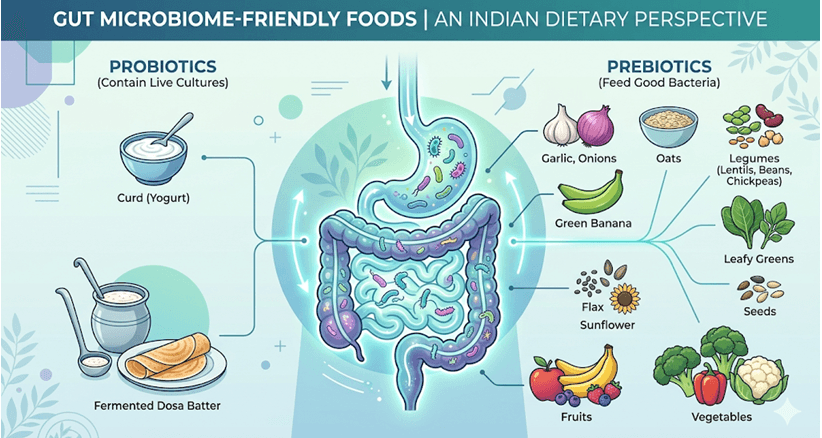
Direct Clinical Answer: The best Indian foods for gut health join soluble plant fibers with traditional home fermented foods. Staples like garlic, onions, oats, flaxseed, and green bananas feed friendly gut flora. Fresh curd and spiced chaas supply live cultures. Together, they seal the gut wall, calm stomach heat, and stop chronic bloating.
4 Essential Pillars of Gut Microbiome Nutrition
A strong gut relies on four simple food groups:
- 1. Plant Fiber Foods. Friendly gut microbes feed on prebiotic (plant fibers that nourish good gut bacteria) foods. Garlic, onions, and rolled oats provide rich fuel. They produce short fatty chains that shield colon cells.
- 2. Fermented Culture Foods. Live cultures restore lost flora. Eat fresh home-set curd and spiced chaas daily. These probiotic (live good bacteria that aid digestion) cultures bring back digestive ease.
- 3. Plant Defense Foods. Green vegetables, pomegranate, and turmeric supply polyphenols. These act as an antioxidant (plant defense compounds that protect gut lining) shield. They calm gut irritation. They lower systemic inflammation (cellular immune stress that harms tissues).
- 4. Resistant Starches. Cooled rice, boiled potatoes, and roasted chana deliver resistant starch. This starch moves whole into the large bowel. It feeds good microbes. It supports insulin balance.
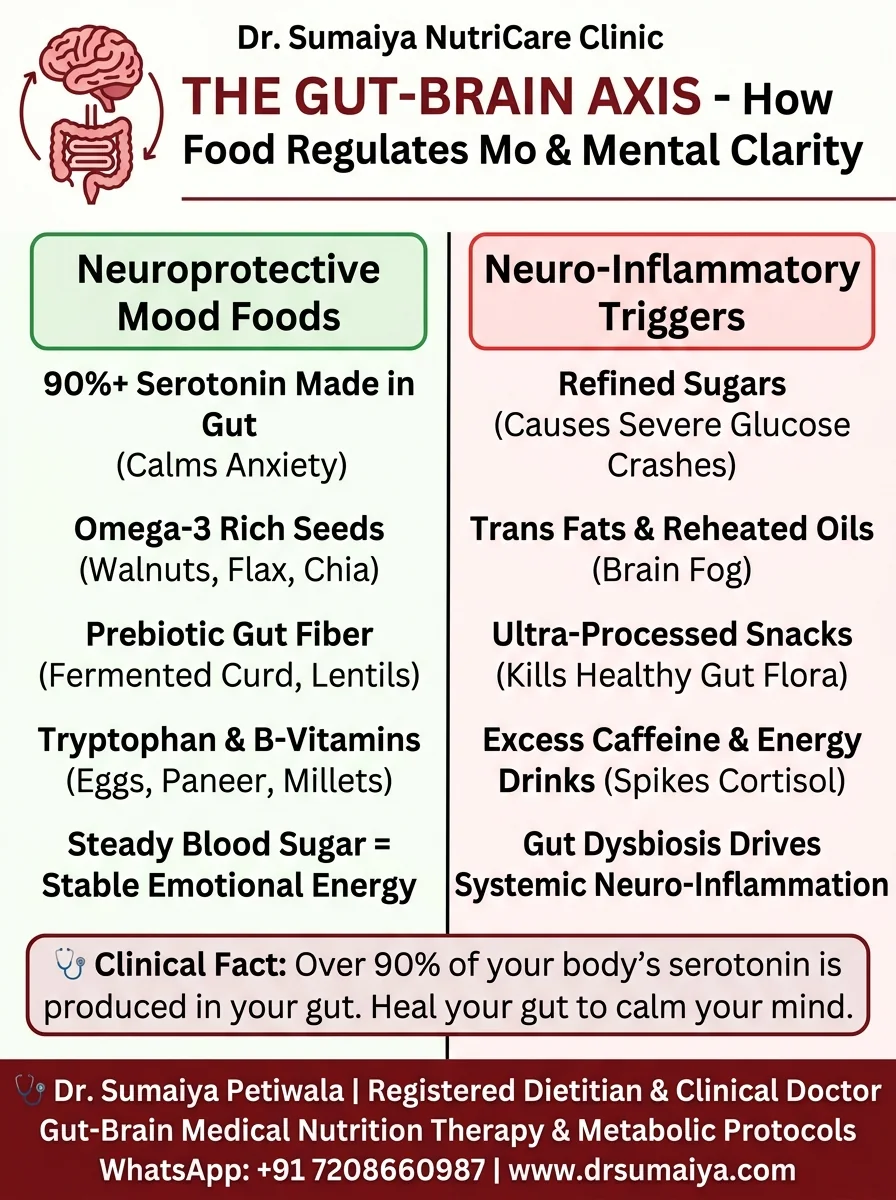
📊 The Gut-Brain Axis: How Microbial Diversity Directs Digestion, Mood, and Metabolic Health.
How Gut Health Controls Your Whole Metabolism
Your gut links straight to your blood sugar, liver, and hormone glands:
- Blood Sugar Control and Belly Fat. A loose gut barrier leaks bacterial waste into the blood. This sparks insulin resistance (where cells do not absorb glucose well). It builds stubborn visceral fat (deep belly fat packed around internal organs). Over time, poor gut ecology lifts your HbA1c (a 3-month average of blood sugar levels). It also pushes up fasting insulin (a morning blood test measuring baseline insulin levels).
- Liver Health and Blood Fats. Gut flora process bile acids. Weak gut walls trigger fatty liver (a condition where fat builds up inside liver cells) and NAFLD (non-alcoholic fatty liver disease, a condition with excess liver fat). It lifts liver enzymes like SGPT (a liver enzyme showing hepatic irritation) and SGOT (a liver enzyme released during cell damage). It also hikes triglycerides (blood fats tied to metabolic health).
- Hormone Balance and Glandular Pace. Gut microbes help clear excess estrogen. Poor gut clearance makes PCOS (polycystic ovary syndrome, a hormonal imbalance) worse. A calm gut also aids nutrient uptake for your thyroid (the neck gland that controls how fast your body burns energy), monitored by TSH (a blood test that checks your thyroid pace).
Comparison: Damaging Diet Habits vs Clinical Gut Protocol
Notice the contrast between random eating and a guided gut plan:
| Diet Factor | Ultra-Processed Eating | Dr. Sumaiya Clinical Protocol |
|---|---|---|
| Microbe Count | Weak gut flora. Low good bacteria. | Rich diverse flora. High good microbes. |
| Gut Wall Strength | Loose leaky walls. High tissue stress. | Strong tight junctions. Calm gut lining. |
| After Meals | Heavy bloating. Gas and acid reflux. | Light easy belly. Smooth daily stool. |
| Daily Energy | Sluggish feeling. Afternoon brain fog. | Steady clear focus. Good daily mood. |
Heal Your Gut Microbiome with Doctor-Guided Nutrition
Chronic bloating and digestive distress do not need harsh laxatives. Discover the root cause of your gut imbalance through personalized clinical nutrition. Consult Dr. Sumaiya Petiwala today.
Book Clinical Consultation on WhatsApp →The 50/25/25 Indian Plate Rule for Superior Digestion
Build your lunch and dinner with this simple clinical method to nurture healthy flora:
- 50% Cooked Fibers and Salads. Fill half your plate with bottle gourd, spinach, carrots, and cucumber. Gentle cooking softens tough plant fiber. This makes it easy on your belly.
- 25% High-Quality Clean Protein. Eat your protein next. Choose yellow moong dal, paneer, tofu, boiled eggs, or stewed chicken. Protein delivers amino acids that mend gut walls.
- 25% Slow-Digesting Whole Grains. Finish your plate with whole jowar roti, foxtail millet, or brown rice. These foods carry a low glycemic index (a scale measuring how fast foods raise blood sugar) and gentle glycemic load (a ranking system for carbohydrate content and blood sugar impact). They stop sudden postprandial (occurring after a meal) sugar spikes.
Drink a small glass of fresh buttermilk with roasted jeera after lunch. This traditional habit adds friendly microbes and cools stomach acid.
The Dr. Sumaiya 3-Step Medical Correction Process
At Dr. Sumaiya NutriCare Clinic, we restore gut wellness through three clear clinical stages:
- Step 1: Biomarker Analysis & Food Mapping. We check food sensitivities, stool patterns, and blood panels. We pinpoint gut leakage and sluggish liver work.
- Step 2: Personalized Indian Nutritional Prescription. We craft a custom food plan with simple kitchen ingredients. We remove food triggers while feeding good microbes.
- Step 3: Clinical Pacing & Long-Term Monitoring. We check your recovery every week. We add new foods with care to build lasting gut strength.
🌟 Transform Your Health Today
Takes only 60 seconds to get personalized clinical insights.
"Lost 4kgs in one month... plans are simple and effective! She
responds to queries promptly."
– Payal J.
Frequently Asked Questions About Indian Gut Health Foods
Is home-set curd better for gut health than commercial yogurt?
Yes. Fresh home-set curd has rich live cultures without added sugars, thickeners, or preservatives that harm gut walls.
Which Indian pulses are easiest to digest for people with severe gas?
Yellow moong dal and split red masoor dal are easiest to digest. Soaking them for six hours before cooking cuts down gas-producing fibers.
Can improving gut health help reduce stubborn belly fat?
Yes. A healthy gut microbiome curbs body swelling, improves insulin response, and stops excess belly fat storage around inner organs.
Are raw vegetable salads safe for individuals with IBS or bloating?
Raw veggies can hurt a tender gut wall. Light steaming or sautéing softens plant fibers so your belly digests them with ease.
How long does it take to repair the gut microbiome with food?
Early relief from bloating starts within two weeks. Full gut wall repair and microbial balance take eight to twelve weeks of clean medical nutrition.