
For millions of Indian families managing diabetes or prediabetes, giving up daily roti feels impossible. The good news is that you do not have to eliminate wheat entirely. The real key lies in choosing ancient, low-glycemic grain varieties that digest slowly and protect your insulin sensitivity.
🩺 Quick Clinical Verdict: Best Wheat for Diabetes
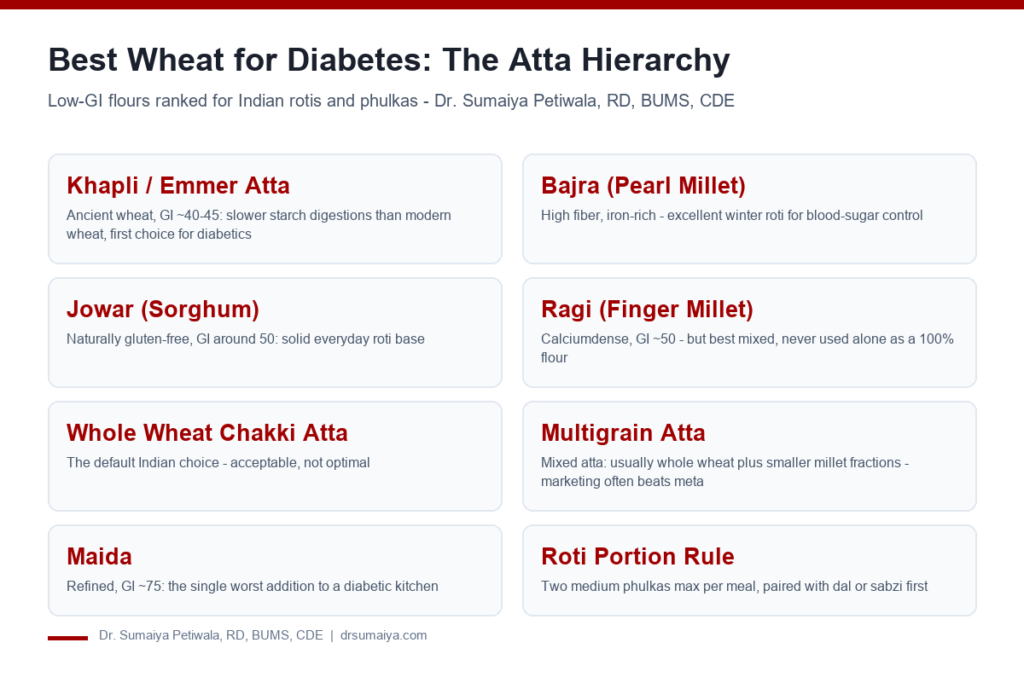
Khapli wheat (Emmer wheat) is the best wheat for diabetes and blood sugar control. It has a low glycemic index (GI 45–50) and rich dietary fiber. Modern hybrid wheat breaks down rapidly into free sugar. Dr. Sumaiya’s Recommendation: Choose stone-ground Khapli atta, blend with roasted chana flour, and limit portions to 1–2 rotis per meal.
When you live with insulin resistance (when muscle cells resist insulin, trapping excess glucose in your blood), everyday food choices matter. Modern commercial wheat has been altered over decades for high baking volume, but it digests far too fast. Ancient grains like Khapli offer a far healthier alternative for Indian kitchens.

🌾 Clinical Comparison: Khapli (Emmer) Atta vs. Modern Hybrid Wheat for Blood Glucose Stability.
1. Why Modern Commercial Wheat Spikes Blood Glucose
Most store-bought flour comes from modern dwarf wheat. This grain was bred for massive agricultural yields and high stretchiness. But that fluffiness comes with a metabolic price tag.
Commercial roller mills grind grains at high heat. They remove the nutritious germ and pulverize the outer bran into dust. This gives your digestive enzymes instant access to bare starches.
Within 20 minutes of eating a modern wheat roti, blood glucose rushes into your bloodstream. Your pancreas responds by pumping out large amounts of insulin hormone. Over time, these frequent surges worsen your HbA1c (a 3-month blood test showing your average sugar levels).
2. Clinical Comparison: Indian Wheat & Flour Varieties
Understanding glycemic index (a score rating how fast a carbohydrate raises blood glucose) and glycemic load (the real-world blood sugar impact of an actual food portion) helps you make smart grocery choices.
| Flour Variety | Glycemic Index (GI) | Fiber / 100g | Protein / 100g | Clinical Verdict |
|---|---|---|---|---|
| Khapli (Emmer) Atta | 45 – 50 (Low) | 12.5g | 13.8g | Best Daily Choice for Diabetes |
| Chakki Sharbati Wheat | 62 – 68 (Medium) | 10.2g | 11.5g | Acceptable with strict portion control |
| Commercial Packaged Atta | 70 – 75 (High) | 6.5g | 10.0g | Rapid glucose absorption; limit use |
| Refined White Flour (Maida) | 85 – 90 (Very High) | 1.2g | 9.0g | Strictly avoid; sparks severe spikes |
| Broken Wheat (Dalia / Lapsi) | 48 – 52 (Low) | 11.0g | 12.0g | Excellent grain option for khichdi |
3. 3 Biological Reasons Khapli Wheat Prevents Sugar Spikes
Khapli wheat has nourished Indian families for over 10,000 years. Farmers across Maharashtra, Karnataka, and Gujarat prize this ancient grain. Three clinical factors make it superior:
- 1. Slow-Digesting Starches: Khapli contains high levels of complex amylose starches. These starches pack tightly together. Your digestive tract breaks them down slowly, preventing sharp sugar rushes.
- 2. Fragile, Gentle Gluten: Unlike hybrid wheat with dense gluten strands, Khapli has delicate protein chains. It dissolves easily in water and treats your gut barrier kindly.
- 3. Abundant Magnesium & Minerals: Khapli delivers high levels of magnesium. Magnesium is an essential mineral that helps insulin keys unlock your muscle cells efficiently.
4. The “Blood-Sugar-Shield” Atta Recipe for Diabetics
You can easily lower the glycemic impact of your meals at home. Dr. Sumaiya recommends mixing your own therapeutic flour blend:
🌾 Dr. Sumaiya’s Smart Diabetes Flour Formula
Combine these wholesome ingredients in your home kitchen:
- 70% Whole Khapli Atta: Use stone-ground flour with intact bran.
- 15% Roasted Chana Flour (Besan): Adds clean plant protein to lower the meal’s glycemic response.
- 10% Ground Flaxseeds (Alsi Powder): Infuses plant omega-3 fats and soluble fiber.
- 5% Psyllium Husk (Isabgol): Creates a gentle fiber gel that delays sugar absorption.
💡 Kitchen Tip: Knead this dough with warm water and let it rest for 20 minutes before rolling. Rotis roll out soft and pliable without tearing.
5. Portion Rules & The 50/25/25 Indian Plate Method
Even healthy wheat turns into glucose inside your body. That is why portion control and food sequencing are vital:
- Portion Limit: Limit yourself to 1 or 2 small rotis (~30 grams of flour each) per meal. Eating 3 or more rotis overwhelms your pancreas, no matter the grain.
- The 50/25/25 Plate Balance: Fill half your plate with non-starchy cooked sabzi and fresh salad. Fill one quarter with quality protein like thick dal, paneer, eggs, or chicken. Dedicate the last quarter to your roti.
- The Golden Meal Sequence: Eat your salad and sabzi first. Eat your protein second. Eat your roti last. This sequence cuts post-meal glucose spikes significantly. Learn more in our clinical guide on how meal sequencing balances blood sugar.
Struggling with High Blood Sugar Spikes After Meals?
Generic diets often leave you hungry and frustrated. Dr. Sumaiya creates doctor-supervised clinical nutrition plans that restore metabolic health, protect pancreas function, and fit real Indian home kitchens.
- Comprehensive Lab & Biomarker Audit: Reviewing full blood panels, cellular metabolism markers, and lipid ratios.
- Root-Cause Metabolic Mapping: Identifying personal carbohydrate limits and daily glucose triggers.
- Tailored Indian Nutrition Prescription: A 100% customized home meal plan using real kitchen staples with weekly medical guidance.
📍 In-Clinic at Frazer Town, Bengaluru & Telehealth Pan-India / Globally | WhatsApp: +91 7208660987
6. Key Lab Tests That Reveal Carbohydrate Sensitivity
Checking regular blood glucose is helpful. But deeper tests tell the full metabolic story before diabetes worsens:
- Fasting Insulin (baseline hormone level in your blood after an overnight fast): This marker often creeps upward years before your fasting blood sugar rises.
- HOMA-IR (calculated insulin resistance score from fasting sugar and insulin): This index shows how hard your pancreas works. A score below 1.5 indicates healthy insulin sensitivity.
- Postprandial (After-Meal) Blood Glucose: Testing sugar 2 hours after your main meal shows exactly how well your body handled your roti and sabzi. If you crave sweets right after meals, explore our guide on post-meal sugar cravings and insulin resistance.
- Triglycerides (Blood Fats) to HDL Ratio: Elevated triglycerides (harmful circulating blood fats) paired with low good cholesterol point to metabolic syndrome (a cluster of metabolic health issues like high blood pressure and deep belly fat).