
Can you eat rice if you have type 2 diabetes, prediabetes, or insulin resistance (a condition where your cells stop responding properly to the sugar-clearing hormone insulin)? The answer is yes—yes, if you pick the right rice, cook it the right way, and eat it in the right order. After treating over 80,000 patients, I can say rice is unfairly blamed. The real difference lies in which starches the rice contains, whether the bran coat is intact, and how the cooked rice is prepared.
🩺 Quick Answer: What Is the Best Rice for Diabetes?
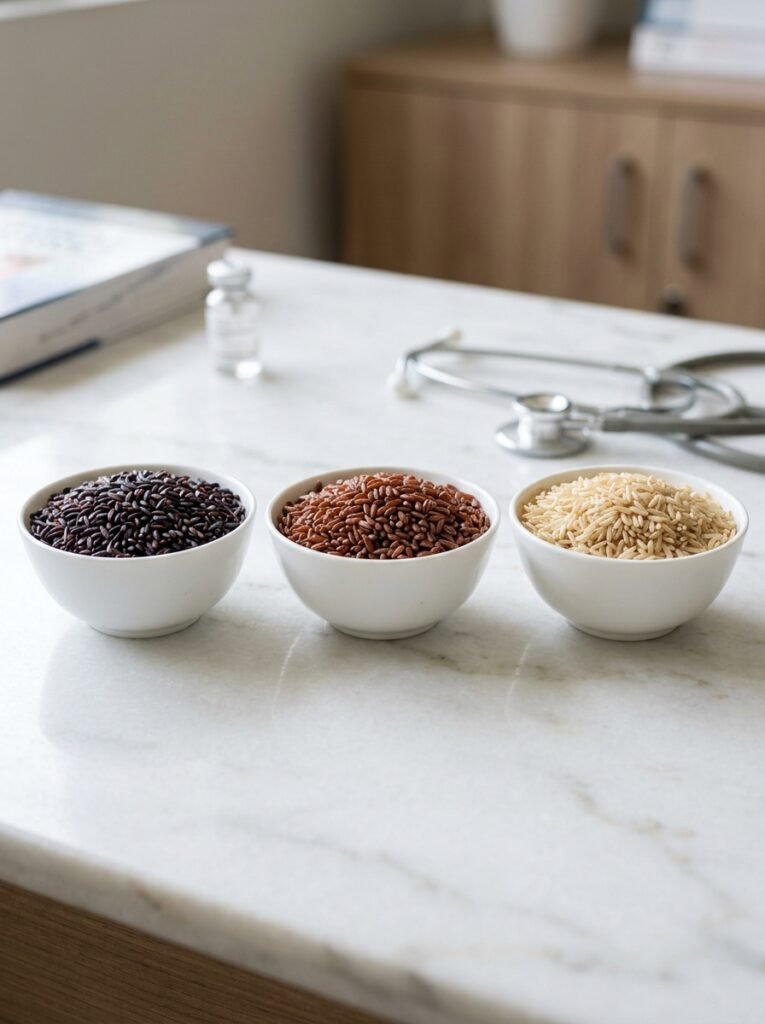
The best rices for blood sugar control are unpolished heritage grains—Karuppu Kavuni black rice, Mappillai Samba red rice, and aged brown basmati (Glycemic Index 42–52). Cook them firm, cool them for 12–24 hours before eating, and always eat vegetables and protein first, rice last. Dr. Sumaiya’s recommendation: this simple routine can cut the after-meal sugar spike by 35–40%—no medicine needed.
Why Rice Affects Blood Sugar: The Two Starches, Explained Simply
Rice starch is made of two sugar chains. The mix decides how fast your blood sugar rises:
- Amylose (the “slow” starch): a tightly packed, straight chain. Digestive enzymes (the chemicals that break food into sugar) struggle to untangle it. Result: a slow, gentle rise in blood sugar after eating. Rices rich in amylose are always the safer choice.
- Amylopectin (the “fast” starch): a bushy, heavily branched chain with huge surface area. Enzymes attack it instantly, flooding your blood with glucose (sugar) and triggering hyperinsulinemia (surges of insulin flooding the bloodstream). Sticky, short-grain rices are loaded with it.
When mills polish white rice, they strip away the outer bran and germ. What is left is a pure starch core—fast sugar, and almost no fibre, magnesium, zinc, or B vitamins.
Why Indians Need to Be Extra Careful (The CURES Study)
The Chennai Urban Rural Epidemiology Study (CURES) confirmed something important for every Indian kitchen. South Asians carry more visceral fat (fat stored deep around abdominal organs) and less muscle than Westerners at the same Body Mass Index (BMI, a height-to-weight ratio).
Muscle is where most blood sugar is burned after a meal—using GLUT4 transporters (cellular gates that pull sugar from your blood into your muscle cells). Less muscle plus large plates of polished white rice means your pancreas (the insulin-making organ) is overworked for years. Over 5 to 15 years, this overdrive leads to beta-cell exhaustion (burnout of the very cells that make insulin) and type 2 diabetes.
Glycemic Index vs. Glycemic Load: Two Numbers You Should Know
Two related measures tell you how a food affects sugar:
- Glycemic Index (GI): how fast a food raises blood sugar compared to pure glucose (rated 100). Low GI is 55 or below; Medium is 56–69; High is 70+.
-
Glycemic Load (GL): the GI multiplied by the actual amount of carbohydrate in your serving. Formula:
GL = (GI × Net Carbs in grams) ÷ 100. A GL of 10 or less is low; 20+ is high.
Practical meaning: even a medium-GI rice becomes safe when the portion is small and the plate is full of dal and vegetables. A big plate of any rice is a high-GL plate. Quantity matters as much as variety.
The Complete GI Chart: 21 Indian Rice Varieties Compared
This is the reference matrix we use in clinic—grain type, amylose content (the slow starch %), Glycemic Index, Glycemic Load per 150g cooked, and my verdict for each variety:
| Rice Variety & Origin | Grain Type | Amylose % | Glycemic Index (GI) | Glycemic Load (GL/150g) | Dr. Sumaiya’s Verdict |
|---|---|---|---|---|---|
| Konjac (Shirataki) Rice | 100% Glucomannan Yam Fiber | 0% | 0 (Zero GI) | 0 | Exceptional for rapid weight loss, keto, and severe insulin resistance. Zero glucose impact. |
| Karuppu Kavuni (Black Rice) | Unpolished Tamil Nadu Whole Grain | 24–27% | 42 – 50 (Low) | 13 (Medium-Low) | Premier therapeutic choice. Its antioxidant pigments slow carbohydrate absorption in the gut. |
| Parboiled Long-Grain Rice (Usna) | Hydrothermally Pre-Steamed Paddy | 25–28% | 38 – 48 (Low) | 14 (Medium-Low) | Outstanding everyday diabetic staple. Parboiling pushes B-vitamins into the grain core and firms the starch. |
| Brown Basmati Rice (2-Yr Aged) | Whole Grain with Intact Bran | 24–26% | 50 – 52 (Low) | 16 (Medium) | Rich in magnesium and fiber (3.5g/cup). Excellent staple when cooked firm, not soft. |
| Mappillai Samba Red Rice | Heritage Tamil Nadu Unpolished | 22–25% | 50 – 55 (Low) | 15 (Medium) | High in zinc and bran fiber; helps your cells respond better to insulin. |
| Navara Medicinal Rice | Ayurvedic Heritage Whole Grain | 22–24% | 52 – 56 (Low) | 16 (Medium) | Rich in plant antioxidants; supports gut health and steadier sugar curves. |
| Thooyamalli White Heritage | Indigenous Non-Hybrid White Grain | 23–25% | 54 – 58 (Low-Medium) | 17 (Medium) | Best option for patients who cannot tolerate the rough texture of brown rices. |
| Kerala Matta / Rosematta | Parboiled Red Grain | 23–26% | 55 – 60 (Medium) | 17 (Medium) | High in natural magnesium; thick grain structure digests slowly. |
| Aged White Basmati Rice | Aged Long Grain Milled | 22–28% | 52 – 58 (Medium) | 18 (Medium) | Safe for diabetics if portioned to 1 katori and preceded by raw salad and dal. |
| Wild Rice (Zizania aquatica) | Aquatic Grass Seed | 26–30% | 55 – 57 (Low-Medium) | 14 (Medium-Low) | Delivers 6.5g protein and 3g fiber per cup. Keeps you full longer with a flat sugar curve. |
| Brown Sona Masuri | Unpolished Medium Grain | 18–20% | 55 – 60 (Medium) | 18 (Medium) | Significantly safer than polished Sona Masuri because the fiber-rich outer layer is kept. |
| Sona Masuri (Polished White) | Milled Medium Grain | 15–18% | 60 – 68 (Medium-High) | 22 (High) | Caution required. Cook open-pot with starch draining and pair with generous vegetables. |
| Wada Kolam / Surti Kolam | Milled Short Grain | 13–16% | 68 – 74 (High) | 25 (High) | Fast-digesting starch causes sharp post-meal peaks. Restrict strictly. |
| Gobindobhog Rice | Short-Grain Aromatic White | 12–15% | 72 – 78 (High) | 26 (High) | Avoid during active diabetes control; reserve for rare festive occasions. |
| Ponni Rice (Polished Raw) | Milled Medium Grain | 16–19% | 70 – 75 (High) | 24 (High) | High sugar spike. Swap for parboiled Ponni (Puzhungal Arisi), which has a lower GI (~55). |
| Red Poha (Flattened Red Rice) | Rolled Whole Red Paddy | 18–21% | 58 – 64 (Medium) | 19 (Medium) | Far superior to white poha. Cook with roasted peanuts, mustard seeds, and generous peas/carrots. |
| White Poha (Flattened White Rice) | Rolled Polished Paddy | 12–15% | 70 – 76 (High) | 25 (High) | Flattening damages the starch granules. Absorbs rapidly; spikes morning sugar readings. |
| Jasmine Rice | Fragrant Long Sticky Grain | 12–15% | 68 – 80 (High) | 27 (High) | Stickiness signals heavy fast starch; produces sharp sugar spikes. Avoid. |
| Arborio / Calrose Rice | Short Starchy Grain | 14–17% | 69 – 75 (High) | 26 (High) | Used for creamy risottos and sushi. Its starch is almost instantly digested. |
| Standard Milled White Rice | Stripped Endosperm | 14–17% | 70 – 75 (High) | 28 (High) | Unbuffered white rice triggers steep insulin surges. Must be buffered or substituted. |
| Murmura (Puffed Rice) | High-Pressure Puffed Endosperm | <10% | 78 – 88 (Very High) | 31 (Extreme) | Industrial puffing explodes the starch matrix. It hits your bloodstream faster than table sugar. Completely eliminate. |
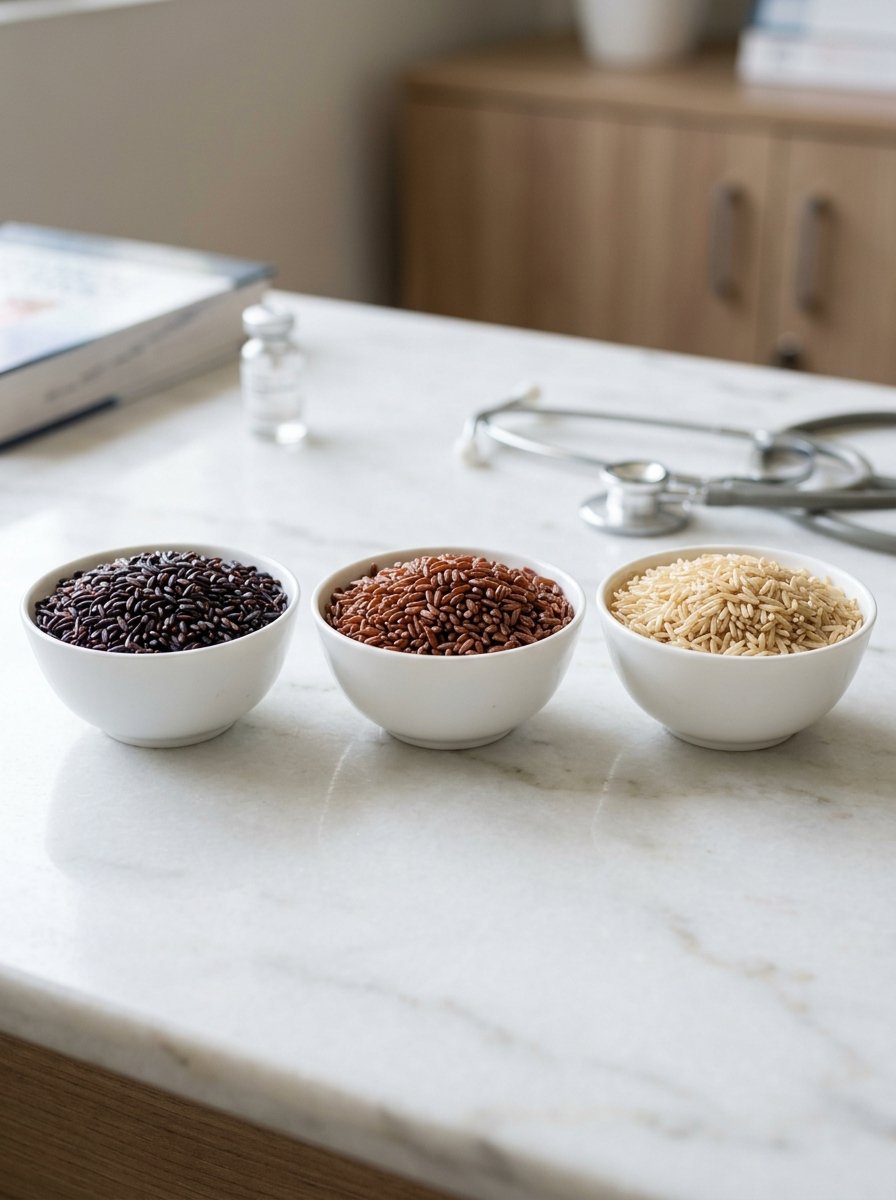
• Glycemic Index: 42–50 (Low)
• Amylose: 24–27% (High)
Its dark pigment is a natural antioxidant that slows sugar absorption.
• Glycemic Index: 50–55 (Low)
• Amylose: 22–25% (High)
Dense bran coat rich in zinc & insulin-sensitizing fiber.
• Glycemic Index: 50–52 (Low)
• Amylose: 24–26% (High)
Aged starch + 3.5g of gut-friendly fiber per cooked cup.
🔬 Figure 1: Authentic unpolished heritage rices evaluated at Dr. Sumaiya NutriCare Clinic for diabetic medical nutrition therapy.
Four Kitchen Tricks That Make Any Rice Safer
You do not always need to switch to expensive heritage grains. Food chemistry lets you change how rice behaves in your gut:
Refrigerate cooked rice at 4°C for 12 to 24 hours. The starches realign into a crystal form called Type-3 Resistant Starch (RS3, a starch your small intestine cannot digest). It travels to the colon intact, where friendly gut bacteria ferment it into Short-Chain Fatty Acids (SCFAs, healing compounds like butyrate that feed your gut lining). These compounds trigger GLP-1 (a natural gut hormone that improves insulin response and keeps you full). Human trials show this trick cuts the after-meal glucose spike by 30% to 40%—and it still works after you gently reheat the rice!
Cook rice in plenty of water (1:5 rice-to-water ratio), then drain the cloudy water (kanji). This washes away up to 20% of the fast surface starch. Pressure cookers do the opposite—they seal the leached starch back onto the grain. If you prefer white rice, open-pot boiling and straining is the mandatory method.
Adding 1 teaspoon of traditional pure cow ghee or cold-pressed coconut oil to the boiling water slows digestion. The fat binds with the slow starch inside the grain, forming complexes that digestive enzymes struggle to break. A tastier rice that digests slower—grandmothers knew this all along.
Overcooked, mushy rice is pre-digested food—enzymes reach the starch instantly. Cook rice al dente (firm to the bite). A firm grain digests slowly and keeps your sugar curve flat.
Four Doctor-Approved Rules for Eating Rice with Diabetes
- Eat in the right order (meal sequencing): Never start with rice. First eat raw salad (cucumber, methi, kakdi, cabbage). Then the protein and healthy fat (sprouted moong, paneer, eggs, fish, dal). Eat rice last. The fibre mesh from vegetables traps sugar and delays absorption by up to 45 minutes.
- Follow the 1:2 plate rule: Rice should never cover more than a quarter of your plate. For every 1 small katori of cooked rice, keep 1.5 to 2 katoris of thick dal, sambar, or non-starchy sabzi.
- Add lemon or vinegar: Squeezing lemon over rice, or a tablespoon of vinegar dressing on your salad, slows stomach emptying and blunts the sugar surge. A free, tasty fix.
- Cap the portion: In insulin resistance or type 2 diabetes with HbA1c (your 3-month average blood sugar test) above 7.0%, limit cooked rice to 100 to 120 grams per meal (about 1 small katori).
🩺 Stop Guessing. Get a Doctor-Guided Diabetes Correction Plan.
Managing rice is only one step. Reversing insulin resistance, reducing HbA1c, and protecting your liver needs a complete plan built around your lab reports—not a generic diet chart.
Dr. Sumaiya’s 3-Step Medical Correction Process:
- Biomarker Analysis: A full audit of your fasting insulin, HbA1c, lipid profile, liver and kidney tests.
- Root-Cause Mapping: Calculating your personal HOMA-IR (a score of how resistant your cells are to insulin) and your exact carbohydrate tolerance.
- Your Custom Plan: A 100% customized home-food protocol (no starvation, no crash diets) with weekly doctor check-ins.
💬 Book Clinical Consultation via WhatsApp
📍 In-Clinic: Frazer Town, Bengaluru | 💻 Global Telehealth (Pan-India, UAE, US, UK NRIs) | 📞 Call/WhatsApp: +91 7208660987
🌟 Transform Your Health Today
Takes only 60 seconds to get personalized clinical insights.
"Lost 4kgs in one month... plans are simple and effective! She
responds to queries promptly."
– Payal J.
Common Myths About Rice & Diabetes, Busted
Reality: Whole wheat atta has a GI of ~62–65—similar to parboiled or aged basmati rice. Over-milled commercial flours spike sugar just like white rice. With the right variety, portion, and cooking method, rice can stay on your plate. For the full picture, see our guide to reversing diabetes through personalized nutrition.
Reality: Brown rice still carries about 45 grams of carbohydrate per cooked cup. Eat enough of it and your sugar will still rise. Portion control stays mandatory—see also our guide on improving digestion and gut health, since a healthy gut multiplies the benefit of resistant starch.
Reality: In polished white rice, the vitamins and minerals were already stripped out during milling. Draining the kanji removes fast-absorbing starch, not nutrition—so you lose nothing and gain a safer meal.
Frequently Asked Questions (FAQs)
Scientific References & Consensus Guidelines
- Indian Council of Medical Research (ICMR) & National Institute of Nutrition (NIN). (2024). Dietary Guidelines for Indians: A Manual. ICMR-NIN, Hyderabad, India.
- American Diabetes Association (ADA). (2025). Standards of Medical Care in Diabetes: Facilitating Positive Health Behaviors and Well-being to Improve Health Outcomes. Diabetes Care, 48(Suppl. 1), S77–S110.
- Radhika, G., et al. (2009). Refined grain consumption and the metabolic syndrome in urban Asian Indians (Chennai Urban Rural Epidemiology Study 57). Metabolism: Clinical and Experimental, 58(5), 675–681.
- Brand-Miller, J. C., et al. (2003). Low-glycemic index diets in the management of diabetes: a meta-analysis of randomized controlled trials. The American Journal of Clinical Nutrition, 77(1), 243–250.
- Sajilata, M. G., Singhal, R. S., & Kulkarni, P. R. (2006). Resistant Starch: A Review. Comprehensive Reviews in Food Science and Food Safety, 5(1), 1–17.