
🩺 Quick Clinical Verdict: Almond Flour vs. Coconut Flour for Blood Sugar
Almond flour is superior for direct blood sugar control (GI under 15, only 10g net carbs per 100g), high magnesium, and rolling soft rotis. Coconut flour provides rich prebiotic (nourishing fiber for gut bacteria) fiber (38g per 100g) with fewer calories, but absorbs four times more water. For diabetes and PCOS (polycystic ovary syndrome, a hormonal and metabolic condition), blend 20% almond flour and 10% coconut flour into whole grain atta. Dr. Sumaiya’s recommendation:
When managing diabetes, prediabetes, or PCOS, your daily roti flour matters deeply. Refined flours and commercial wheat often cause postprandial (after-meal blood sugar levels) glucose spikes. They also keep insulin levels high throughout the day.
Switching to grain-free, nutrient-dense nut and seed flours is one of the most effective steps in medical nutrition therapy. However, when comparing almond flour versus coconut flour, patients often ask: Which flour manages insulin resistance (when your cells struggle to absorb blood sugar) better, and how do I cook with them without ending up with dry, crumbly rotis?
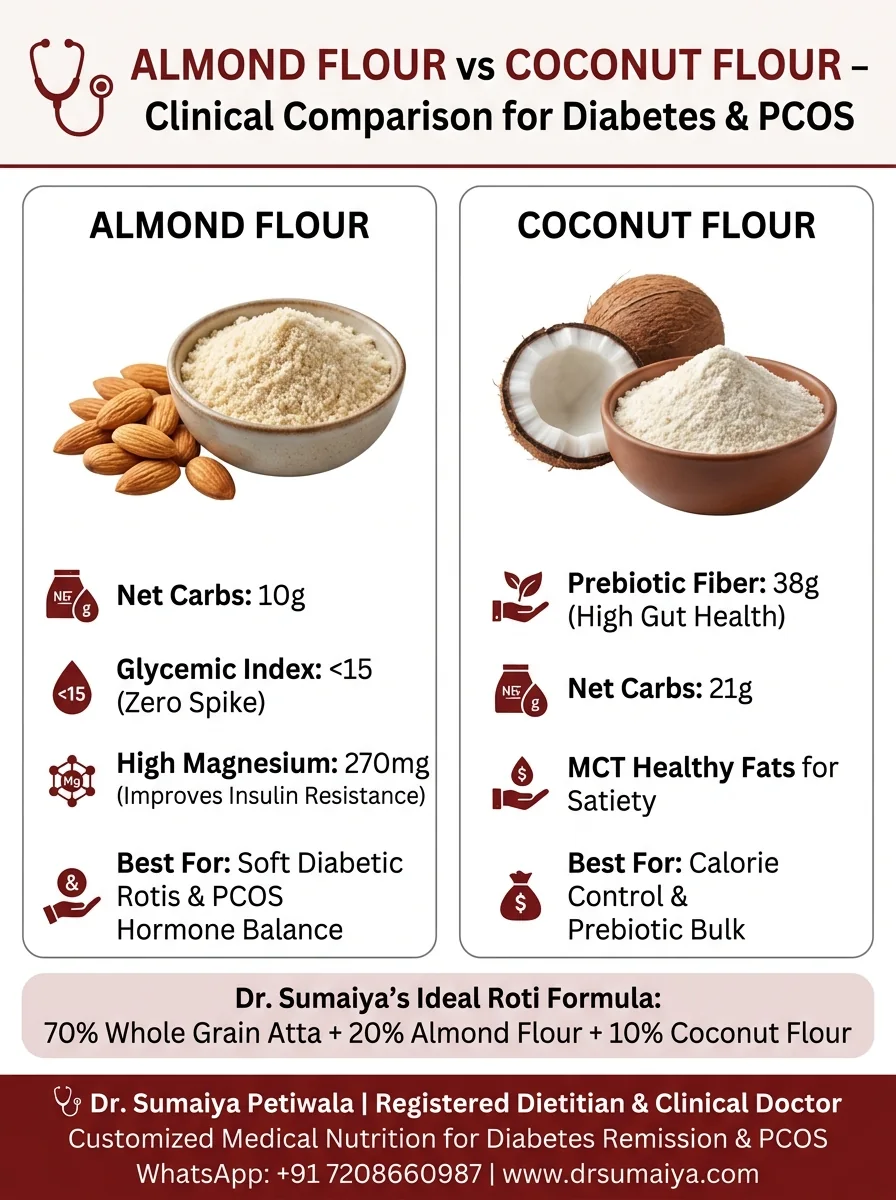
Table of Contents
Nutritional Comparison: Almond Flour vs. Coconut Flour (Per 100g)
Understanding the exact nutrient breakdown, glycemic index (a score rating how fast a carbohydrate raises blood glucose), and fiber content is essential when planning your daily meals:
| Nutritional Parameter | Blanched Almond Flour | Defatted Coconut Flour | Clinical Impact for Diabetes & PCOS |
|---|---|---|---|
| Energy / Calories | ~575 kcal | ~380 kcal | Coconut flour is lower in calories; ideal for calorie management. |
| Total Carbohydrates | ~21 g | ~59 g | Raw carbohydrate count before deducting dietary fiber. |
| Dietary Fiber | ~11 g | ~38 g (Dense Fiber) | Coconut flour supplies rich prebiotic fiber to slow glucose uptake. |
| Net Carbs | ~10 g (Ultra-Low) | ~21 g | Almond flour has 50% fewer active carbs that affect blood sugar. |
| Plant Protein | ~21 g | ~18 g | Both provide wholesome plant amino acids to protect muscle tone. |
| Healthy Fats | ~50 g (MUFA Rich) | ~10–14 g (MCT Rich) | Almond fats protect the heart; coconut fats supply quick energy. |
| Glycemic Index (GI) | < 15 (Very Low) | ~35–45 (Low) | Almond flour causes virtually no immediate blood sugar rise. |
| Magnesium Content | ~270 mg (68% RDA) | ~80 mg | Magnesium is a vital mineral that helps cells respond to insulin. |
| Dough Texture | High (Easy to roll) | Low (Absorbs 4x water) | Almond dough rolls well; coconut flour needs binders like isabgol. |
1. Blood Sugar Impact & Insulin Sensitivity
When evaluating flours for diabetes control, we monitor after-meal sugar rises and insulin demand. Your pancreas releases insulin to move glucose into your cells. When cells resist insulin, blood sugar stays high.
- Almond Flour (The Zero-Spike Choice): Almond flour consists mostly of monounsaturated fats and plant protein. These nutrients slow down stomach emptying, allowing glucose to enter your blood slowly. Almond flour also provides 270mg of magnesium per 100g. Magnesium helps activate cell gates that pull sugar from your blood into muscle cells. This directly improves your HOMA-IR (a calculated score measuring how resistant your body’s cells are to insulin). Over time, this helps lower your HbA1c (a simple 3-month blood test showing your average sugar levels).
- Coconut Flour (The Fiber Sponge): While coconut flour has slightly more net carbs than almond flour, over 60% of its carb weight is dietary fiber. This dense fiber forms a thick gel inside your gut that traps sugar molecules and slows down starch digestion. This gentle digestion protects against fatty liver (fat that builds up inside your liver cells), also known as NAFLD (the clinical term for fatty liver disease).
2. PCOS, Hormonal Acne & Ovarian Health
In women with PCOS, high insulin levels prompt the ovaries to produce excess male hormones like testosterone. This causes irregular cycles, excess facial hair, stubborn acne, and lower belly fat.
- Why Almond Flour Helps PCOS: Almonds are packed with natural Vitamin E and Zinc. Vitamin E acts as a protective antioxidant (a natural substance that protects cells from damage) in ovarian tissue, supporting egg quality and regular ovulation. Healthy fats from almonds also help raise protective proteins that bind and calm down excess testosterone.
- Why Coconut Flour Supports Weight Management: The fats in coconut flour are medium-chain fats. Unlike common dietary fats, these fats travel directly to your liver. Your liver burns them quickly for energy, which boosts calorie burn and helps reduce visceral fat (deep belly fat surrounding internal organs).
3. Dr. Sumaiya’s Practical Kitchen Formulas & Roti Ratios
The most common frustration when using grain-free flours is dough breaking apart. Gluten is what gives wheat rotis their stretch and puff. Because almond and coconut flours have no gluten, using them alone creates crumbly dough. Here is how to blend them for soft, easy-to-roll rotis:
👩⚕️ Formula A: Everyday Blood Sugar Stabilizing Roti (Soft & Easy to Roll)
Best For: Prediabetes, Mild Insulin Resistance, PCOS, and General Weight Management.
- 70% Whole Grain Atta (Khapli / Emmer Wheat or Jowar Flour)
- 20% Fine Blanched Almond Flour (Adds healthy fats, softness, and magnesium)
- 10% Defatted Coconut Flour (Adds rich prebiotic fiber without changing the taste)
- Kitchen Tip: Knead with lukewarm water and let the dough rest for 15 minutes before rolling. The natural oils in almond flour keep the rotis soft for hours.
🔬 Formula B: Ultra-Low-Carb Clinical Roti (Strict Remission Protocol)
Best For: Strict Low-Carb Diabetes Care or Severe PCOS protocols.
- 65% Fine Almond Flour
- 20% Low-Fat Coconut Flour
- 15% Isabgol / Psyllium Husk (Essential natural binder that holds the dough together)
- Kitchen Tip: Knead with warm water and a pinch of salt. Roll gently between two sheets of parchment paper. Cook on a medium tawa for 60 to 90 seconds per side.
4. The Clinical Verdict: Which Flour Should You Choose?
Choose Almond Flour If:
- You want the lowest possible net carbs (only 10g per 100g).
- You have PCOS, insulin resistance, or muscle cramps and need magnesium.
- You want soft, pliable rotis, pancakes, and parathas that roll easily.
- You have no tree nut allergies.
Choose Coconut Flour If:
- You want an economical option (a small bag lasts long because it absorbs water).
- You suffer from slow digestion or constipation and need high fiber.
- You are on a moderate calorie deficit for weight loss.
- You have tree-nut allergies and cannot eat almonds.
5. The 50/25/25 Indian Plate Method for Flour Meals
Even healthy flours work best when your entire meal is properly balanced. Use this simple plate formula:
- 50% of your plate (Fiber and Micronutrients): Fill half your plate with colorful vegetables like bhindi, palak, methi, cabbage, or beans, plus fresh cucumber and tomato salad.
- 25% of your plate (High-Quality Protein): Fill one quarter of your plate with thick dal, chana, paneer, curd, tofu, or eggs to stabilize glucose uptake.
- 25% of your plate (Smart Carbs): Keep your composite almond or coconut flour rotis to this final quarter.
Always follow the golden sequence of eating. Eat your fresh salad and sabzi first to form a protective fiber gel in your stomach. Eat your dal and protein second. Enjoy your phulkas last. This simple eating order lowers post-meal glucose spikes by up to 35%.
Struggling to Control Blood Sugar, HbA1c, or PCOS?
Changing your flour is just one step. Achieving sustainable results requires an evidence-based medical protocol tailored to your unique blood markers and daily routine.
- Step 1: Comprehensive Lab Biomarker Review — Medical analysis of fasting blood glucose, HbA1c, fasting insulin (a blood test that measures early strain on your pancreas), lipid profile, and HOMA-IR score.
- Step 2: Root-Cause Metabolic Mapping — Pinpointing insulin resistance, hormonal balance, and personal carb thresholds.
- Step 3: Personalized Indian Nutritional Prescription — 100% customized home meal plans using accessible grocery foods with weekly doctor reviews.
In-Clinic Consultations in Frazer Town, Bengaluru & Secure Telehealth Consultations Pan-India & Globally.