
If you often struggle with bloating, gas, or acidity after meals, you are not alone. Your digestive system does more than break down food. It controls your energy, immunity, sleep, and metabolism. When your gut works smoothly, your whole body thrives. When it struggles, daily life feels exhausting.
🩺 Quick Clinical Verdict: How to Improve Digestion
Improving digestion requires supporting your natural digestive cascade from your mouth to your gut. Chew food slowly, awaken stomach acid naturally, and eat fiber before carbohydrates. Clinical Warning: Relying on daily antacids weakens stomach acid, impairs nutrient absorption, and worsens gas. Dr. Sumaiya’s Recommendation: Sip warm cumin-ginger water, eat probiotic (gut-friendly) curd daily, and leave 3 hours between dinner and sleep.
Many people try to fix digestive troubles with quick over-the-counter antacids or harsh laxatives. But masking your symptoms does not solve the root issue. True gut healing means giving your stomach, liver, and gut bacteria the simple support they need. This lets them do their jobs naturally.
| Digestive Concern | Temporary Quick Fix (What Fails) | Dr. Sumaiya’s Clinical Gut Protocol (What Works) |
|---|---|---|
| Frequent Acidity & Reflux | Popping daily antacids, which lowers natural stomach acid and blocks B12 and iron absorption. | Chewing slowly, using warm ginger before meals, and eating lighter dinners 3 hours before bed. |
| Post-Meal Bloating & Heaviness | Drinking cold sodas or sugary digestive drops that add empty sugar and irritate the stomach lining. | Sipping fresh ajwain-fennel water and taking a gentle 10-minute walk (*Shatapawali*) after eating. |
| Sluggish Bowels & Constipation | Harsh chemical laxatives that make the bowel lazy over time. | Gentle soluble prebiotic (good-bacteria feeding) fiber (isabgol, soaked flax seeds) paired with 2.5 liters of warm water. |
| Gut Flora & Microbiome | Expensive store-bought pill supplements that often perish on shelves. | Fresh homemade curd (*dahi*) and spiced chaas delivering live, active beneficial bacteria daily. |
| Long-Term Outcome | Rebound acidity, recurring bloat, and poor nutrient uptake. | A resilient gut barrier, comfortable daily bowel habits, and steady all-day energy. |
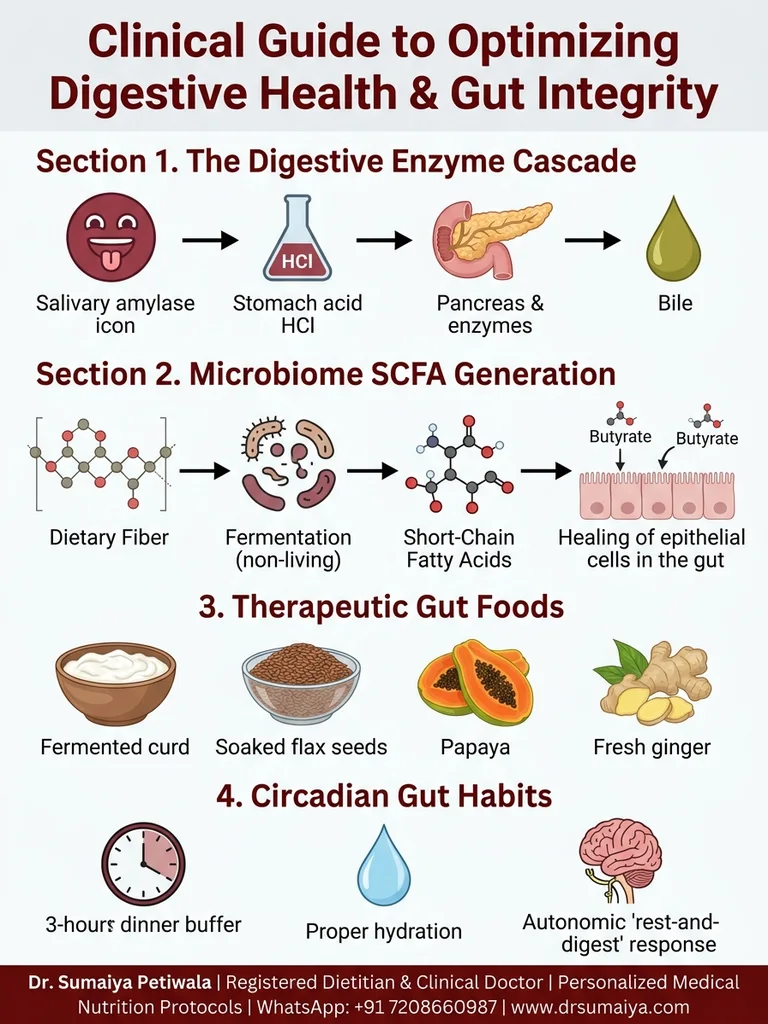
📊 Visual Summary: The 4 Biological Steps of Smooth Digestion & Daily Kitchen Remedies.
1. The Digestive Relay Race: How Food Moves Through You
Think of your digestion as a team relay race. Four runners pass the baton in order. If the first runner drops the baton, every runner downstream struggles.
- Runner 1: Your Mouth and Teeth. Digestion starts the second you chew food. Chewing breaks bites into soft pieces and mixes them with saliva enzymes. When you swallow food half-chewed, your stomach works twice as hard.
- Runner 2: Your Stomach Acid. Your stomach needs strong acid to digest dal, paneer, and eggs. It also acts as a shield to kill bad bacteria. Low stomach acid leaves food sitting too long, causing gas and heartburn.
- Runner 3: Your Liver and Pancreas. Once food leaves your stomach, your liver sends bile to break down fats. Next, your pancreas releases enzymes to digest carbs and proteins. Healthy liver enzymes like ALT (alanine aminotransferase) and AST (liver markers checked on routine blood tests that show liver cell health) ensure this step runs smoothly.
- Runner 4: Your Intestines and Gut Bacteria. In your colon, trillions of friendly bacteria ferment leftover fibers. They produce protective compounds that heal your gut wall and keep bowel movements regular.
2. The Gut Garden: Nurturing Your Good Bacteria
Inside your digestive tract lives an entire ecosystem called your gut microbiome. Think of it like a beautiful home garden.
When you feed your garden with nourishing whole foods, colorful vegetables, and homemade curd, the beneficial plants flourish. These good bacteria produce natural gut-healing compounds that protect your intestinal wall from becoming irritated or “leaky.”
To keep your gut garden thriving, you need two simple allies:
- Prebiotic Fiber: Prebiotic fiber (special plant fibers found in onions, garlic, oats, flax seeds, and green bananas that feed your good bacteria) acts like natural fertilizer for your gut.
- Probiotics: Probiotics (live, beneficial bacteria found in fermented foods like fresh curd and chaas) plant new seeds of healthy bacteria to crowd out harmful microbes.
When your gut is starved of fiber or flooded with junk food, harmful bacteria multiply. This imbalance causes low-grade inflammation (hidden cellular irritation that slows natural healing). Doctors measure this using blood tests like hs-CRP (high-sensitivity C-reactive protein).
3. 5 Everyday Indian Kitchen Remedies for Bloating & Gas
You do not need complicated detox potions to find relief. Traditional Indian kitchens have always held evidence-based digestive wisdom:
- Fresh Ginger (*Adrak*): Fresh ginger contains natural compounds called gingerols. Chew a thin slice of fresh ginger with lemon juice and rock salt 10 minutes before lunch. This gently prompts your stomach to release natural digestive juices.
- Spiced Buttermilk (*Chaas* with Roasted Jeera & Hing): Homemade buttermilk is light and cooling. Roasted cumin (*jeera*) stimulates enzymes, while asafoetida (*hing*) relaxes gut muscles to release trapped gas.
- Warm Ajwain & Saunf Water: Boil half a teaspoon of carom seeds (*ajwain*) and fennel seeds (*saunf*) in one glass of water. Sip this warm tea to calm cramps and ease post-meal fullness within 15 minutes.
- Soaked Whole Legumes: Dals, rajma, and chana can cause bloating when cooked unsoaked. Always soak legumes overnight with a pinch of salt and hing. This breaks down hard starches, making protein gentle on your stomach.
- Papaya (*Papita*): Ripe papaya contains a natural digestive enzyme called *papain*. Eat a small bowl of papaya before meals to help break down heavy proteins and support smooth bowel habits.
4. The Golden Eating Sequence: What to Eat First
The order in which you eat your meal can change how you feel for hours afterward. Most people eat rice or roti first, leading to rapid sugar surges and heavy digestion.
Instead, follow Dr. Sumaiya’s simple Golden Meal Sequence:
- Step 1: Vegetables & Salad First (The Fiber Brake). Fiber forms a gentle gel in your stomach. It acts like a brake pedal to slow digestion and prevent sugar spikes.
- Step 2: Protein & Dals Second. Eating your dal, paneer, eggs, or chicken next stimulates satiety hormones, signaling your brain that you are comfortably satisfied.
- Step 3: Roti or Rice Last. Finishing with your carbs prevents post-meal sleepiness, sluggishness, and gas. Learn more in our guide on how meal sequencing optimizes blood sugar and digestion.
Struggling with Chronic Bloating, Gas, or Sluggish Bowels?
Daily antacids and laxatives only mask symptoms while weakening your body’s natural digestive fire. Dr. Sumaiya creates doctor-supervised clinical nutrition plans that restore gut barrier strength, enzyme balance, and comfortable daily bowel transit.
- Comprehensive Biomarker & Gut Audit: Reviewing inflammatory markers (hs-CRP), liver enzymes (ALT, AST), vitamin levels (B12, D3), and personal food sensitivities.
- Root-Cause Motility Mapping: Identifying low stomach acid triggers, microbiome imbalances, and daily stress factors.
- Personalized Indian Gut-Healing Protocol: A 100% customized home meal plan using healing kitchen spices, natural prebiotic fibers, and probiotic foods suited to your lifestyle.
📍 In-Clinic at Frazer Town, Bengaluru & Telehealth Pan-India / Globally | WhatsApp: +91 7208660987
5. Key Lab Tests That Reveal Hidden Digestive Stress
If your digestive discomfort persists despite eating clean home food, specific diagnostic tests can identify what is happening behind the scenes:
- Thyroid (metabolism gland) Panel (TSH [thyroid-stimulating hormone], Free T3, Free T4): Your thyroid directly controls bowel muscle contractions. A sluggish thyroid frequently causes stubborn constipation and low stomach acid.
- Liver Function Test (ALT and AST): Elevated ALT or AST enzymes indicate liver stress or fatty liver (fat accumulation in liver cells), which reduces healthy bile flow needed to digest dietary fats.
- High-Sensitivity CRP (hs-CRP): A simple blood marker that detects systemic inflammation originating from an irritated or leaky gut wall.
- Complete Vitamin & Iron Panel (B12, Ferritin, Vitamin D): Low B12 and ferritin often point to poor stomach acid, as healthy acid is required to pull these nutrients out of whole foods.
6. 3 Evening Habits That Prevent Morning Acidity
Your gut follows an internal biological clock. Digestive blood flow and enzyme production peak during daylight hours and naturally slow down after dark.
- Keep a 3-Hour Dinner Gap: Finish dinner at least 3 hours before sleep. Lying down with a full stomach causes acid to splash upward. This triggers nighttime heartburn and disrupts sleep.
- Hydrate Smarter, Not Harder: Avoid drinking cold water during meals, as it dilutes digestive juices. Drink water 30 minutes before eating, or wait 45 minutes after your meal.
- Take Three Slow Breaths Before Eating: Stress puts your body into fight-or-flight mode. This pulls blood flow away from your stomach. Take three deep, slow breaths before eating to activate your rest-and-digest state. For more chronic issues, explore our clinical guide on evidence-based constipation relief strategies.