
Your Daily Gut Health Report Card
Bristol Stool Chart Explained: What Your Stool Is Telling You About Your Gut Health
By Dr Sumaiya Petiwala, RD, CDE, BUMS, Monash University Certified Low FODMAP Dietitian with 18 years of experience.
Most people check their weight every day. Some monitor their blood sugar or blood pressure.
But very few people pay attention to something that can reveal a lot about their digestive health:
Their stool.
It may not be a pleasant topic to discuss, but your stool can provide valuable clues about how well your digestive system is functioning.
Doctors and dietitians often use a simple tool called the Bristol Stool Chart to understand bowel habits and identify potential gut health issues.
Let’s explore it in simple language.
What Is the Bristol Stool Chart?
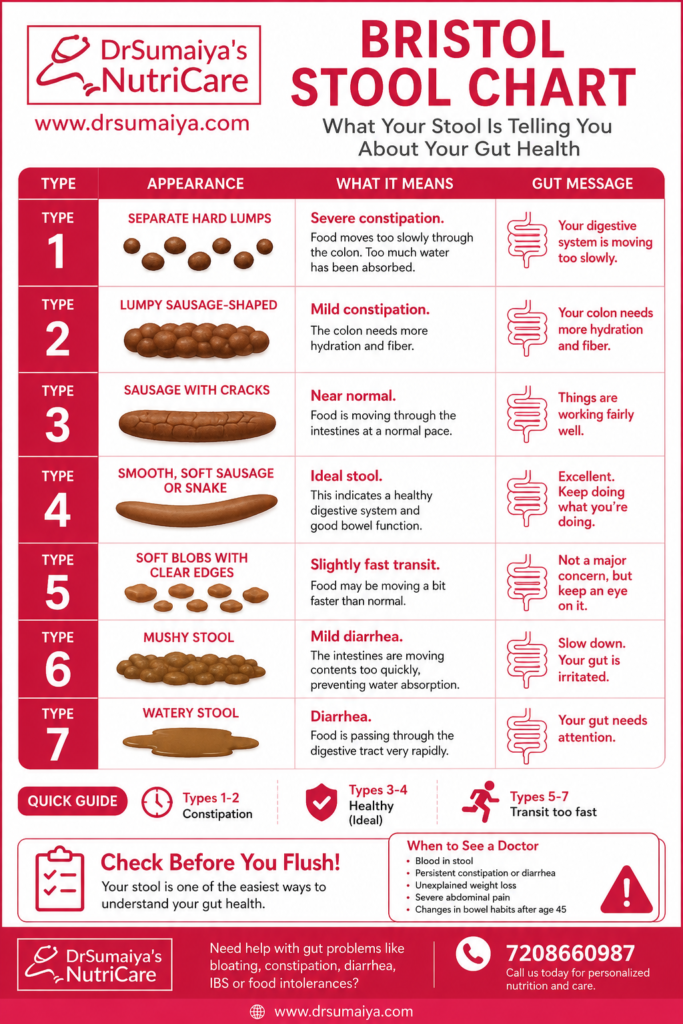
The Bristol Stool Chart is a medical tool that classifies stool into seven different types based on shape and consistency.
Each type can indicate whether food is moving through your digestive tract too slowly, too quickly, or at an ideal pace.
Think of it as a report card for your gut.
Type 1: Hard Pebbles
Appearance: Separate hard lumps that look like small pellets or goat droppings.
What it means: Food is moving very slowly through the colon. Too much water has been absorbed, making the stool hard and dry.
Common symptoms:
- Straining during bowel movements
- Pain while passing stool
- Feeling of incomplete evacuation
- Bloating
Possible causes:
- Constipation
- Inadequate water intake
- Low-fiber diet
- Lack of physical activity
Gut message: “Your digestive system is moving too slowly.”
Type 2: Sausage-Shaped but Lumpy
Appearance: A sausage-shaped stool with visible lumps.
What it means: This is also a sign of constipation, although less severe than Type 1.
Common symptoms:
- Difficulty passing stool
- Infrequent bowel movements
- Abdominal discomfort
Gut message: “Your colon needs more hydration and fiber.”
Type 3: Sausage with Cracks on the Surface
Appearance: Sausage-shaped with cracks or fissures.
What it means: This is generally considered healthy.
Food is moving through the intestines at a reasonable speed.
Gut message: “Things are working fairly well.”
Type 4: Smooth, Soft Sausage or Snake
Appearance: Smooth, soft, and easy to pass.
What it means: This is considered the ideal stool.
It indicates a healthy digestive system and good bowel function.
Gut message: “Excellent. Keep doing what you’re doing.”
Type 5: Soft Blobs with Clear Edges
Appearance: Soft pieces that pass easily.
What it means: Food may be moving slightly faster than normal through the intestines.
Possible causes:
- Mild increase in gut motility
- Slightly low fiber intake
- Stress
- Dietary changes
Gut message: “Not a major concern, but keep an eye on it.”
Type 6: Mushy Stool
Appearance: Fluffy pieces with ragged edges. Mushy consistency.
What it means: This suggests mild diarrhea.
The intestines are moving contents too quickly, preventing adequate water absorption.
Possible causes:
- Food intolerance
- Stress and anxiety
- Gut infections
- Irritable Bowel Syndrome (IBS)
- Certain medications
Gut message: “Slow down. Your gut is irritated.”
Type 7: Watery Stool
Appearance: Completely liquid with no solid pieces.
What it means: This is diarrhea.
Food is passing through the digestive tract very rapidly.
Possible causes:
- Gastrointestinal infections
- Food poisoning
- Inflammatory bowel disease
- Severe food intolerance
- Certain medications
Gut message: “Your gut needs attention.”
Persistent Type 7 stools require medical evaluation, especially if accompanied by dehydration, fever, blood, or weight loss.
Check Before You Flush: What Your Stool Reveals About Your Health!
Why Does Stool Consistency Matter?
Your stool reflects several important aspects of health:
Fiber Intake
Too little fiber often leads to Types 1 and 2.
Hydration
Insufficient water intake can make stool hard and difficult to pass.
Gut Microbiome
The trillions of bacteria in your intestines influence stool consistency and bowel regularity.
Stress
The brain and gut communicate continuously.
Stress can trigger constipation in some people and diarrhea in others.
Digestive Disorders
Persistent abnormal stool patterns may indicate conditions such as:
- Irritable Bowel Syndrome (IBS)
- Inflammatory Bowel Disease (IBD)
- Celiac disease
- Food intolerances
- Thyroid disorders
Interactive Self-Check
Answer the following questions:
Question 1
What type of stool do you usually pass?
- Type 1-2 → Constipation may be present.
- Type 3-4 → Generally healthy.
- Type 5-7 → Transit may be too fast.
Question 2
How often do you pass stool?
- Less than 3 times per week
- Daily
- More than 3 times per day
Frequency combined with stool type provides a clearer picture of gut health.
Question 3
Do you experience any of the following?
- Bloating
- Excess gas
- Abdominal pain
- Urgency
- Straining
- Incomplete evacuation
These symptoms can help identify underlying digestive issues.
When Should You See a Doctor?
Seek medical advice if you notice:
- Blood in stool
- Black or tarry stool
- Unexplained weight loss
- Persistent constipation
- Chronic diarrhea
- Severe abdominal pain
- New bowel habit changes after age 45
These symptoms should never be ignored.
Tips for Healthier Bowel Movements
Drink Enough Water
Aim for adequate hydration throughout the day.
Increase Fiber Gradually
Include:
- Fruits
- Vegetables
- Whole grains
- Legumes
- Nuts and seeds
Stay Physically Active
Walking alone can improve bowel movements significantly.
Manage Stress
Stress directly affects gut function.
Avoid Excess Processed Foods
Ultra-processed foods can negatively affect gut microbiota and bowel regularity.
Final Thoughts
Your stool is not something to be embarrassed about. It is one of the easiest and most useful indicators of digestive health.
A quick glance before flushing can provide valuable information about hydration, fiber intake, gut bacteria, stress levels, and potential digestive disorders.
For most adults, Type 3 or Type 4 stools are the goal.
Your gut speaks every day. The Bristol Stool Chart helps you understand what it is saying.
Need Help With Gut Problems?
Persistent constipation, diarrhea, bloating, IBS, food intolerances, or unexplained digestive symptoms may require a personalized nutrition and medical assessment.
Dr Sumaiya’s NutriCare Clinic
Phone: 7208660987
Email: doc@drsumaiya.com
Website: www.drsumaiya.com
Address: 7, Moore Rd, off Coles Road, Pulikeshi Nagar, Frazer Town, Bengaluru, Karnataka 560005
Looking for a Personalized Clinical Nutrition Protocol?
Managing your health requires addressing your unique metabolic biomarkers, digestive transit, and root causes. Dr. Sumaiya provides individualized medical nutrition therapy tailored to your lifestyle.
- Comprehensive Blood & Biomarker Audit (HbA1c, Fasting Insulin, Lipid Ratios, Thyroid/Liver)
- Root-Cause Metabolic Mapping & Dietary Assessment
- 100% Customized Indian Meal Protocol with Continuous Weekly Monitoring
In-Clinic at Frazer Town, Bengaluru & Telehealth Pan-India / Globally | Call/WhatsApp: +91 7208660987