🩺 Quick Clinical Answer: Why Do You Regain Weight After Dieting?
Weight regain after strict dieting happens because your body slows down your resting burn rate to protect fat stores. Severe calorie cuts trigger sharp rises in hunger hormones and cause lean muscle loss. Restoring your metabolism requires steady protein, high fiber, and doctor-guided meal timing. Dr. Sumaiya’s recommendation:
Have you ever pushed through weeks of strict dieting, lost five or ten kilograms, only to watch the weight return as soon as you resumed normal meals? This heartbreaking cycle is known as the yo-yo effect. Many patients arrive at my clinic feeling defeated, blaming themselves for a lack of willpower.
Weight regain is not an emotional flaw. It is a biological survival response. When you starve your body on crash diets, your brain believes you are facing a severe famine. It actively slows your daily calorie burn and increases hunger signals to restore your lost fat.
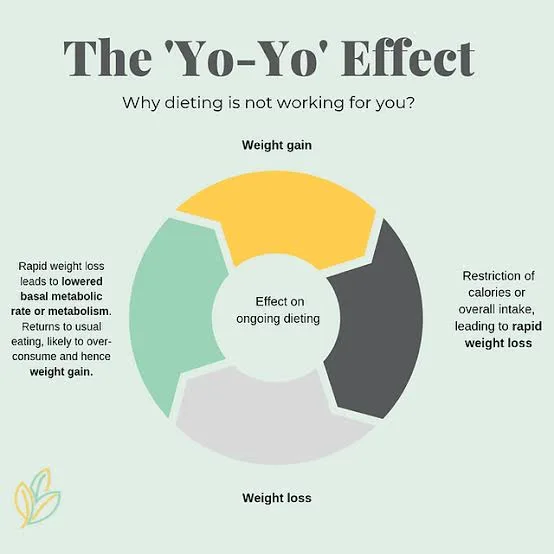
Table of Contents
The Biological Trap: Why Crash Diets Backfire
Your metabolism evolved over thousands of years to keep you alive during famines. When you suddenly cut your food intake in half, your body does not know you are trying to fit into old clothes. It assumes food has become dangerously scarce.
To protect you, your body activates metabolic adaptation. It slows down your thyroid (the neck gland that controls how fast your body burns energy) and reduces your daily heat production. At the same time, it breaks down metabolically active muscle tissue for emergency fuel.
Because muscle burns calories even while you sleep, losing muscle lowers your daily energy needs permanently. When you return to normal eating, your body burns far fewer calories than before. The surplus energy gets stored rapidly as visceral fat (deep belly fat surrounding internal organs).
This rebound fat storage also triggers fatty liver (fat that builds up inside your liver cells), also called NAFLD (the clinical term for fatty liver disease). You can learn more in our guide on true fat loss versus water and muscle loss.
Clinical Comparison: Crash Diets vs. Metabolic Nutrition Therapy
Understanding the physiological difference between short-term dieting and doctor-guided nutrition therapy is essential for long-term health:
| Clinical Metric | Severe Calorie Crash Diet | Metabolic Clinical Therapy | Patient Health Outcome |
|---|---|---|---|
| Metabolic Burn Rate | Drops 20% to 35% sharply | Preserved with adequate protein | Prevents post-diet rebound weight |
| Body Composition | Heavy loss of muscle and water | Selective loss of stored fat | Maintains strong lean tone |
| Appetite Hormones | High ghrelin and low leptin | Stable satiety signals | Stops intense food cravings |
| Blood Sugar Stability | Frequent hypoglycemic dips | Smooth all-day glucose curves | Eliminates late-day fatigue |
| 2-Year Sustainability | Under 10% maintain results | Over 80% maintain goal weight | Builds permanent home habits |
The Hormonal Tug-of-War: Leptin and Ghrelin
Weight regulation is controlled by delicate hormonal feedback loops. Two key hormones govern how much you eat every single day:
- Leptin (your natural fullness hormone produced by fat cells): Leptin signals your brain that you have enough stored energy. When you lose weight rapidly, leptin levels drop drastically. Your brain receives a false signal that you are starving.
- Ghrelin (the hunger hormone made in your stomach): Ghrelin levels rise when your stomach is empty, creating urgent hunger. On severe calorie restriction, ghrelin stays elevated for months even after you stop dieting.
This hormonal imbalance creates relentless hunger and cravings. Over time, constant dieting also increases insulin resistance (when your cells struggle to absorb blood sugar). High circulating insulin prevents stored fat from being burned. If you also struggle with post-meal cravings, read our clinical guide on why you crave sweets after eating and insulin resistance.
Essential Medical Tests to Check During Weight Loss Plateaus
When weight loss stalls or rebounds, guessing what to cut next often makes things worse. You must look at what your biochemistry is doing under the surface. At our clinic, we evaluate these essential markers:
- Fasting Insulin (a blood test that measures early strain on your pancreas): Optimal levels should stay between 3 and 7 μIU/mL. High levels lock fat inside fat cells.
- HbA1c (a simple 3-month blood test showing your average sugar levels): Checks whether hidden glucose spikes are preventing fat loss. Readings between 5.7% and 6.4% indicate prediabetes.
- HOMA-IR (a calculated score measuring how resistant your body’s cells are to insulin): A score above 1.9 confirms cellular resistance that causes easy weight regain.
- Fasting Triglycerides (the main type of fat circulating in your blood from excess calories): High triglycerides indicate your liver is packing extra dietary carbs into stored fat.
- Complete Thyroid Profile: Checks your TSH (the pituitary hormone that prompts your thyroid to make hormones) and free T3/T4 to ensure your metabolic burn rate has not slowed down.
5 Indian Kitchen Rules to Stop Yo-Yo Weight Regain
You do not need expensive gym powders or foreign meal plans to maintain a healthy weight. Simple, practical adjustments in your everyday kitchen build lasting metabolic resilience:
🌾 Practical Daily Strategies for Indian Kitchens
- 1. Anchor Every Meal with Real Protein: Eat at least 20 grams of protein per meal. Include a katori of thick dal, paneer, boiled chana, sprouted moong, or eggs to protect muscle mass and keep ghrelin low.
- 2. Drink Spiced Chaas with Roasted Cumin: Replace sugary drinks or sweetened tea with fresh homemade buttermilk (chaas) seasoned with roasted jeera and mint. It supports digestion and curbs mid-day hunger.
- 3. Swap Refined Grains for High-Fiber Atta: Avoid refined maida and pure white rice. Choose whole grains like Khapli wheat, jowar, or bajra for soft phulkas that digest slowly.
- 4. Eat Home-Cooked Vegetables in Abundance: Fiber acts as a natural brake in your gut. Enjoy two generous katoris of seasonal sabzi like bhindi, tori, methi, palak, or beans with lunch and dinner.
- 5. Follow a Gentle 10-Minute Post-Meal Walk: A light stroll after meals prompts your muscles to pull glucose directly from your blood, preventing high insulin surges that encourage fat storage.
The 50/25/25 Indian Plate Method for Lasting Results
Sustainable weight management is not about eating less food. It is about balancing the foods on your plate so your metabolism stays active and full:
- 50% of your plate (Fiber and Micronutrients): Fill half your plate with colorful vegetables, cooked sabzi, and fresh cucumber-tomato salad.
- 25% of your plate (High-Quality Protein): Fill one quarter of your plate with thick dal, chana, paneer, curd, tofu, or eggs.
- 25% of your plate (Smart Carbs): Keep your roti or rice to the last quarter. Choose high-fiber grains like Khapli phulkas or parboiled rice.
Follow the golden sequence of eating. Eat your fresh salad and sabzi first to coat your gut with soluble fiber. Eat your dal and protein second. Enjoy your phulka or rice last. This meal order reduces post-meal blood sugar surges by up to 35% without cutting portions. For personalized guidance on late-day hunger, read our article on late evening hunger pangs and weight gain.
Stuck in the Frustrating Diet-and-Regain Cycle?
Starvation diets damage your metabolism. Achieving long-term fat loss without rebound weight requires a doctor-designed medical protocol built around your unique blood markers, daily routine, and favorite home foods.
- Step 1: Comprehensive Biomarker Analysis — We evaluate your HbA1c, fasting insulin, lipid profile, liver function, and thyroid health.
- Step 2: Root-Cause Metabolic Mapping — Identifying metabolic slowdown, insulin resistance, and nutrient deficiencies.
- Step 3: Personalized Indian Nutritional Prescription — 100% personalized home meals with weekly doctor follow-ups to keep your burn rate high.
In-Clinic Consultations in Frazer Town, Bengaluru & Secure Telehealth Consultations Pan-India & Globally.