

Medically Verified & Evidence-Based | Authored by Dr. Sumaiya Petiwala, RD, BUMS, CDE (Registered Clinical Dietitian & Metabolic Health Specialist) | Aligned with ICMR-NIN Clinical Standards | Last Updated: October 2026
For years, people viewed excess weight as a personal flaw. Society said to eat less and move more. Yet millions struggle with weight despite dieting. Modern medicine shows a different truth. Global medical bodies now call obesity a chronic metabolic disease. At Dr. Sumaiya NutriCare Clinic, we treat the biological roots of weight with medical care.
Is Obesity a Disease or a Choice?
Direct Clinical Answer: Obesity is a recognized chronic metabolic disease. It is not a lack of willpower. It stems from hormone shifts, altered brain signals, and cell stress. Genetic risks lock fat inside body tissues. Real healing requires doctor-led nutrition therapy with Indian home food to reset hormones safely.
The 4 Biological Triggers Behind Obesity
Weight gain is driven by real biological changes in your body:
- Hormonal Sugar Trapping: When cells stop responding to insulin, it causes insulin resistance (where cells do not absorb glucose well). This raises fasting insulin (a morning blood test measuring baseline insulin levels). It pushes up your HOMA-IR (a lab score showing how hard your body works to manage sugar) score. It locks sugar into fat cells.
- Deep Abdominal Fat Storage: South Asians often store extra visceral fat (deep belly fat packed around internal organs). This directly fuels fatty liver (a condition where fat builds up inside liver cells) and NAFLD (non-alcoholic fatty liver disease, a condition with excess liver fat).
- Slow Neck Gland Pace: A sluggish thyroid (the neck gland that controls how fast your body burns energy) slows daily energy burn. We test TSH (a blood test that checks your thyroid pace) and HbA1c (a 3-month average of blood sugar levels) to check gland speed.
- Liver and Vascular Strain: High circulating fats push up triglycerides (blood fats tied to insulin levels). We also test liver enzymes like SGPT (a liver test showing liver cell stress) and SGOT (a test tracking liver strain). We check ALT (a liver enzyme checking cell health), AST (an enzyme showing liver and muscle health), and uric acid (a body waste product that can cause joint pain) to protect kidneys and joints.
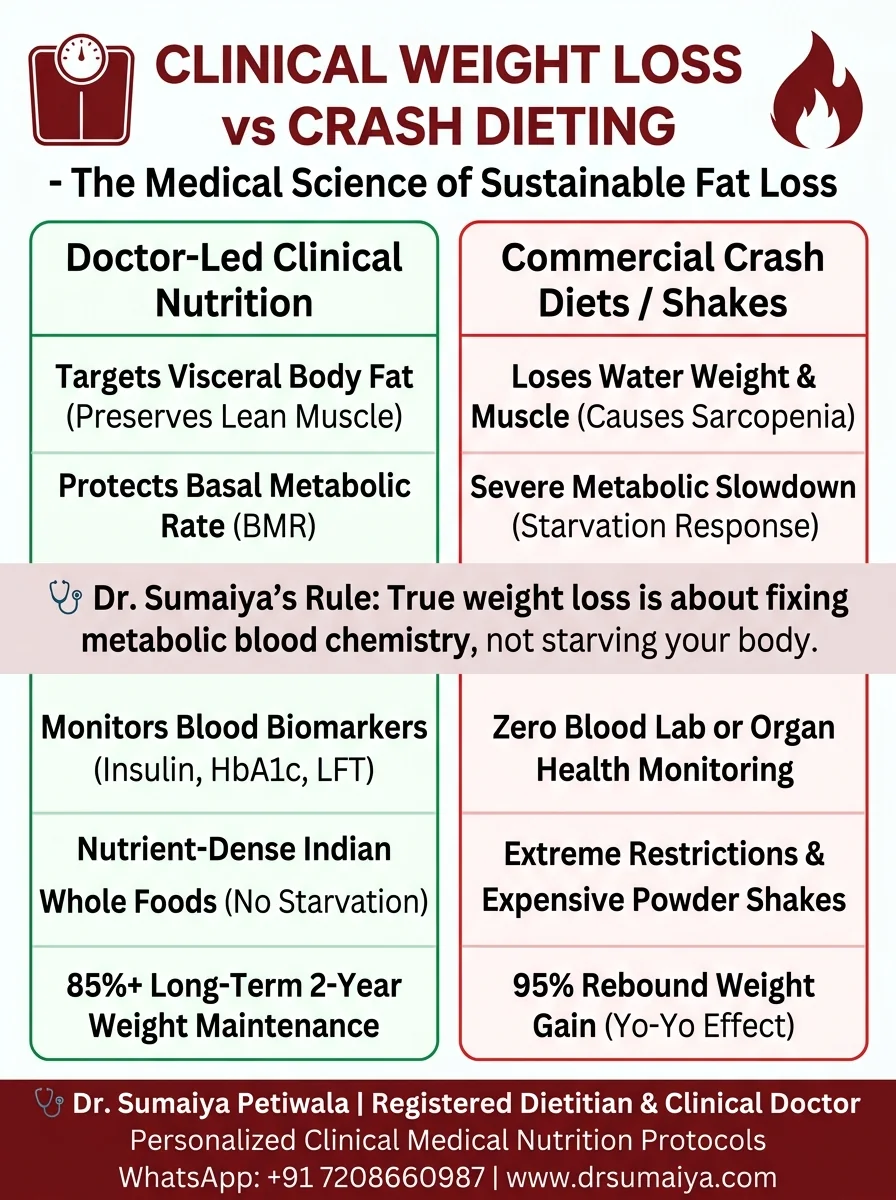
📊 Medical Perspective: Treating Obesity as a Hormonal Disease vs Commercial Weight Loss Fads.
Comparison: The Willpower Myth vs The Medical Disease Model
See how old dieting myths compare with medical care:
| Perspective | Old Willpower Myth | Medical Disease Model | Clinical Treatment |
|---|---|---|---|
| Root Cause | Laziness or poor will | Hormones and genes | Lab-guided care |
| Diet Approach | Severe starvation | Balanced plates and meal order | Protects resting calorie burn |
| Hunger Signal | Ignored, causing binges | Managed with protein and fiber | Restores natural fullness |
| Long-Term Health | Rebound weight gain | Lasting metabolic reset | Lifelong health |
Stop Blaming Yourself. Start Clinical Healing.
Obesity is a treatable medical condition. Work with Dr. Sumaiya Petiwala to analyze your blood markers and build a personalized medical nutrition plan with authentic Indian food.
Book Clinical Consultation on WhatsApp →The 50/25/25 Indian Kitchen Plate Rule
We build your clinical plan around nourishing home-cooked Indian meals:
- 50% High-Fiber Sabzi & Salad: Fill half your plate with cucumber, palak, methi, bhindi, or cabbage. These give you prebiotic (plant fibers that nourish good gut bacteria) fuel and keep you full.
- 25% High-Quality Protein First: Eat your protein first. Have paneer, boiled eggs, curd, sprouts, chicken, or fish. Protein shields your muscles.
- 25% Smart Complex Carbs: Finish with jowar roti, daliya, or brown rice. These carry a moderate glycemic index (a scale measuring how fast foods raise blood sugar) and modest glycemic load (a ranking system for carbohydrate content and blood sugar impact). This prevents rapid postprandial (occurring after a meal) sugar surges.
Add fresh curd for probiotic (good live bacteria that support digestion) gut health. Use turmeric for antioxidant (compounds that defend cells against daily wear and tear) protection. Avoid deep-fried snacks to lower chronic inflammation (cellular immune stress that hinders recovery).
The Dr. Sumaiya 3-Step Medical Correction Process
At Dr. Sumaiya NutriCare Clinic, we eliminate guesswork through structured clinical care:
- Step 1: Biomarker Analysis & Metabolic Audit: We review your complete blood panel. We check your visceral fat and daily food habits.
- Step 2: Personalized Indian Nutritional Prescription: We create an easy home meal plan with Indian foods. We calibrate it for safe fat loss.
- Step 3: Weekly Doctor-Led Monitoring: We evaluate your body measurements weekly. We adjust meal portions to keep your energy high.
🌟 Transform Your Health Today
Takes only 60 seconds to get personalized clinical insights.
"Lost 4kgs in one month... plans are simple and effective! She
responds to queries promptly."
– Payal J.
Frequently Asked Questions About Obesity as a Disease
Why do official medical organizations classify obesity as a disease?
Medical bodies know obesity changes appetite hormones and fat tissue. It raises risks of diabetes and heart issues. It needs medical care.
Why doesn’t eating less and moving more work for long-term weight loss?
Starvation diets slow your resting calorie burn. They spike hunger hormones. Without doctor-guided care to fix insulin response, the body regains lost weight.
What is the South Asian phenotype in obesity?
South Asians tend to hold more deep belly fat and less muscle. Even at normal weights, this profile raises diabetes risks early.
Can medical nutrition therapy reverse early obesity-related complications?
Yes. Dropping visceral fat lowers insulin levels. It clears liver fat, controls blood pressure, and reverses prediabetes safely.
Do I need weight loss injections or surgery to treat obesity?
Not for most people. Surgery and shots carry high costs and side effects. Most patients get lasting fat loss through clinical nutrition with home Indian food.