One term first, because it matters. PCOS (polycystic ovary syndrome) is a common hormonal and metabolic condition that affects ovulation, insulin levels, and weight gain. If your daughter has irregular periods, stubborn acne, or excess hair growth, it is the first thing worth investigating.
🩺 Quick Clinical Answer: Is Teen PCOS Something She Will Grow Out Of?
No. PCOS is a lifelong metabolic condition, not a phase of puberty. Early detection matters because it raises lifetime risk of type 2 diabetes, heart disease, and endometrial cancer. Lifestyle change is the first-line treatment in adolescent girls. The birth control pill controls symptoms but does not fix the underlying cause.
Irregular periods. Stubborn acne. Sudden weight gain. Hair growth on the face and chin. When a teenage girl has these, the default advice is too often that it is simply part of puberty, that it will pass, or that a prescription will hold it down until she is older. Waiting is the one thing that makes the outcome worse.
I have seen this pattern repeatedly in my clinic. A mother arrives worried, having been told there is nothing to do yet. There is a great deal that can be done, and the teenage years are in fact the single most valuable window we have.
Table of Contents
- What PCOS Really Is
- The Long-Term Risks of Leaving It Untreated
- Why the Band-Aid Approach Falls Short
- Treating the Root Cause With Food
- How to Start This Conversation With Your Daughter
- Frequently Asked Questions
What PCOS Really Is
PCOS (polycystic ovary syndrome) is the most common hormonal and metabolic condition in women of reproductive age. It is not a gynaecological problem alone, which is exactly why it gets missed.
Two words you will hear throughout this guide. Insulin resistance (when your cells stop responding properly to insulin) sits at the centre of almost every case. And a thyroid (the neck gland that sets your metabolism) that is underactive can produce very similar symptoms, so both need checking. Fasting insulin (your insulin level after an overnight fast) and HbA1c (your average blood sugar over roughly three months) show how far that resistance has progressed.
Insulin resistance in a teenager is not a minor issue. It changes how her ovaries, liver, and brain all behave, and it tends to worsen over time rather than settle.
The Long-Term Risks of Leaving It Untreated
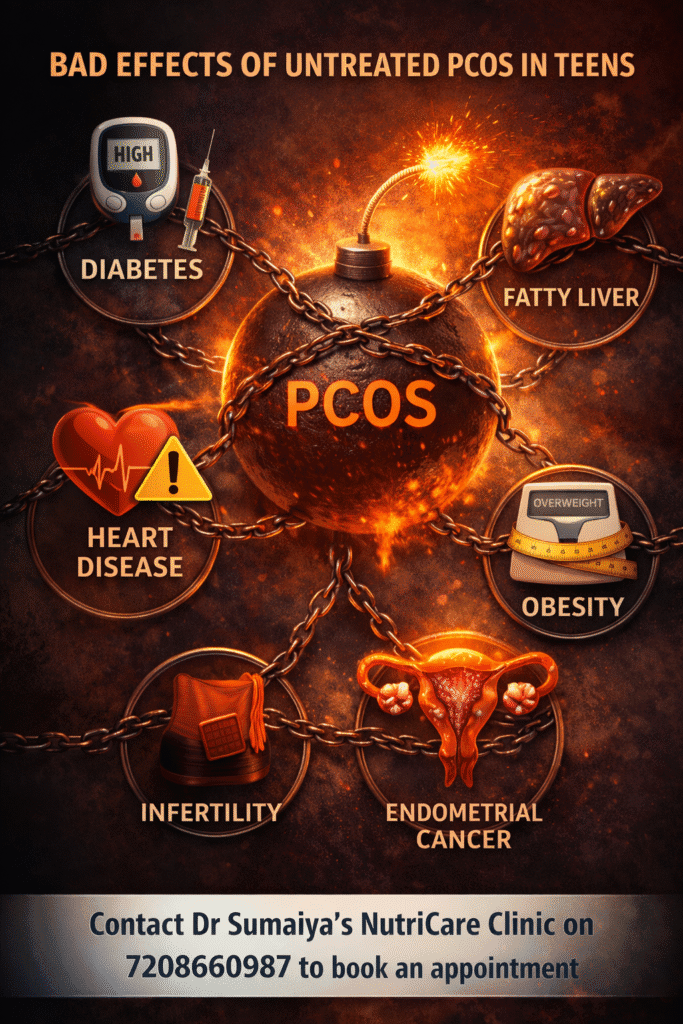
These are the consequences I see in my adult patients who wish someone had caught it earlier. None of them is inevitable. All of them are more likely if the metabolic driver stays unaddressed.
1. A Fast Track to Type 2 Diabetes
Around half of women with PCOS develop prediabetes or type 2 diabetes before the age of 40. When high insulin drives blood sugar up over years, the damage to blood vessels begins early, even if she feels perfectly well.
2. Heart Disease and Stroke
PCOS raises the risk of metabolic syndrome (a cluster of high blood pressure, high triglycerides (blood fats), and low good cholesterol). Carried into adulthood, that cluster is a direct route to heart attack and stroke at an unusually young age. This is one where the teenage years matter most, since cholesterol and blood pressure patterns set early.
3. Infertility Struggles Later
PCOS is the leading cause of ovulation-related infertility. High insulin makes the ovaries produce extra testosterone, and ovulation stops. Correcting this early usually restores regular cycles, which is why adolescent care matters so much.
4. Increased Endometrial Cancer Risk
When periods are skipped for long stretches, the uterine lining builds up without shedding. Across the lifespan, women with PCOS have roughly two to three times the risk of endometrial cancer compared to women without it. Regular periods, or the hormonal protection that supports them, reduce that risk.
5. Mental Health
Adolescents and women with PCOS are up to three times more likely to be diagnosed with depression and anxiety. The hormonal imbalance plays a role, and so does living with weight gain, acne, and unwanted hair growth. Both deserve to be taken seriously.
Why the Band-Aid Approach Falls Short
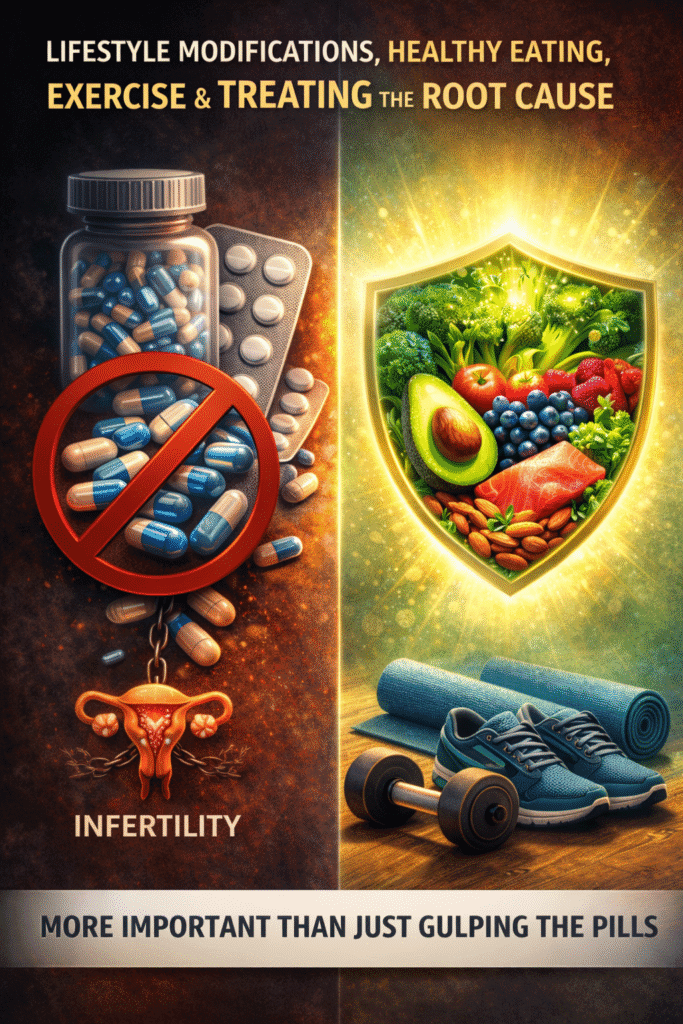
For many teenagers, the first step is an oral contraceptive to regularise bleeding and clear acne. I do not object to that. It gives relief, and it protects the uterine lining when periods stay absent.
But here is the honest part. The pill manages symptoms. It does not fix insulin resistance, and in some patients it can worsen insulin sensitivity and lipid profiles. So once the medication stops, the underlying problem returns, and by then some of the metabolic damage has already accumulated.
The 2023 international evidence-based guideline for PCOS states that lifestyle intervention, meaning diet and physical activity, is the first-line treatment for all women and adolescents with the condition. Medication is added alongside it, not instead of it.
Treating the Root Cause With Food
Food is not just fuel. It is information your body reads to decide how to behave, and for a teenager with PCOS that message is currently sending the wrong signal. This is what a clinical nutrition plan actually changes.
- It reverses insulin resistance. Steadier carbohydrate choices and sensible food pairings prevent the insulin spikes that drive the whole condition.
- It lowers androgens. Specific foods help clear excess male hormones, which is what drives acne, scalp hair thinning, and facial hair.
- It reduces inflammation (the body's ongoing swelling response). A dietary pattern rich in vegetables, nuts, and oily fish calms the ongoing inflammatory process that PCOS sustains.
- It protects bone and growth. Teenage girls are still accumulating bone. Crash dieting and skipped meals are genuinely harmful here, and adequate protein, calcium, and vitamin D are non-negotiable.
What A Day Actually Looks Like
This is not starvation, and I want to be clear about that. It is ordinary food in a sensible order.
| Meal | Simple Indian option | Why it helps |
|---|---|---|
| Breakfast | Two eggs with vegetables, or poha with peanuts and sprouts | Protein at breakfast steadies insulin all day |
| Mid-morning | A fruit with a handful of almonds, or curd | Curdition and calcium for bone |
| Lunch | Dal, a leafy vegetable sabzi, two rotis, and a salad | Vegetables and dal eaten before roti lowers the spike |
| Evening snack | Roasted chana, makhana, or a boiled egg | Stops the late-afternoon sugar craving |
| Dinner | Khichdi with vegetables, paneer or eggs, and dal | Light, protein-led evening meal |
Three habits do most of the work. Eat vegetables and protein before roti and rice, never after.Walk or play for thirty minutes most days. And never use food as a punishment or a conversation enforcer with a teenager, because that reliably makes the problem worse.
How to Start This Conversation With Your Daughter
Parents often tell me they do not know how to raise it. Here is what works.
- Lead with health, not appearance. “Your sleep and energy are suffering” lands very differently from “you need to lose weight.”
- Ask for a blood test, not a lecture. Insulin, HbA1c, thyroid function, and a lipid profile give you facts instead of opinions.
- Change the family’s food, not just hers. A household shift to dal, vegetables, curd, and eggs works far better than one girl’s private diet.
- Protect sleep and activity. Teenagers need 8 to 10 hours. Poor sleep and insulin resistance make each other worse.
- Keep weight off the scale. Growth, puberty, and healthy weight gain are expected at this age. Focus on energy, strength, and cycle regularity.
Explore Related Clinical Guides
- A Family Affair: Helping Your Teen Without the Drama — practical ways to build habits together.
- Weight Loss and Healthy Lifestyle in Managing PCOS — what the evidence supports and what it does not.
- Why You Still Crave Sweets After a Meal — the hidden link to insulin resistance.
- Cracking the Mystery of Hidden Calories — where the extra calories hide in an Indian home.
- 10 Best Fertility Foods — why ovulation health matters long before you plan a family.
- Almond Flour vs Coconut Flour for PCOS — comparing flours on blood sugar response.
Worried About Your Daughter’s PCOS?
Adolescent PCOS is treatable, and the teenage years are when the most is gained. At Dr. Sumaiya NutriCare Clinic we assess her metabolic markers first, then build a family-level nutrition plan she will actually follow.
- Comprehensive Blood & Biomarker Audit (HbA1c, Fasting Insulin, Lipid Ratios, Thyroid and Liver)
- Root-Cause Metabolic Mapping with Cycle and Androgen Assessment
- 100% Customised Indian Meal Protocol with Continuous Monthly Monitoring
In-Clinic at Frazer Town, Bengaluru & Telehealth Pan-India / Globally | Call/WhatsApp: +91 7208660987
Ready to take the first step? Complete our patient history form so the team can review her markers before the visit.
Fill in the patient history form here
Frequently Asked Questions
References
- Teede HJ, et al. 2023 International Evidence-based Guideline for the Assessment and Management of Polycystic Ovary Syndrome. Journal of Clinical Endocrinology and Metabolism. 2023;108(10):2447-69.
- Wild RA, et al. Assessment of Cardiovascular Risk and Prevention of Cardiovascular Disease in Women with the Polycystic Ovary Syndrome: A Consensus Statement. Journal of Clinical Endocrinology and Metabolism. 2010;95(3):899-912.
- Azziz R, et al. Polycystic Ovary Syndrome. Journal of Clinical Endocrinology and Metabolism. 2016;101(3):807-21.
- Barry JA, et al. Risk of endometrial, ovarian and breast cancer in women with polycystic ovary syndrome: a systematic review and meta-analysis. Human Reproduction Update. 2014;20(4):567-76.
- Legro RS, et al. Prevalence and predictors of impaired glucose tolerance in women with polycystic ovary syndrome. Journal of Clinical Endocrinology and Metabolism. 2013;98(3):922-30.
- Cooney LG, et al. High prevalence of moderate and severe depressive and anxiety symptoms in polycystic ovary syndrome. Journal of Clinical Endocrinology and Metabolism. 2017;102(2):604-12.