
Medically Verified & Evidence-Based | Authored by Dr. Sumaiya Petiwala, RD, BUMS, CDE (Registered Clinical Dietitian & Metabolic Health Specialist) | Aligned with ICMR-NIN Clinical Standards | Last Updated: October 2026
Investing in a clinical nutrition program is a wise choice for your health. Many people bring bad habits from social media. They skip meals, avoid good fats, and weigh themselves daily. Medical nutrition therapy works differently. We fix root metabolic stalls. Your body learns to burn fat naturally.
How Do You Get the Best Results on a Clinical Nutrition Program?
Direct Clinical Answer: To get the best results from a clinical nutrition plan, focus on burning deep belly fat while protecting skeletal muscle. Work with your dietitian to match your meals to your blood biomarkers. Eat adequate home-cooked protein, maintain consistent meal timing, and track inch loss rather than just bathroom scale numbers.
5 Ways to Accelerate Your Doctor-Led Program
Follow these core rules to get the best fat loss results:
- 1. Eat Prescribed Meals on Time: Do not skip meals to cut calories. Skipping food spikes stress hormones and stores belly fat.
- 2. Share Daily Symptoms: Tell your dietitian if you feel gas, bloating, or tiredness. These signs help us adjust your meal plan.
- 3. Guard Your Deep Sleep: Sleeping under seven hours raises hunger hormones. This causes intense sugar cravings.
- 4. Never Starve After Parties: If you eat heavy food at a wedding, do not fast the next day. Fasting causes blood sugar crashes.
- 5. Track Inch Loss: Scales cannot tell muscle from fat. Measure waist loss, energy, and clothing fit.
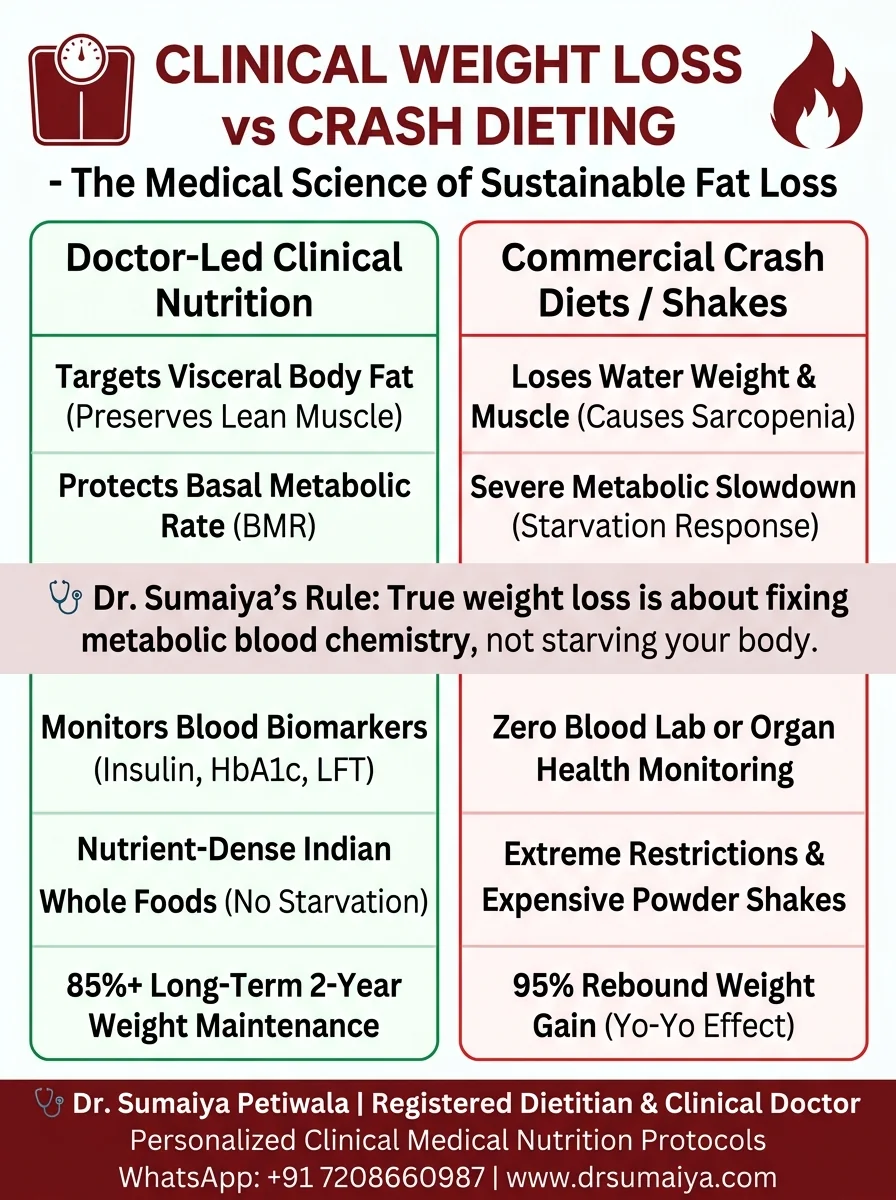
📊 Visual Summary: Clinical Medical Weight Loss vs. Commercial Crash Dieting.
Comparison: Doctor-Led Therapy vs Commercial Fad Diets
See why clinical nutrition creates lasting fat loss while commercial fad diets fail:
| Feature | Doctor-Led Nutrition Therapy | Commercial Crash Diets | Long-Term Outcome |
|---|---|---|---|
| Type of Loss | Burns body fat; protects lean muscle | Drops water and skeletal muscle | Preserving muscle keeps resting metabolism high |
| Metabolic Rate | Protects your baseline calorie burn | Slows down metabolism drastically | Prevents painful weight plateaus |
| Medical Monitoring | Tracks blood tests and organ function | Zero blood work; scale weight only | Resolves underlying medical root causes |
| Meal Approach | Home-cooked Indian dal, roti, sabzi | Synthetic shakes and starvation teas | Fits seamlessly into family routine |
Ready to Transform Your Metabolic Health?
Stop cycling through temporary diets. Work directly with Dr. Sumaiya Petiwala for a clinical nutrition plan that targets abdominal fat and restores your metabolic burn.
Book Clinical Consultation on WhatsApp →Hormonal Drivers of Weight Loss Resistance
Your body fat responds to internal hormones:
- Insulin Roadblocks: High carb intake leads to insulin resistance (where cells do not absorb glucose efficiently). This elevates fasting insulin (a morning blood test measuring baseline insulin levels) and locks fat in cells.
- Deep Belly Fat: Extra sugars turn into visceral fat (deep abdominal fat surrounding internal organs). This directly drives fatty liver (a condition where excess fat accumulates in liver cells exceeding 5% of liver weight).
- Female Hormones: Women with PCOS (polycystic ovary syndrome, a hormonal disorder causing irregular cycles and metabolic strain) face stubborn belly fat that needs careful meal balance.
- Sluggish Gland: A slow thyroid (the butterfly-shaped neck gland regulating body metabolism) slows daily calorie burn. Test TSH (a hormone test for neck gland health) to check your gland speed.
The 50/25/25 Indian Fat-Loss Plate Formula
Structure your lunch and dinner using this proven formula:
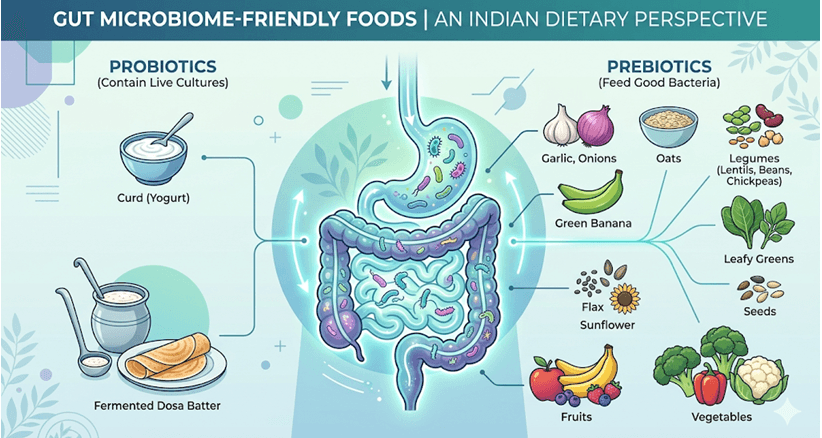
- 50% High-Fiber Sabzi & Salad: Fill half your plate with cucumber, tomato, palak, methi, or cabbage. They supply prebiotic (non-digestible plant fibers that nourish healthy gut bacteria) fuel and prevent overeating.
- 25% High-Quality Protein First: Eat your protein first. Choose paneer, boiled eggs, curd, sprouts, chicken, or fish. Protein shields your muscles and preserves lean mass.
- 25% Smart Complex Carbs: Finish with jowar roti, daliya, or brown rice. These carry a moderate glycemic index (a numerical scale measuring how quickly foods raise blood sugar) to stop postprandial (occurring after a meal) sugar surges.
Add fresh curd for probiotic (beneficial living bacteria that colonize the digestive tract) gut support. Use turmeric and mild spices for antioxidant (compounds that defend cells against oxidative stress) benefits. Avoid fried street snacks to reduce chronic inflammation (cellular immune stress that hinders recovery).
Key Blood Tests to Check During Your Program
Monitor these lab markers to track internal metabolic improvements:
- Long-Term Blood Sugar: Track HbA1c (a 3-month average blood glucose marker) to evaluate glucose control.
- Vascular Health: Check hs-CRP (a blood marker for body inflammation) to monitor stress levels.
- Liver Health Markers: Test SGPT (a liver enzyme measuring cell stress) and SGOT (a liver marker for tissue health) to track liver healing.
- Lipid Profile Markers: Check triglycerides (blood fat molecules formed from excess dietary sugars) and ApoB (a protein test for heart health) for arterial wellness.
The Dr. Sumaiya 3-Step Medical Correction Process
At Dr. Sumaiya NutriCare Clinic, we eliminate guesswork through structured clinical care:
- Step 1: Biomarker Analysis & Metabolic Audit: We review your complete blood panel. We evaluate your visceral fat and daily food habits.
- Step 2: Personalized Indian Nutritional Prescription: We create an easy home meal plan with Indian foods. We calibrate it for safe fat loss.
- Step 3: Weekly Doctor-Led Monitoring: We evaluate your body measurements weekly. We adjust meal portions to keep your energy high.
🌟 Transform Your Health Today
Takes only 60 seconds to get personalized clinical insights.
"Lost 4kgs in one month... plans are simple and effective! She
responds to queries promptly."
– Payal J.
Frequently Asked Questions About Clinical Nutrition Programs
How is a registered dietitian different from a gym trainer or wellness coach?
A Registered Dietitian is a qualified medical expert with clinical hospital training. They read blood tests, manage diabetes, and treat PCOS. They design medical nutrition plans tailored to your body chemistry.
Why does scale weight fluctuate by one kilogram overnight?
Daily scale changes reflect water weight, salt intake, and digestion rather than fat gain. Eating a salty meal or sleeping poorly causes fluid retention. True fat loss takes several weeks of consistent clean eating.
Can I follow my meal plan if I travel for work frequently?
Yes. A practical clinical nutrition plan is flexible. Your dietitian gives you simple food rules for hotel buffets and flights. You will learn how to choose protein and fiber wherever you travel.
How often should I have follow-up consultations with my dietitian?
Weekly or bi-weekly visits are best during the first two months. Regular reviews allow your dietitian to adjust portions, fix digestive issues, and prevent weight plateaus.
What happens after I reach my target weight?
Your dietitian moves you into a maintenance phase. Your food intake is raised gradually while keeping your metabolic rate high. This prevents rebound weight gain and keeps results permanent.