
A few clinical words appear below, so let me define them once. An antioxidant (a compound that protects your cells from damage) is what vitamins C and E act as. Inflammation (the body’s swelling-and-irritation response) is what good food keeps in check. Your microbiome (the vast community of microbes living in your gut) trains much of your immune system. Cytokines (chemical messengers that immune cells use to signal each other) rise and fall with what you eat. The thyroid (the neck gland that sets your energy pace) is one more marker we test when infections keep recurring.
🩺 Quick Clinical Answer: Which Foods Actually Support Immunity?
No single food switches immunity on. Your immune system is built from what you eat every week: amla and guava for vitamin C, dal and seeds for zinc and iron, curd and chaas for gut bacteria, turmeric with pepper, and enough protein at every meal. Add seven to nine hours of sleep, and infections come less often and hit less hard.
What This Guide Covers
- How your immune system is built
- The immunity nutrient shortlist
- A day of immunity-friendly Indian eating
- Your gut: the training ground
- Sleep, stress and sugar
- Supplements: test first
- A seven-day starter plan
- Frequently asked questions
- References
How Your Immune System Is Built
Immunity is not a pill or a seasonal drink. It is a defence network with two layers. The innate layer reacts within minutes to anything unfamiliar. The adaptive layer learns: it remembers each virus it has met and responds faster the next time. Both layers are built from cells, and those cells are built from nutrients.
That is why diet matters, but also why expectations should be realistic. Food cannot prevent every infection. What a well-fed body does is respond faster, recover sooner, and need fewer interventions. Malnourished children get more infections, more severe ones, and recover more slowly. The gap between adequate and poor nutrition is enormous. The gap between adequate and heroic is not.
The Immunity Nutrient Shortlist
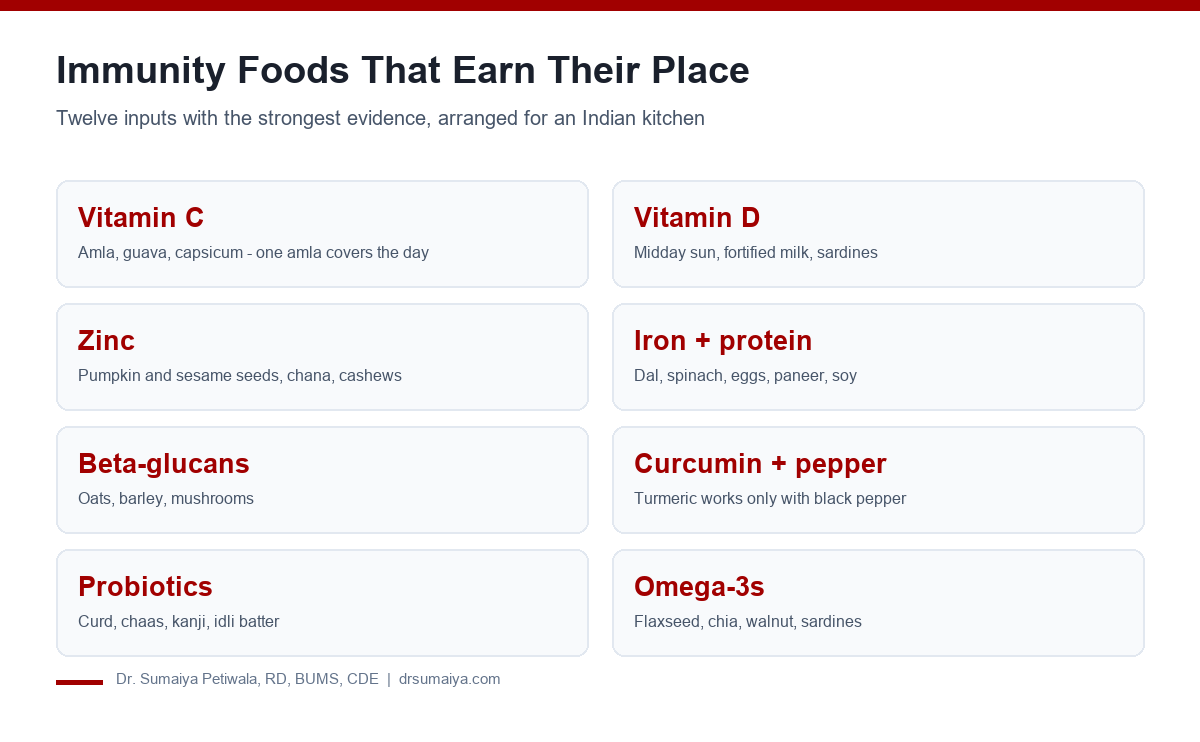
These are the twelve inputs with the strongest evidence behind them, arranged so you can act on them.
Vitamin C: the workhorse
Vitamin C supports white blood cell function and shortens the common cold modestly in people under heavy physical stress. Food sources beat tablets: amla (the richest common source), guava, red and yellow capsicum, kiwi, and oranges. One amla or one guava a day covers most adults. Raw or lightly cooked is best, because heat destroys vitamin C.
Vitamin D: the regulator
Vitamin D calms overactive immune responses and supports the cells that patrol your airways. Most Indians are low, especially in winter and in indoor jobs. Twenty minutes of midday sun on arms and face helps, along with fortified milk, sun-dried mushrooms, and fatty fish such as sardine and mackerel. Test before you supplement, because dose depends on your level.
Zinc: the antiviral shield
Zinc is essential for T-cell development, the cells that learn and remember viruses. Low zinc shows up as slow-healing wounds, frequent colds, and loss of taste. Pumpkin seeds, sesame seeds, chickpeas, cashews, and lentils are the kitchen sources. Soaking seeds overnight improves absorption.
Iron and protein: the builders
Immune cells multiply fast during infection, and both iron and protein set the pace of that multiplication. Dal, spinach, chana, and ragi cover iron; eggs, curd, paneer, dal, and soy cover protein. Pair plant iron with lemon or amla, and keep tea an hour away from meals. I explain the food-versus-powder question in my guide to natural protein sources over supplements.
The supporting cast
| Compound | Kitchen sources | What it does |
|---|---|---|
| Beta-glucans | Oats, barley, mushrooms (reishi, shiitake) | Primes scavenger immune cells |
| Curcumin | Turmeric, paired with pepper and fat | Calms inflammation signals |
| Gingerols | Fresh ginger, dried saunth | Soothes throat, eases nausea |
| Catechins | Green tea, cocoa, apple skin | Antioxidant, mild antiviral |
| Quercetin | Red onion, apple skin, berries, capers | Stabilises mast-cell reactions |
| Sulforaphane | Broccoli, cabbage, kale, sprouts | Boosts the body’s own detox enzymes |
| Omega-3 fats | Flaxseed, chia, walnut, sardines | Resolves inflammation after infection |
| Selenium | Brazil nuts (one is enough), sunflower seeds, eggs | Reduces viral virulence |
A Day of Immunity-Friendly Indian Eating
Plans fail when they need special ingredients. This one uses your regular kitchen.
- Breakfast: vegetable poha with lemon and peanuts, or curd with fruit and ground flaxseed. The lemon covers your morning vitamin C.
- Mid-morning: one guava or a handful of soaked almonds instead of biscuits. That is a swap, not an addition.
- Lunch: dal, sabzi, roti, and a katori of salad with lemon. Finish with a small bowl of curd or a glass of chaas.
- Evening snack: roasted chana or pumpkin seeds, plus green tea if you like it. This is where most people raid sugar, and where a planned snack earns its keep.
- Dinner: lighter and early. Add turmeric and black pepper to the sabzi, and ginger to the dal. Two hours before bed.
Your Gut: The Training Ground
Roughly seventy percent of your immune tissue sits around your gut. The microbes there teach immune cells what to ignore and what to attack. Feed the bacteria well and they keep inflammation in check; starve them with ultra-processed food and the teaching goes wrong.
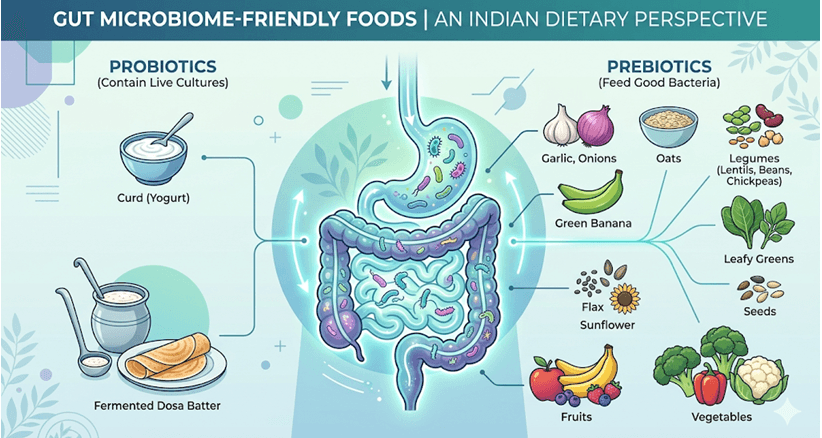
Two words matter here. Probiotics (live helpful bacteria in fermented food) come from curd, chaas, kanji, and idli batter. Prebiotics (the fiber that feeds those bacteria) come from onion, garlic, banana, oats, and cooked-and-cooled rice. You need both, and Indian kitchens already carry them. I list the best options in my guide to gut microbiome friendly foods.
Sleep, Stress and Sugar
Three non-food levers move immunity as much as food does. Sleep is the biggest: seven to nine hours is when your body releases infection-fighting signals and consolidates immune memory. Chronic stress raises cortisol, which suppresses immune surveillance. And a high-sugar meal temporarily slows white blood cell activity for a few hours after eating, which is one more reason sweets belong at meals, not between them. The food side of sleep is covered in my guide to eating for better sleep.
Supplements: Test First
Supplements fix tested gaps; they do not upgrade a working system. Vitamin D, B12, and iron are the three deficiencies we confirm most often on blood reports, and correcting a genuine deficiency changes how often a patient falls ill. Self-prescribing is where it goes wrong: fat-soluble vitamins accumulate in the liver, and excess zinc or iron carries real risks. Match the supplement to the report, not the advertisement. I break this down in take these vitamins if you have these diseases.
A Seven-Day Starter Plan
- Day 1: buy amla, guava, and lemon for the week. Fruit bowl goes where the biscuit tin was.
- Day 2: soak pumpkin seeds overnight; roast a batch for the week.
- Day 3: add one katori of curd or one glass of chaas at lunch.
- Day 4: put turmeric and black pepper in the evening sabzi, and ginger in the dal.
- Day 5: swap biscuits for roasted chana at the evening slump.
- Day 6: fix a bedtime alarm for 10:45 pm. Screens off before it rings.
- Day 7: book the pending blood tests: vitamin D, B12, hemoglobin. Supplement to the report, not the shelf.
Falling Ill Too Often?
Frequent infections deserve a cause, not a potion. At Dr. Sumaiya NutriCare Clinic we audit your blood report, diet, sleep, and gut first, then build an immunity plan around what your body is actually missing.
- Comprehensive Blood & Biomarker Audit (vitamin D, B12, iron studies, blood sugar, thyroid)
- Root-Cause Assessment with Diet Recall and Infection History
- 100% Customised Indian Meal Protocol with Continuous Weekly Monitoring
In-Clinic at Frazer Town, Bengaluru & Telehealth Pan-India / Globally | Call/WhatsApp: +91 7208660987
Frequently Asked Questions
References
- Hemila H. Vitamin C and Infections. Nutrients. 2017;9(4):339. PMID 28353648
- Artusa P, White JH. Vitamin D and its analogs in immune system regulation. Pharmacological Reviews. 2025. PMID 40148037
- Kogan S, Sood A, Garnick MS. Zinc and Wound Healing: A Review of Zinc Physiology and Clinical Applications. Wounds. 2017;29(4):102-106. PMID 28448263
- Molecular Mechanisms of Gut Microbiota-Immune System Crosstalk: From Mucosal Architecture to Adaptive Immunity. Int J Mol Sci. 2026. PMID 42511589
- Indian Council of Medical Research – National Institute of Nutrition. Recommended Dietary Allowances for Indians. Hyderabad: NIN.