🩺 Quick Clinical Answer: What Are the Best Foods for Fertility?
The best fertility foods are everyday whole foods: eggs, leafy greens, lentils, curd, berries, nuts, seeds, avocado, oats, and yogurt. Folic acid, iron, vitamin B12, vitamin D, and healthy fats matter most. Fix insulin resistance (when your cells stop responding properly to insulin) and thyroid (the neck gland that sets your metabolism) first.
Ten foods come up in nearly every fertility clinic I run. Eggs, dal, sabzi, curd, nuts, and seeds. Patients usually arrive carrying a long list of expensive powders, then open the cupboard to show me what they already bought. The good news is simple. The foods that help most are foods they already know.
Let me be honest about what food can and cannot do. Diet supports fertility. It cannot override age. It cannot clear a blocked fallopian tube. But high blood sugar, low iron, and thyroid disease are common and correctable. Each one can quietly stop ovulation. Fix those first.
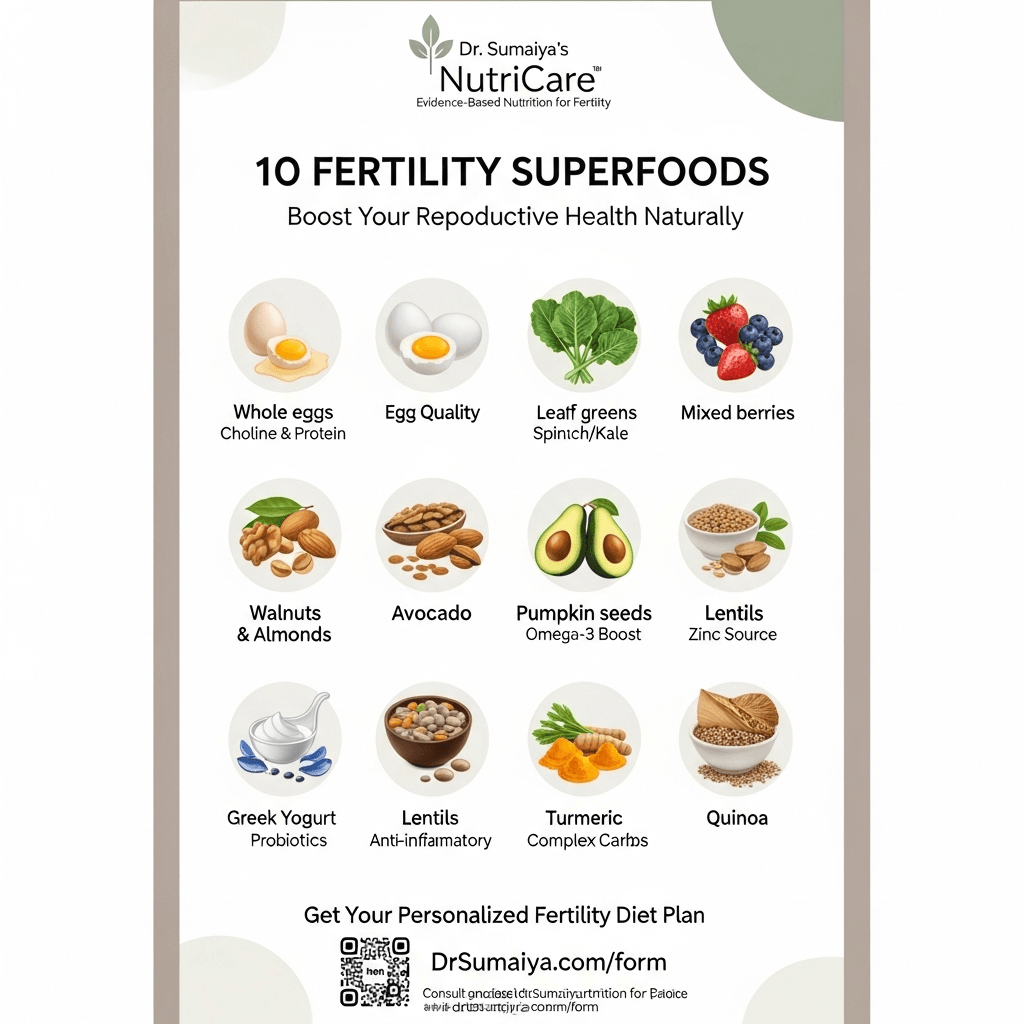
Table of Contents
- What Actually Influences Fertility
- The 10 Foods Compared Side by Side
- The Nutrients That Matter Most
- The Blood Numbers Worth Knowing
- Your Indian Preconception Plate
- What To Cut Back On
- When To See A Doctor
- Frequently Asked Questions
What Actually Influences Fertility
Four things drive most of what I see in clinic. Knowing them changes the plan you build.
- Blood sugar control. When insulin resistance (when your cells stop responding properly to insulin) runs high, the ovaries make extra male hormones. That can stop ovulation even when periods look regular.
- Hormone health. Your thyroid (the neck gland that sets your metabolism) steers ovulation. Underactive thyroid is common in women and is easy to test for.
- PCOS (polycystic ovary syndrome). The most common cause of irregular ovulation. It responds well to food changes, which is why this guide matters to so many of you.
- Both partners. Sperm health responds to diet too. A woman cannot conceive alone, so I always ask the man in the room to eat well as well.
Chronic inflammation (the body’s long-running swelling and repair response) ties these together. Antioxidants (protective compounds in food that guard cells from wear) help keep it in check. That is why the foods below all look colourful on purpose.
No food list creates an egg. Egg quality is mostly set by age, and no supplement overrides that. What food does is fix the correctable parts: iron, vitamin D, blood sugar, thyroid status, and weight. Those genuinely change your odds.
The 10 Foods Compared Side by Side
Here is the short version. Each food below earns its place for a specific reason, and each has a practical Indian source.
| Food | Key nutrient | Best Indian swap | Daily amount |
|---|---|---|---|
| Whole eggs | Choline, protein, B12, vitamin D | Boiled eggs, egg bhurji | 1 to 2 |
| Leafy greens | Folate, iron, vitamin K | Palak, methi, moringa, drumstick leaves | 2 to 3 cups |
| Lentils and chickpeas | Folate, iron, protein, fiber | Dal, chana, rajma | 1 to 2 servings |
| Curry leaves and moringa | Folate, vitamin C | Fresh in dal and chutney | A weekly handful |
| Berries | Vitamin C, antioxidants | Fresh or frozen with curd | 1 serving |
| Walnuts and almonds | Omega-3, vitamin E, selenium | 5 soaked almonds, 2 walnut halves | 28 to 56 g |
| Seeds | Zinc, selenium, vitamin E | Pumpkin, sunflower, sesame | 2 to 3 tbsp |
| Avocado | Folate, monounsaturated fat | Half an avocado on toast | Half, most days |
| Plain curd | Protein, calcium, probiotics | Homemade curd, no sugar | 1 bowl |
| Oats and quinoa | Fiber, magnesium, B vitamins | Oats upma, kichdi with quinoa | 1 serving |
1. Whole Eggs
One large egg gives you about 147 mg of choline against a daily target of 425 mg. Choline (a nutrient your brain and liver depend on) matters for cell division as a baby grows. Eggs also give you clean protein, vitamin B12, vitamin D, and choline in one small package.
The protein is useful for a second reason. It steadies your blood sugar after a meal, and steady blood sugar supports ovulation. Have one or two eggs most days. Boiled, as bhurji, or in a vegetable omelet all work.
2. Leafy Greens
Palak, methi, moringa, and drumstick leaves are folate powerhouses. One cup of raw spinach holds roughly 58 mcg of folate. Folate (vitamin B9, the form that builds DNA) is what lowers the risk of birth defects.
These greens also bring iron, magnesium, and calcium. Add two to three cups a day. Throw them into dal, make a methi chutney, or add a handful to your morning smoothie.
3. Lentils and Chickpeas
A cup of cooked dal holds about 358 mcg of folate, close to a full day’s share. It also brings plant protein, iron, and fiber. Low iron is one of the most common correctable causes of poor ovulation, so dal deserves a place on every plate.
One or two servings a day works well. Have dal at lunch, and add chickpeas to a salad or a chana chaat at snack time.
4. Berries
Blueberries, strawberries, and raspberries are dense in vitamin C and antioxidants. The vitamin C helps you absorb iron from dal and spinach, which makes both foods work better together.
One serving a day is enough. Frozen berries keep their nutrition and cost less, so use them freely through curd and oats.
5. Walnuts and Almonds
Walnuts carry an omega-3 fat called ALA (alpha-linolenic acid, a plant omega-3 your body converts as needed). Almonds are rich in vitamin E. Both hold selenium, which matters for sperm and egg cell protection.
Aim for 28 to 56 g a day. That is about five soaked almonds and two walnut halves. Soaking improves the digestion of the phytates in the skin.
6. Seeds
Pumpkin seeds carry zinc, which supports progesterone production and the second half of your cycle. Sunflower seeds are unusually high in vitamin E. Sesame, flax, and chia add more omega-3 and calcium.
Two to three tablespoons a day is plenty. Sprinkle them over curd, add them to a salad, or mix into a dry fruit and seed trail mix for a snack.
7. Avocado
Half an avocado covers close to 30 percent of your daily folate. Its healthy fat helps you absorb vitamin E and vitamin K from the vegetables on the same plate.
Add half to toast, a salad, or a smoothie most days. Avocado is handy, but it is also calorie dense, so keep it to half an apple of size rather than a whole one.
8. Plain Curd and Fermented Foods
Plain curd brings protein, calcium, and probiotics (live bacteria that settle in the gut and support digestion and immunity). Full-fat versions are fine here. Your body needs dietary fat to build hormones.
One bowl a day. Skip the fruit-flavoured ones, which carry added sugar. Add idli, dosa, or pickles to the mix for more live cultures.
9. Turmeric
Turmeric holds curcumin, a compound studied for lowering inflammation and oxidative stress in conditions like endometriosis. Add one to two teaspoons to your cooking, or take it as golden milk at bedtime.
Add a pinch of black pepper with it. That single step raises how much curcumin your body actually absorbs.
10. Oats and Quinoa
Oats and quinoa bring fiber, magnesium, and B vitamins. The fiber slows how fast glucose enters your blood, which steadies insulin through the day. Quinoa adds a complete plant protein.
One serving a day is enough. Oats upma at breakfast or a quinoa and vegetable kichdi at lunch both fit easily into an Indian week.
The Nutrients That Matter Most
Food matters more than supplements. These four nutrients carry the weight, and each one has a food you can eat daily.
| Nutrient | Daily target | Best sources |
|---|---|---|
| Folic acid (folate) | 400 mcg daily | Greens, dal, chickpeas, oranges, fortified rice |
| Iron | 18 mg daily | Dal, spinach, jaggery, dates, eggs |
| Vitamin D | 600 IU, more if deficient | Egg yolks, fatty fish, fortified milk, sunlight |
| Omega-3 | 1 to 2 g daily | Walnuts, chia, flaxseed, salmon, sardines |
Start folic acid before you conceive, not after. A high dose of 4 mg is reserved for women with a previous neural tube defect pregnancy, diabetes, or a family history, and it must be prescribed by your doctor.
Iron deserves a closer look. Many women who feel tired before their period are simply low, and low iron can stop ovulation. Get a ferritin test, not only a haemoglobin test, since ferritin drops before haemoglobin does.
The Blood Numbers Worth Knowing
Before I build any plan, I ask for these five values. They take one blood draw and reveal more than a food diary ever will.
- HbA1c (your average blood sugar over roughly three months). Under 5.7 percent is the usual target. Anything above 6.5 points to diabetes and warrants medical treatment.
- Fasting insulin (your insulin level after an overnight fast). This often climbs years before HbA1c does, so it is the earliest sign that your diet needs work.
- Ferritin and haemoglobin. Ferritin below 30 ng per mL is low for a woman planning a pregnancy, even when haemoglobin looks normal.
- Thyroid function, starting with TSH (the main blood test for thyroid activity) and free T4. An underactive thyroid disrupts ovulation and can raise miscarriage risk.
- Vitamin D and vitamin B12. Both are commonly low, and both affect egg quality and energy.
Test once now, then repeat every six months while you are trying. Trends matter far more than a single reading.
Your Indian Preconception Plate
You do not need to buy anything new. An Indian kitchen already has every food on this list. What you need is the plate rule.
Fill half the plate with vegetables and salad. Add one quarter protein, such as dal, eggs, paneer, or curd. Use the last quarter for rice, roti, or quinoa.
- Eat vegetables first, then dal, then rice. That order blunts the post-meal sugar spike without changing a single ingredient.
- Never skip protein at breakfast. A protein-heavy breakfast flattens your appetite all day.
- Add a spoon of ghee or olive oil to a dry sabzi. Fat helps you absorb vitamins A, E, and K.
- Pair every iron food with vitamin C. A squeeze of lemon on dal boosts uptake several times over.
- Drink 8 to 10 glasses of water across the day. Keep a bottle at your desk.
Prepare twice a week. Batch-cook dal and quinoa on Sunday, then build lunches and snacks from them. That is what makes the plan survive a busy week.
A One-Week Sample Plan
| Meal | Simple Indian option |
|---|---|
| Breakfast | Two boiled eggs, oats upma with palak, or an idli with cooked egg and sabzi |
| Mid-morning | One orange or a guava with five soaked almonds and two walnuts |
| Lunch | Dal, a methi and vegetable sabzi, one or two rotis, and a salad |
| Evening snack | Curd with pumpkin seeds and a fruit, or a boiled egg with salad |
| Dinner | Khichdi or quinoa and vegetable bowl, paneer or eggs, and a bowl of dal |
What To Cut Back On
Cutting matters as much as adding. These are the ones that show up again and again in my clinic.
- Packaged snacks and fried items. They spike your blood sugar, and high insulin drives the hormonal shifts that block ovulation.
- Sugar drinks and sweetened curd. Liquid sugar reaches your blood fastest of all. This is the easiest first swap for many families.
- Refined flour in large amounts. Keep roti and rice in sensible portions. You do not need to remove them.
- Excess tea and coffee. Stay within about two cups a day. More than that is linked to lower fertility and disturbed sleep.
- High-mercury fish. Limit tuna, swordfish, and shark during preconception and pregnancy.
- Unnecessary supplements. Excess vitamin A in retinol form is harmful in pregnancy. Take what your doctor recommends and no more.
When To See A Doctor
Nutrition helps, but some problems need investigation rather than a food swap. Do not wait if any of these apply to you.
- You have been trying for 12 months if you are under 35, or 6 months if you are 35 or older.
- Your periods are irregular, very heavy, or have stopped.
- You have PCOS (polycystic ovary syndrome), endometriosis, fibroids, or thyroid disease.
- You have had a miscarriage or a pregnancy with complications before.
- Your partner has any fertility concern, or you know of a blocked tube or low sperm count.
Book a basic fertility workup rather than spending another six months on supplements. It takes one cycle of blood tests for both partners, and it can save years.
Explore Related Clinical Guides
- The Role of Weight Loss and Healthy Lifestyle in Managing PCOS — why blood sugar control is the first target for ovulation.
- Why Ignoring Your Teen’s PCOS Could Cost Her Future Health — early signs and what to do now.
- Iron Absorption: The Complete Evidence-Based Guide — how to absorb more iron from dal, greens, and jaggery.
- Omega-3 Fatty Acids: Sources and Daily Needs — simple Indian sources and how much you actually need.
Trying To Conceive Or Preparing For Pregnancy?
Fertility is not a food problem alone. At Dr. Sumaiya NutriCare Clinic we test your hormone and nutrient markers first, then build a preconception plan around an Indian kitchen that you will actually follow.
- Comprehensive Blood & Biomarker Audit (HbA1c, Fasting Insulin, Ferritin, Thyroid, Vitamin D and B12)
- Root-Cause Metabolic Mapping with Cycle and Ovulation Assessment
- 100% Customised Indian Meal Protocol with Continuous Monthly Monitoring
In-Clinic at Frazer Town, Bengaluru & Telehealth Pan-India / Globally | Call/WhatsApp: +91 7208660987
Ready to take the first step? Complete our patient history form so the team can review your markers before your visit.
Fill in your patient history form here
Frequently Asked Questions
References
- Salas-Huetos A, et al. Women’s Adherence to Healthy Dietary Patterns and Outcomes of Infertility Treatment. JAMA Network Open. 2023. https://jamanetwork.com/journals/jamanetworkopen/fullarticle/2808489
- MRC Vitamin Study Research Group. Prevention of neural tube defects: results of the Medical Research Council Vitamin Study. Lancet. 1991;338:131-37.
- American College of Obstetricians and Gynecologists. Practice Bulletin No. 187: Neural Tube Defects. Obstetrics & Gynecology. https://journals.lww.com/greenjournal/fulltext/10.1097/aog.0000000000002412~practice-bulletin-no-187-neural-tube-defects
- Baroutis D, et al. The Role of the Mediterranean Diet in Assisted Reproduction. 2024. https://pmc.ncbi.nlm.nih.gov/articles/PMC11356935/
- United States Department of Agriculture. FoodData Central. Nutrient values for eggs, legumes, nuts, seeds, and leafy greens. https://fdc.nal.usda.gov/
- Indian Council of Medical Research. Recommended Dietary Allowances for Indians. National Institute of Nutrition, Hyderabad.

Post navigation
Previous Post
 Beet the Odds: A Therapeutic Superfood Backed by Science