
Medically Verified & Evidence-Based | Authored by Dr. Sumaiya Petiwala, RD, BUMS, CDE (Registered Clinical Dietitian & Metabolic Health Specialist) | Aligned with ICMR-NIN Clinical Standards | Last Updated: October 2026
Fasting during the holy month of Ramadan is a spiritual pillar. It is also an unmatched hormonal reset. Yet many people feel tired, foggy, and gain weight. Why does this happen? The problem lies in fried evening foods and poor hydration. At Dr. Sumaiya NutriCare Clinic, we show you how to unlock true metabolic repair through smart nutrition.
How Does Fasting Trigger Hormonal Fat Burning and Mental Focus?
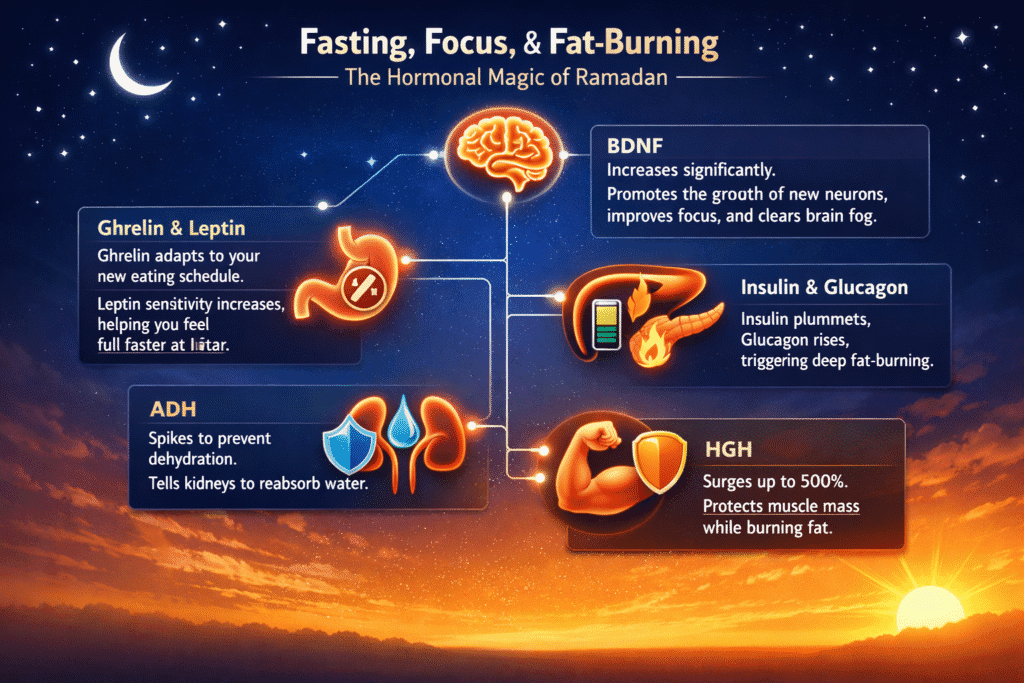
Direct Clinical Answer: Fasting prompts a major hormonal shift after ten to twelve hours without food. Circulating insulin drops steeply. This drop opens fat cells to burn stored lipids for fuel. Growth hormone rises to guard lean muscle. Brain signaling proteins increase to sharpen focus. Balanced meals at dawn and sunset ensure safe cellular repair.
4 Key Hormonal Shifts During Daily Fasting
Daily fasting alters your endocrine system in four distinct ways:
- 1. Falling Insulin Levels. Blood glucose dips as the body clears meal energy. This lowers fasting insulin (a morning blood test measuring baseline insulin levels). Low insulin reverses insulin resistance (where cells do not absorb glucose well). It allows your liver to tap into stubborn visceral fat (deep belly fat packed around internal organs). Over thirty days, this improves your HbA1c (a 3-month average of blood sugar levels).
- 2. Growth Hormone Surge. During fasting hours, human growth hormone climbs. This vital hormone prevents muscle loss. It directs fat burning toward energy production while preserving physical strength.
- 3. Norepinephrine and Cognitive Clarity. The nervous system releases norepinephrine. This chemical sharpens attention and alertness. It dispels midday mental haze when you stay hydrated between dusk and dawn.
- 4. Autophagy and Cellular Clean-Up. By hour fourteen of fasting, cells sweep out damaged proteins. This natural renewal tames systemic inflammation (cellular immune stress that harms tissues). It shields the liver from fatty liver (a condition where fat builds up inside liver cells) and NAFLD (non-alcoholic fatty liver disease, a condition with excess liver fat). It lowers SGPT (a liver enzyme showing hepatic irritation) and SGOT (a liver enzyme released during cell damage). It also curbs blood triglycerides (blood fats tied to insulin levels).
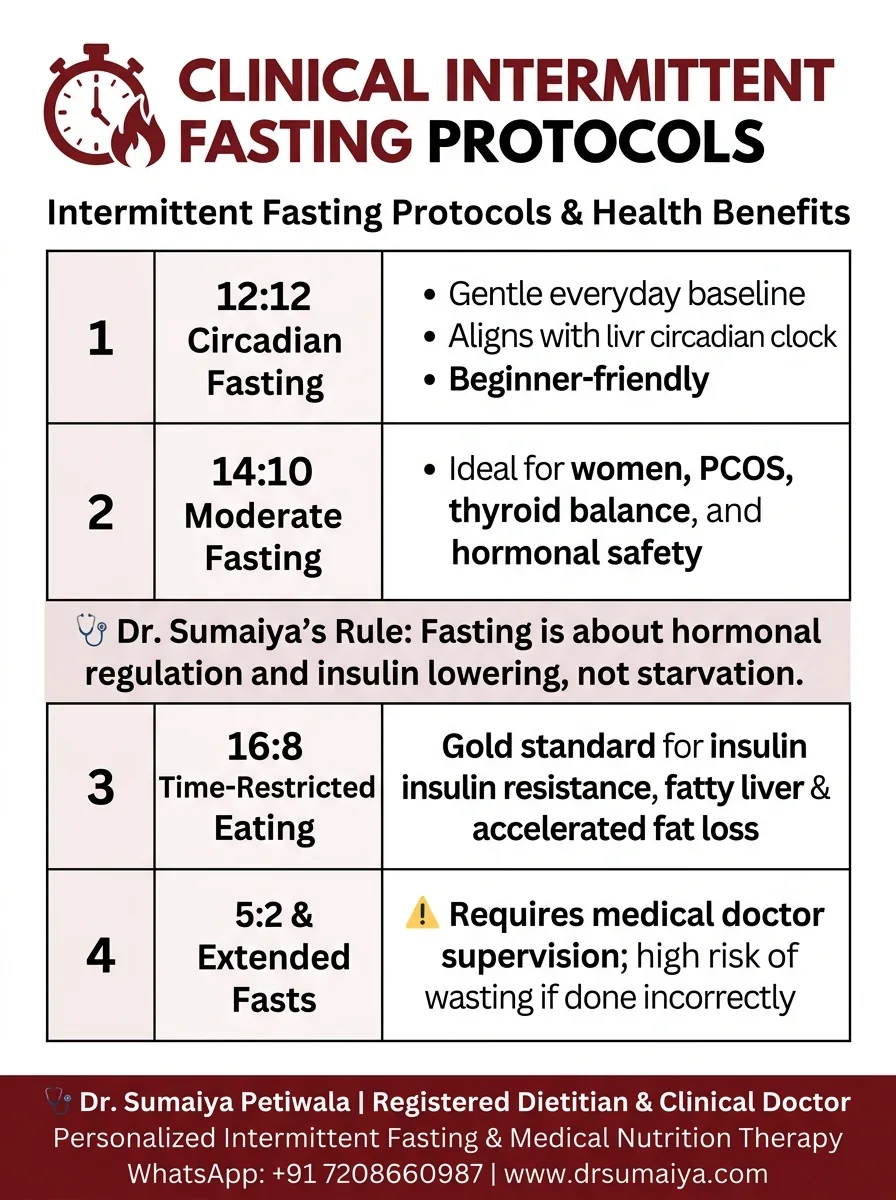
📊 Hormonal Fasting Chronobiology: Insulin Decline, Lipolysis, and Autophagy Phases.
Protecting Glandular Pace and Energy During Fasting
Improper fasting with poor calorie intake can harm your metabolism:
- Glandular Hormone Conversion. Severe under-eating slows down your thyroid (the neck gland that controls how fast your body burns energy). Doctors track this with TSH (a blood test that checks your thyroid pace). Balanced meals at Suhoor prevent metabolic slowdown.
- Reversing Metabolic Complications. Done correctly, Ramadan fasting helps reverse metabolic syndrome (a cluster of conditions like high blood sugar and belly fat). It also eases hormonal symptoms in women with PCOS (polycystic ovary syndrome, a hormonal imbalance).
Comparison: Deep Fried Feasting vs Clinical Hormonal Protocol
See how typical evening overeating compares with a doctor-guided fasting method:
| Fasting Practice | Fried Feasting Habits | Dr. Sumaiya Clinical Protocol |
|---|---|---|
| Iftar Meal Order | Fried snacks. Sugary drinks. White sweets. | Water and one date. Clear soup. Protein first. |
| Hormone Response | Sharp blood sugar surges. Sudden fat storage. | Gentle glucose curves. Sustained fat burning. |
| Energy During Fast | Severe fatigue. Headaches. Heavy afternoon fog. | High mental focus. Calm steady vitality. |
| Weight Outcome | Post-Ramadan weight gain. Bloating. | Pure fat loss. Preserved lean muscle mass. |
Optimize Your Ramadan Health with Doctor-Led Nutrition
Do not let poor meal choices drain your energy during fasting. Learn how to balance Suhoor and Iftar to burn fat and maintain peak physical strength. Consult Dr. Sumaiya Petiwala today.
Book Clinical Consultation on WhatsApp →The 50/25/25 Indian Plate Rule for Suhoor and Iftar
Structure your meals using this proven clinical breakdown:
- 50% High-Fiber Vegetables. Fill half your plate with cucumber, palak, methi, tomatoes, or stewed zucchini. These supply prebiotic (plant fibers that nourish good gut bacteria) food. They also deliver rich antioxidant (plant defense compounds that protect gut lining) protection to reduce cellular stress.
- 25% Clean Protein First. Eat protein early in the meal. Choose boiled eggs, grilled chicken, paneer, fish, or thick dal. Protein keeps you full during long fasting hours.
- 25% Complex Smart Grains. Finish with whole jowar roti, oats, or brown rice. These carry a low glycemic index (a scale measuring how fast foods raise blood sugar) and modest glycemic load (a ranking system for carbohydrate content and blood sugar impact). This prevents rapid postprandial (occurring after a meal) sugar crashes.
Add a small bowl of fresh home-set curd for probiotic (live good bacteria that aid digestion) gut support. Drink two liters of water between Iftar and Suhoor to stay properly hydrated.
The Dr. Sumaiya 3-Step Medical Correction Process
At Dr. Sumaiya NutriCare Clinic, we guide you through three clear stages:
- Step 1: Biomarker Analysis & Health Audit. We review blood sugar, kidney function, and liver health to ensure safe fasting.
- Step 2: Personalized Indian Fasting Prescription. We design an easy home meal plan with local foods for Suhoor and Iftar.
- Step 3: Clinical Pacing & Weekly Monitoring. We track hydration, energy levels, and fat loss across the entire fasting month.
🌟 Transform Your Health Today
Takes only 60 seconds to get personalized clinical insights.
"Lost 4kgs in one month... plans are simple and effective! She
responds to queries promptly."
– Payal J.
Frequently Asked Questions About Hormonal Fasting
Why do I feel extreme fatigue after eating Iftar?
Post-Iftar fatigue happens when high-glycemic fried foods or sugary drinks trigger a sudden blood sugar surge followed by a rapid glucose crash.
What is the ideal food to eat at Suhoor to prevent hunger?
A balanced meal of eggs or paneer with rolled oats or jowar roti and a small bowl of curd provides sustained energy and prevents mid-day hunger.
Can fasting cause loss of muscle tissue instead of fat?
No. Elevated human growth hormone shields lean muscle during fasting, provided you consume sufficient protein during non-fasting hours.
How many dates should a person eat to break their fast?
One or two small dates are sufficient to restore blood glucose without causing an excessive postprandial glycemic surge.
Is Ramadan fasting safe for patients with thyroid disorders?
Yes. As long as thyroid medication timing is properly adjusted and meals supply adequate protein and micronutrients, fasting remains completely safe.