
🩺 Medically Verified & Evidence-Based | Authored by Dr. Sumaiya Petiwala, RD, BUMS, CDE (Registered Clinical Dietitian & Certified Diabetes Educator). Updated: September 2026.
🩺 Quick Clinical Verdict: Debunking Common Diet Myths
Pervasive diet myths—such as zero-fat diets, detox teas, and skipping meals—sabotage metabolic health by causing hormonal disruption, muscle wasting, and severe rebound overeating. Clinical Warning: Eliminating dietary fats impairs steroid hormone production and blocks fat-soluble vitamin absorption. Dr. Sumaiya’s Recommendation: Avoid unscientific fad restrictions. Sustainable fat loss and longevity require balanced Indian whole foods, essential lipids, and consistent meal timing.
In the era of social media wellness influencers and viral marketing, nutrition misinformation spreads faster than clinical truth. Millions of well-intentioned individuals in India trap themselves in punishing diet cycles—starving themselves, cutting out entire macronutrient groups, drinking unverified ‘detox’ mixtures, and fearing wholesome natural foods.
As a clinical doctor and registered dietitian, I encounter the physiological consequences of these myths every single week in my consultation clinic: severe hormonal imbalances, amenorrhea in young women, elevated cortisol, fatty liver progression, and completely exhausted metabolic rates. Let us dismantle the seven most damaging diet myths with rigorous nutritional biochemistry.
| Dietary Topic | Pervasive Social Media Myth | Dr. Sumaiya’s Clinical Evidence |
|---|---|---|
| Dietary Fats | “All fats make you fat and clog arteries; switch to boiled zero-fat meals” | Essential lipids are mandatory for steroid hormones, vitamin A/D/E/K uptake & gall bladder motility |
| Meal Skipping | “Skipping breakfast or lunch is an effortless shortcut to burn body fat faster” | Spikes cortisol, drives muscle protein catabolism, and triggers uncontrollable nighttime binges |
| Detoxification | “Commercial detox teas, green juices, and 7-day cleanses flush out bodily toxins” | Your liver and kidneys are continuous 24/7 detox organs; detox teas are dangerous stimulant laxatives |
| Fresh Fruits | “Avoid all sweet fruits like mangoes and bananas because fructose causes diabetes” | Whole fruits contain protective pectin fiber, polyphenols, and water that moderate glycemic absorption |
| Long-Term Outcome | Yo-yo weight regain, gallstones, hair thinning, and metabolic burnout | Permanent metabolic flexibility, preserved lean muscle mass, and vibrant clinical markers |
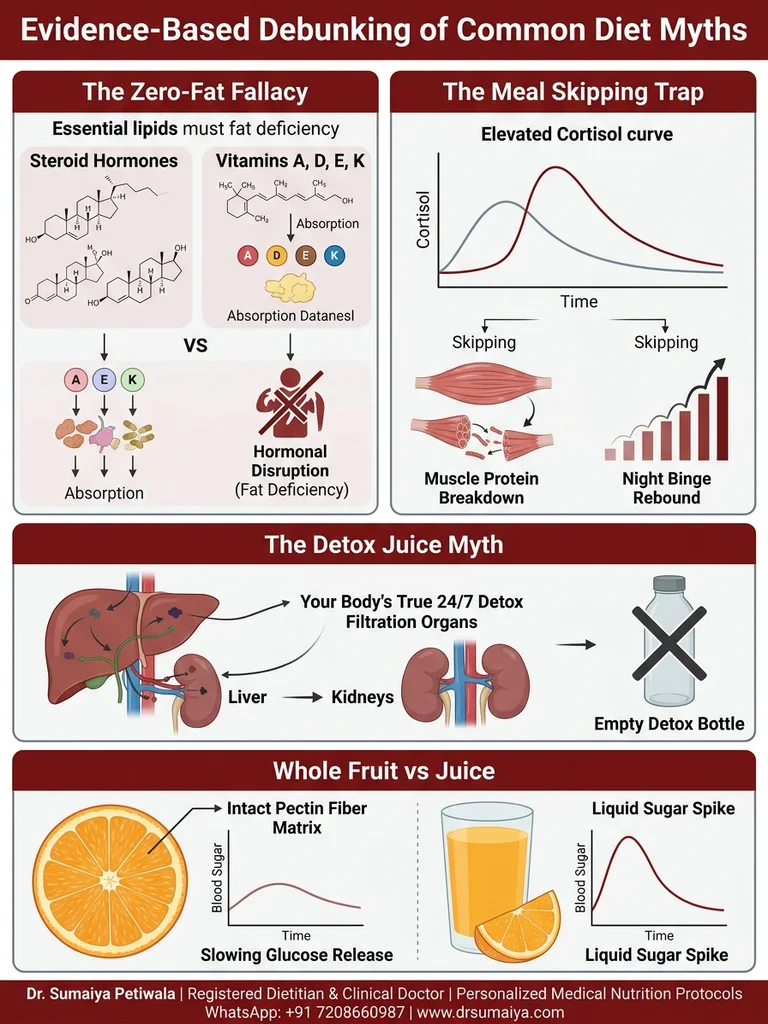
📊 Visual Summary: The Zero-Fat Fallacy, Cortisol Spikes, Liver Detox Reality & Whole Fruit Fiber.
🔍 4 Truths of Clinical Nutrition Science
1. Fats Build Hormones
Dietary lipids synthesize steroid hormones (estrogen, testosterone, progesterone) and absorb vitamins.
2. Starvation Slows T3
Skipping meals suppresses thyroid hormone conversion, dropping your daily resting metabolic expenditure.
3. Organs Detox 24/7
Your hepatic cytochrome P450 enzymes and nephrons filter wastes. Commercial cleanses are marketing gimmicks.
4. Whole Fruit ≠ Sugar
The physical pectin fiber structure traps fruit fructose, ensuring slow, steady intestinal absorption.
The 7 Most Dangerous Diet Myths Exposed
Myth 1: “A Zero-Fat Diet Is the Healthiest Way to Lose Weight”
The Clinical Fact: Your body cannot survive without essential fatty acids. Dietary lipids are required for steroid hormone synthesis (the biochemical manufacturing of crucial hormones including estrogen, progesterone, and testosterone from cholesterol precursors). Furthermore, fat-soluble vitamins (A, D3, E, and K2) can only be absorbed in the presence of dietary lipids.
Patients who adopt extreme zero-fat boiled diets quickly suffer from dry skin, hair thinning, gallstones (due to bile stasis), and amenorrhea in women. The solution is choosing unprocessed, cold-pressed oils, nuts, seeds, and whole eggs in controlled portions.
Myth 2: “Skipping Meals Accelerates Fat Burning”
The Clinical Fact: When you skip scheduled meals while leading a demanding, stressful daily life, your body perceives a state of biological starvation. In response, your adrenal glands release a massive surge of cortisol.
Cortisol triggers the catabolism of muscle tissue to supply glucose through gluconeogenesis, reducing your basal metabolic rate. Furthermore, prolonged hunger depletes leptin (the satiety hormone) and elevates ghrelin (the hunger hormone), inevitably triggering a late-night binge on high-carbohydrate comfort foods.
Myth 3: “Commercial Detox Teas and Juices Cleanse Your Liver”
The Clinical Fact: There is no such thing as an external ‘detox’ product in human physiology. Your liver (via Phase I and Phase II cytochrome P450 enzyme pathways) and your kidneys (via microscopic nephrons) filter and neutralize waste products 24 hours a day, 7 days a week.
Commercial detox teas frequently contain senna, a potent stimulant laxative that forces aggressive bowel evacuation, causing severe dehydration and dangerous electrolyte depletion (the loss of essential minerals like potassium and sodium that regulate heart rhythms and muscle contraction).
Myth 4: “Drinking Warm Honey-Lemon Water Burns Stubborn Belly Fat”
The Clinical Fact: Spot reduction of adipose tissue is biologically impossible. You cannot select where your body undergoes lipolysis (the biochemical breakdown of stored fat molecules into free fatty acids for energy).
While warm lemon water provides hydration and mild vitamin C, adding a tablespoon of commercial processed honey introduces 17 grams of concentrated fructose and glucose that elevates blood sugar first thing in the morning. Hydration supports liver function, but only a consistent caloric deficit and insulin management burn visceral adiposity (harmful deep abdominal fat surrounding internal organs like the liver and pancreas).
Myth 5: “Carbohydrates Are Inherently Toxic and Cause Obesity”
The Clinical Fact: Carbohydrates are not a monolithic nutrient. There is a vast biological difference between ultra-processed refined flours (maida, sugar-sweetened beverages) and unrefined complex carbohydrates (whole millets, oats, lentils, green vegetables). Complex carbohydrates deliver prebiotic soluble fiber that fuels the production of anti-inflammatory short-chain fatty acids in your gut.
Myth 6: “Diabetics Must Completely Avoid All Sweet Fruits”
The Clinical Fact: Whole fresh fruits are fundamentally different from industrial high-fructose corn syrup. In whole fruits, natural sugars are locked within a cellular pectin matrix (a viscous soluble plant fiber that forms a gel-like barrier in the stomach, dramatically slowing glucose absorption).
Clinical research consistently demonstrates that moderate consumption of whole fruits (such as apples, berries, guavas, and papayas) lowers type 2 diabetes risk, whereas fruit juices (which strip away all intact fiber) cause rapid glycemic spikes.
Tired of Confusing Diets and Stubborn Weight Plateaus?
Stop punishing your body with starvation tactics and internet fads. At Dr. Sumaiya NutriCare, we combine clinical medicine and registered dietetics to restore your metabolism, balance hormones, and make eating enjoyable again.
- Metabolic Biomarker Audit: Testing Fasting Insulin, Thyroid Panel (TSH, Free T3/T4), HbA1c, Liver Enzymes, and Lipid Profile.
- Fad Detoxification & Education: Identifying and eliminating restrictive eating habits that have slowed your resting metabolic rate.
- Tailored Indian Meal Architecture: Creating satisfying, whole-food Indian meal plans featuring balanced proteins, healthy fats, and complex carbs.
📍 In-Clinic at Frazer Town, Bengaluru & Telehealth Pan-India / Globally | WhatsApp: +91 7208660987
The Mindset Shift: Nourishment Over Deprivation
Sustainable health is never built on punishment or self-deprivation. When you understand the biochemistry of how food interacts with your cells, nutrition stops being an emotional battlefield of ‘good’ versus ‘bad’ foods.
Trust evidence over internet trends, honor your body’s physiological requirements for essential fats, proteins, and micronutrients, and remember that lifelong metabolic health is created through sustainable daily habits—not extreme quick fixes.