

Medically Verified & Evidence-Based | Authored by Dr. Sumaiya Petiwala, RD, BUMS, CDE (Registered Clinical Dietitian & Metabolic Health Specialist) | Aligned with ICMR-NIN Clinical Standards | Last Updated: October 2026
For decades, old advice told people to throw away egg yolks. People feared egg cholesterol would clog their arteries. But modern medical science has cleared this myth. The yellow yolk is not harmful waste. It is nature’s rich multivitamin. At Dr. Sumaiya NutriCare Clinic, we teach you how whole eggs heal your metabolic health.
Why Are Whole Eggs Considered Nature’s Multivitamin?
Direct Clinical Answer: Whole eggs deliver top-grade protein along with choline, vitamin D, B12, and lutein. Medical trials confirm that dietary cholesterol from eggs does not raise heart risk in healthy people. Eating whole eggs prevents post-meal blood sugar surges and guards lean muscle.
4 Vital Nutrients Packed Inside the Golden Yolk
Throwing away the yolk discards over ninety percent of an egg’s micronutrients:
- 1. Choline for Hepatic Cleansing. Egg yolks are among the richest dietary sources of choline. Choline is vital for building cell walls. It helps transport fat out of liver cells. Adequate choline shields against fatty liver (a condition where fat builds up inside liver cells) and NAFLD (non-alcoholic fatty liver disease, a condition with excess liver fat). It lowers SGPT (a liver enzyme showing hepatic irritation) and SGOT (a liver enzyme released during cell damage).
- 2. Natural Vitamin D and Bioavailable B12. Eggs are one of the few whole foods providing active vitamin D3. Vitamin D supports bone density and immune defense. Vitamin B12 protects nerve function and prevents fatigue.
- 3. Eye-Shielding Lutein and Zeaxanthin. These bright yellow compounds are potent carotenoids. They act as an antioxidant (plant defense compounds that protect gut lining) shield for the retina. They defend eyes from blue screen fatigue.
- 4. Complete Protein with All Essential Amino Acids. Whole eggs carry a perfect biological protein score. Eating whole eggs curbs systemic inflammation (cellular immune stress that harms tissues). It supports muscle repair throughout the body.
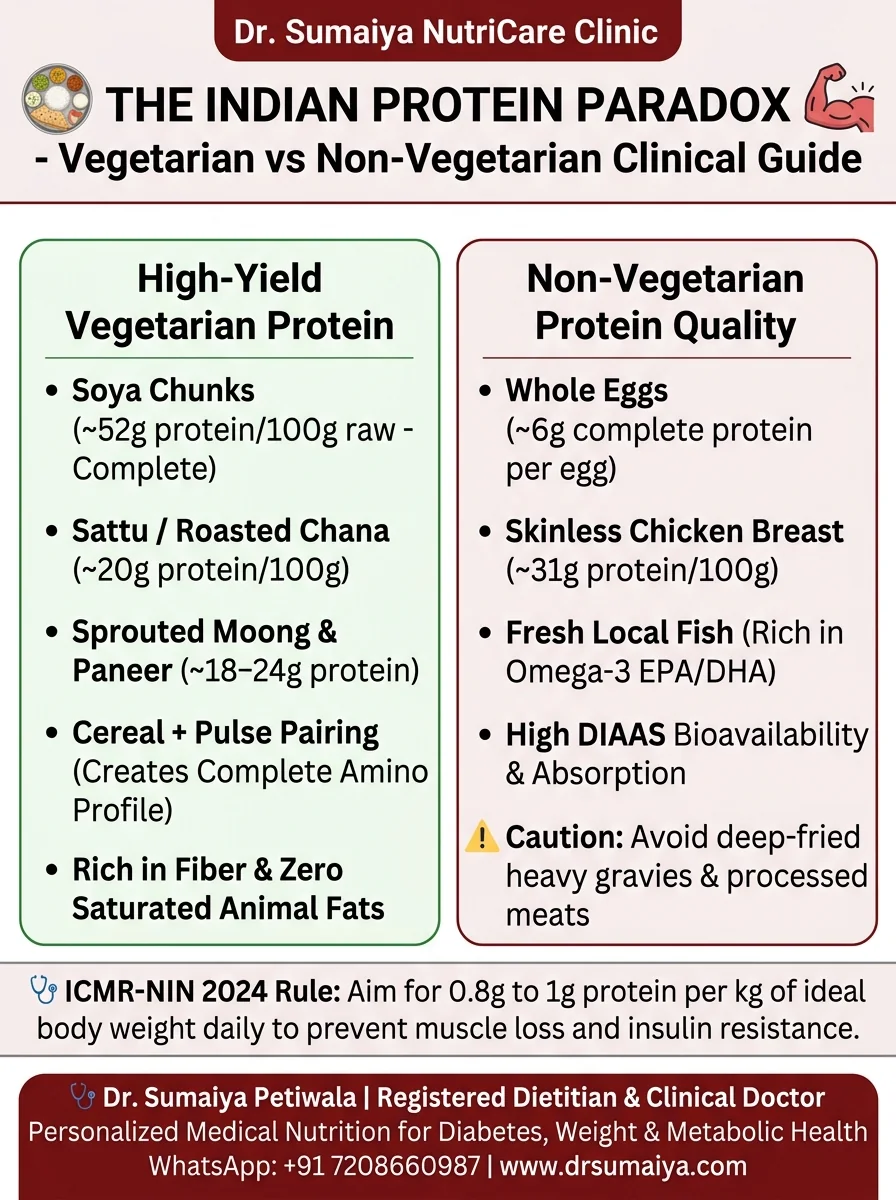
📊 Protein Bioavailability: Why Whole Eggs Outperform Plant Powders for Muscle Synthesis and Glucose Control.
How Whole Eggs Benefit Metabolic and Endocrine Health
Incorporating whole eggs into an Indian diet improves vital metabolic biomarkers:
- Insulin Sensitivity and Blood Sugar Stability. The healthy fats and protein in egg yolks slow stomach emptying. This prevents sharp blood sugar rises. It helps reverse insulin resistance (where cells do not absorb glucose well). It stops accumulation of visceral fat (deep belly fat packed around internal organs). Over time, it lowers HbA1c (a 3-month average of blood sugar levels) and reduces fasting insulin (a morning blood test measuring baseline insulin levels).
- Lipid Profile and Cardiovascular Health. Research demonstrates that whole eggs do not spike blood triglycerides (blood fats tied to insulin levels). Instead, they increase large, buoyant HDL particles that sweep arterial walls clean.
- Hormonal Harmony and Glandular Pace. Eggs provide raw materials for sex hormones. This benefits women managing PCOS (polycystic ovary syndrome, a hormonal imbalance). They also supply selenium and tyrosine. These minerals fuel your thyroid (the neck gland that controls how fast your body burns energy), monitored by TSH (a blood test that checks your thyroid pace).
Comparison: Egg Whites Only vs Whole Eggs with Yolks
See why separating the yolk robs your body of essential nutrition:
| Nutritional Factor | Egg Whites Only | Whole Eggs with Yolk |
|---|---|---|
| Micronutrient Density | Nearly zero fat-soluble vitamins. | Rich in vitamins A, D, E, K, and B12. |
| Liver Health (Choline) | Zero choline. No liver support. | Over 140 mg choline per yolk. |
| Satiety & Fullness | Short-lived. Hunger strikes in an hour. | Deep satiety. Keeps you full for 4 hours. |
| Muscle Building | Moderate muscle protein response. | 40% higher muscle protein synthesis. |
Optimize Your Nutrition with Doctor-Led Care
Confused about cholesterol, eggs, and fat loss? Learn how to incorporate whole superfoods into your meals with evidence-based Indian medical nutrition. Consult Dr. Sumaiya Petiwala today.
Book Clinical Consultation on WhatsApp →The 50/25/25 Indian Plate Rule with Whole Eggs
Build your breakfast or lunch with this clinical plate balance for steady energy:
- 50% Cooked Fibers and Salads. Fill half your plate with sautéed palak, tomatoes, onions, capsicum, or cucumber. These greens deliver prebiotic (plant fibers that nourish good gut bacteria) food and rich plant defenses.
- 25% High-Quality Clean Protein First. Eat two whole boiled eggs, poached eggs, or an egg bhurji first. Eating protein and yolk lipids first blunts glucose spikes from carbs.
- 25% Complex Smart Grains. Finish with one whole jowar roti, a small bowl of oats, or brown rice. These foods carry a low glycemic index (a scale measuring how fast foods raise blood sugar) and modest glycemic load (a ranking system for carbohydrate content and blood sugar impact). This prevents rapid postprandial (occurring after a meal) sugar surges.
Add fresh home-set curd for probiotic (live good bacteria that aid digestion) gut balance. A healthy gut microbiome ensures smooth nutrient uptake.
The Dr. Sumaiya 3-Step Medical Correction Process
At Dr. Sumaiya NutriCare Clinic, we guide you through three structured clinical stages:
- Step 1: Biomarker Analysis & Lipid Audit. We review your complete lipid profile, liver enzymes, fasting insulin, and HbA1c to assess true metabolic health.
- Step 2: Personalized Indian Nutritional Prescription. We design an easy home meal plan with local foods that fuel your cells without dietary fear.
- Step 3: Clinical Pacing & Monthly Retesting. We track your energy, body composition, and blood markers to ensure lifelong metabolic resilience.
🌟 Transform Your Health Today
Takes only 60 seconds to send a booking enquiry.
"Lost 4kgs in one month... plans are simple and effective! She
responds to queries promptly."
– Payal J.
Frequently Asked Questions About Eggs & Cholesterol
Does eating egg yolks raise blood cholesterol levels?
For seventy percent of people, dietary cholesterol from eggs has minimal impact on blood cholesterol because the liver downshifts its own synthesis accordingly.
How many whole eggs can a person with diabetes safely eat per day?
One to two whole eggs daily as part of a high-fiber, low-carb Indian plate is clinically safe and helps stabilize post-meal blood sugar levels.
Why are egg yolks beneficial for patients with fatty liver?
Egg yolks are loaded with choline, an essential nutrient that packages fat into very low-density lipoproteins for safe export out of liver cells.
What is the healthiest way to cook eggs for maximum nutrition?
Boiled, poached, or lightly cooked egg bhurji in cold-pressed mustard or olive oil preserves heat-sensitive yolk nutrients without oxidizing fats.
Is eating whole eggs superior to egg whites for building muscle?
Yes. Clinical studies demonstrate that whole eggs stimulate forty percent greater muscle protein synthesis than an equivalent amount of protein from egg whites alone.
About this guide
This guide provides general health information. Your own care depends on your medical history and circumstances. Speak with your treating clinician before changing medicines or treatment.