Irregular periods. Stubborn acne. Sudden weight gain. Excessive hair growth.
Far too often, when a teenage girl experiences these symptoms, they are brushed off as “just a normal part of puberty.” We tell them it’s a phase, or worse, we hand them a prescription to mask the symptoms and tell them to wait it out.
But if your daughter is struggling with Polycystic Ovary Syndrome (PCOS), waiting is the most dangerous thing you can do.
PCOS is not just a reproductive issue that she will “grow out of.” It is a complex, systemic endocrine and metabolic disorder. When left uncorrected in the teenage years, PCOS acts as a ticking time bomb, quietly laying the groundwork for severe, life-altering chronic diseases in her 20s, 30s, and beyond.
If you think PCOS is just about acne and missed periods, it is time to wake up to the medical reality. Here is exactly what happens when teen PCOS is left unchecked.
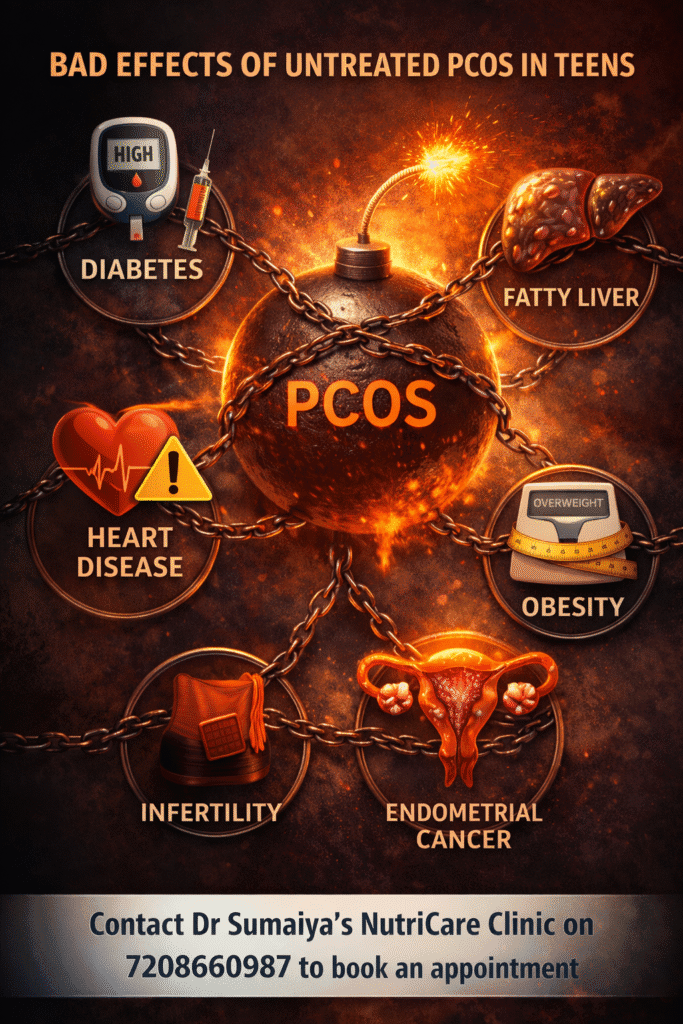
The Alarming Long-Term Risks of Unmanaged PCOS:
1. A Fast Track to Type 2 Diabetes: At the core of most PCOS cases is profound insulin resistance. Her body produces insulin, but her cells don’t respond to it properly, leading to dangerously high blood sugar and insulin levels. The statistics are terrifying: Up to 50% of women with PCOS develop prediabetes or Type 2 Diabetes before the age of 40. If insulin resistance isn’t reversed during her teen years, you are leaving her on a fast track to a lifetime of diabetic complications.
2. Heart Disease and Stroke: Because PCOS wreaks havoc on the metabolism, it dramatically increases the risk of metabolic syndrome. Unmanaged teens with PCOS are at a significantly higher risk of developing high blood pressure, elevated triglycerides, and low “good” cholesterol. This means a sharply increased risk of heart attacks and strokes at an unnaturally young age.
3. Heartbreaking Infertility Battles: PCOS is the number one cause of ovulatory infertility in women. When high insulin levels trigger the ovaries to produce excess testosterone, ovulation stops. If her hormones are not balanced now, she may face agonizing, expensive, and emotionally draining fertility struggles when she is ready to start a family.
4. Increased Risk of Endometrial Cancer: When a teenager with PCOS goes months without shedding her uterine lining (having a period), that lining builds up. Over time, this chronic lack of a menstrual cycle significantly increases her risk of developing endometrial (uterine) cancer later in life.
5. Severe Mental Health Decline: The physical toll of unchecked PCOS—weight gain that won’t budge, hair loss on the scalp, facial hair growth, and chronic fatigue—destroys a teenager’s self-esteem. Teens with unmanaged PCOS are three times more likely to suffer from severe depression and anxiety.
The Problem with the “Band-Aid” Approach:
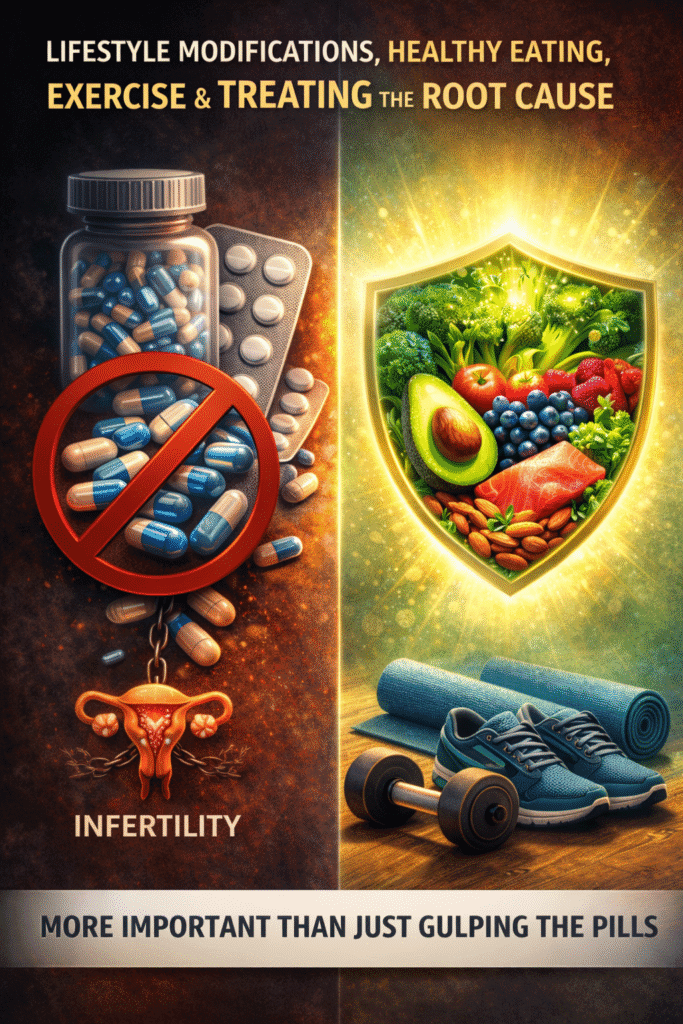
The standard approach to teen PCOS is often deeply flawed. Many doctors simply prescribe oral contraceptives (the birth control pill) to force a monthly bleed and clear up acne. But here is the hard truth: The pill does not cure PCOS. It acts as a chemical Band-Aid. It masks the symptoms while the root cause of the disorder—insulin resistance and chronic inflammation—continues to rage on silently in the background. Once she eventually stops the medication, the symptoms will return, often worse than before, and the metabolic damage will have already been done.
Diet Therapy: The Ultimate Root-Cause Solution:
If you want to protect your daughter’s future, you cannot rely solely on masking the symptoms. You have to treat the root cause. And the most powerful, scientifically proven way to reverse insulin resistance, lower inflammation, and balance hormones naturally is through targeted Diet Therapy.
Food is not just calories; it is information that tells her hormones exactly how to behave. A specialized, clinical PCOS nutrition plan works by:
Healing Insulin Resistance: Strategic carbohydrate pairing and glycemic control prevent the insulin spikes that drive the entire disorder.
Lowering Androgens (Testosterone): Certain foods actively help clear excess male hormones from the body, stopping acne, hair loss, and facial hair growth at the source.
Reducing Systemic Inflammation: Anti-inflammatory nutrition protocols soothe the body, jumpstarting a sluggish metabolism and making natural weight loss finally possible.
Diet therapy is not a “quick fix,” but it is the only solution that heals the body from the inside out, preventing the devastating long-term diseases associated with PCOS.
Take Action Before the Damage is Done: Your teenager does not have to be a victim of her hormones, and you do not have to sit back and watch her struggle. The window of opportunity to correct her metabolism and set her up for a healthy, disease-free life is right now.
Don’t wait for a warning sign to become a lifelong chronic illness. Stop masking the symptoms and start healing the root cause.
If your teen is struggling with PCOS, weight gain, irregular periods, or insulin resistance, contact me today. Together, we will design a customized, comprehensive PCOS Diet Therapy Plan tailored specifically to her body. Fill my patient history form www.drsumaiya.com/form or contact me on 7208660987 for an appointment.
Take control of her health today, so she can have the vibrant, healthy future she deserves tomorrow.
References:
- The Journal of Clinical Endocrinology & Metabolism* (Endocrine Society). Assessment of Cardiovascular Risk and Prevention of Cardiovascular Disease in Women with the Polycystic Ovary Syndrome: A Consensus Statement* (Wild et al., 2010) found that adolescents and women with PCOS have a significantly higher prevalence of cardiovascular risk factors, including metabolic syndrome, hypertension, and dyslipidemia (high triglycerides, low HDL), leading to a higher lifetime risk of heart attacks and strokes.
- Polycystic Ovary Syndrome* (Azziz et al., 2016). This comprehensive clinical review establishes that PCOS is the **most common endocrine disorder in women** and is the leading worldwide cause of anovulatory infertility (infertility caused by a lack of ovulation due to excess androgens/testosterone).
- Risk of endometrial, ovarian and breast cancer in women with polycystic ovary syndrome: a systematic review and meta-analysis* (Barry et al., 2014), Human Reproduction Update* (One of the world’s leading reproductive medical journals). This massive meta-analysis concluded that women of all ages with PCOS have a **nearly 3-fold increased risk (2.7x)** of developing endometrial cancer compared to women without PCOS, directly linked to prolonged periods of no ovulation (amenorrhea) and unopposed estrogen.
- Neuropsychiatric Disease and Treatment & The Journal of Clinical Endocrinology & Metabolism, High prevalence of moderate and severe depressive and anxiety symptoms in polycystic ovary syndrome (Cooney et al., 2017 / Dokras). These clinical studies show that women and adolescents with PCOS are at a significantly elevated risk for psychiatric disorders. They are up to three times more likely to be diagnosed with depression and anxiety, driven by both hormonal imbalances and the psychological distress of symptoms like weight gain and hirsutism (excess hair growth).
- Journal of Clinical Endocrinology & Metabolism, The Effects of Oral Contraceptives on Insulin Resistance, Lipids, and Endothelial Function (Various studies, including Diamanti-Kandarakis et al., 2003). These Studies have shown that while oral contraceptives regulate bleeding and reduce androgens, they do not improve—and in some cases, can actually worsen—insulin resistance and lipid profiles. This backs up your claim that the pill masks the symptoms without fixing the root metabolic problem.
- Monash University & The American Society for Reproductive Medicine (ASRM) has setup the guidelines. This International Evidence-based Guideline for the Assessment and Management of Polycystic Ovary Syndrome (Teede et al., 2018 / Updated 2023) explicitly dictates that Lifestyle Intervention (Diet and Exercise) must be the FIRST-LINE treatment for all women and adolescents with PCOS, prioritizing nutritional therapy over pharmaceuticals for improving insulin resistance, weight management, and reproductive health.