

Dr. Sumaiya Petiwala, RD, BUMS, CDE · Medical Doctor & Registered Clinical Dietitian · Updated 20 October 2026
You made the conscientious decision to eliminate refined table sugar from your daily routine. You swapped sugar in your morning filter coffee or masala chai for “zero-calorie” stevia drops, switched to sugar-free flavoured protein powders after your workouts, and chose diet sodas during social dinners. You were promised that these non-nutritive sweeteners were metabolically invisible—passing through your system without calories, blood sugar spikes, or guilt.
Yet over the past several months, an uncomfortable reality has set in. By mid-afternoon, your lower abdomen swells outward with stubborn, trapped gas and painful distension. Despite eating clean home-cooked meals, your fasting blood glucose fluctuates unpredictably, your continuous glucose monitor (CGM) registers unexplained spikes, and your gut feels perpetually irritated. If you take daily prescription medications—such as metformin for prediabetes, thyroid hormone, blood pressure tablets, or an antidepressant—you might assume your symptoms are unrelated. However, landmark international research published on October 17, 2026, reveals that these “zero-calorie” chemicals are far from inert: they directly clash with your gut microbiome and daily medications.
Do artificial sweeteners and zero-calorie sugar substitutes damage the gut microbiome?
In a landmark 2026 Cambridge University study testing 39 commercial sweeteners across 25 gut bacterial species, nearly 75% directly inhibited beneficial gut microbes. Furthermore, combining sweeteners like isosteviol with everyday medications severely suppressed keystone bacteria like Roseburia intestinalis, compromising gut barrier integrity, worsening painful bloating, and triggering erratic postprandial glucose dysregulation.
The 2026 Cambridge University Study: What Happened When 39 Sweeteners Met 25 Gut Microbes
For decades, the commercial food industry marketed artificial sweeteners and plant-derived zero-calorie extracts as “metabolically neutral xenobiotics” [synthetic or non-food chemical compounds that the body cannot convert into energy]. The prevailing assumption was simple: because human digestive enzymes cannot break down sucralose or steviol glycosides in the upper digestive tract, they must travel harmlessly through the intestines and exit without biological consequence.
On October 17, 2026, a research team from the Medical Research Council (MRC) Toxicology Unit at the University of Cambridge published a groundbreaking multi-species investigation in Molecular Systems Biology. Led by Dr. Sonja Blasche and Professor Kiran Patil, the researchers cultivated 25 distinct species of human intestinal bacteria and systematically challenged them with 39 commercially available sweeteners across both synthetic compounds and chemically refined plant extracts. Their findings shattered the myth of metabolic neutrality:
- Widespread Microbial Inhibition: Approximately three out of every four tested sweeteners (nearly 75%) directly altered or halted the growth of at least one beneficial gut bacterial species at standard dietary exposure levels.
- The Medication-Sweetener Collision: When the researchers tested sweeteners alongside everyday compounds—including dietary caffeine, common flavouring agents (such as vanillin), and eight widely prescribed pharmaceutical drugs—they discovered over 100 synergistic interactions. In 34 instances, pairing a sweetener with a medication markedly intensified the suppression of essential bacteria.
- Keystone Microbes Decimated: One specific combination produced alarming results: when isosteviol [a bioactive metabolite derived from the stevia plant] was paired with duloxetine [a widely prescribed antidepressant and nerve-pain medication taken by millions of patients globally], it strongly suppressed two foundational bacteria: Roseburia intestinalis and Parabacteroides merdae.
- Systemic Toxicity and Gut Barrier Breakdown: In simplified synthetic microbial communities, this drug-sweetener clash depleted overall microbiome diversity, increased cellular toxicity against intestinal host cells, and stimulated cellular pathways involved in systemic chronic inflammation.
| Sweetener Category | Key Examples | Gut Microbial Impact (2026 Study) | Medication & Additive Synergy | Bloating & GI Distress Risk | Clinical Recommendation |
|---|---|---|---|---|---|
| High-Intensity Synthetic Sweeteners | Sucralose, Acesulfame Potassium (Ace-K), Saccharin, Aspartame | Directly inhibits beneficial commensal species; alters microbial metabolic pathways and degrades intestinal mucous layer. | High: Synergistic inhibition observed when stacked with common antibiotics, caffeine, and gastric acid suppressors. | Moderate to High: Induces gut dysbiosis, shifts luminal pH, and alters colonic fermentation dynamics. | Taper and eliminate; avoid combining with prescription medication doses or morning caffeinated beverages. |
| Chemically Extracted ‘Natural’ Blends | Commercial Stevia drops, Rebaudioside A, Isosteviol extracts | Strongly suppresses keystone blood-sugar-regulating bacteria (Roseburia intestinalis & Parabacteroides merdae). | Severe: Over 100 synergistic interactions; potent bacterial suppression when combined with antidepressants (duloxetine) or metformin. | Moderate: Promotes microbial uncoupling and reduces protective short-chain fatty acid (butyrate) synthesis. | Avoid commercial multi-drop concentrates; do not use as an all-day coffee, tea, or protein shake additive. |
| Polyols & Sugar Alcohols | Erythritol, Maltitol, Sorbitol, Xylitol (sugar-free syrups & sweets) | Alters osmotic balance; reduces microbial diversity while feeding opportunistic hydrogen-producing microbes in the small bowel. | Moderate: Can accelerate intestinal transit time, reducing the mucosal contact window for vital cardiovascular drugs. | Very High: Severe osmotic diarrhea, painful trapped gas, and severe abdominal distension (common SIBO trigger). | Strictly avoid in patients with irritable bowel syndrome (IBS), visceral adiposity, or small intestinal bacterial overgrowth. |
| Whole-Matrix Culinary Spices (Safe Alternative) | Ceylon Cinnamon (Dalchini), Green Cardamom (Elaichi), Nutmeg, Raw Cacao | Exerts prebiotic bifidogenic effects; stimulates polyphenol-degrading beneficial microbes and enhances intestinal barrier integrity. | Beneficial / Neutral: Naturally supports hepatic enzyme balance without interfering with cellular drug metabolism. | Very Low / Carminative: Volatile essential oils relieve flatulence, relax intestinal smooth muscle, and soothe cramps. | Recommended Primary Swap: Retrains sweet-taste receptors while supporting stable postprandial glucose regulation. |
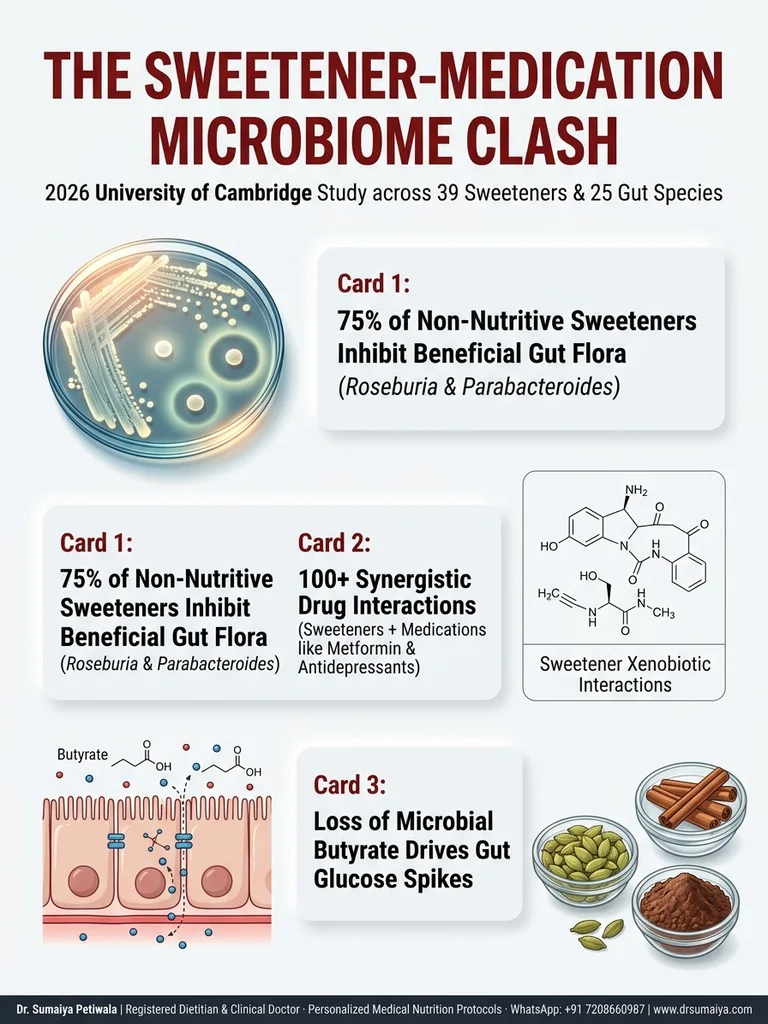
The Sweetener-Medication Microbiome Clash: 2026 University of Cambridge study reveals how 75% of commercial sweeteners inhibit beneficial gut bacteria and interact synergistically with daily medications to provoke gut leakage and glycemic volatility.
Clinical references: University of Cambridge Study on Sweeteners & Gut Microbiota (Molecular Systems Biology, Oct 2026); ICMR-NIN Dietary Guidelines for Indians (2024); American Diabetes Association Standards of Medical Care (2026).
The Science of ‘Microbiome Clashing’: How Sweeteners and Medications Provoke Glucose Dysregulation
To understand why swapping sugar for “sugar-free” drops often leads to worsening waist circumference and volatile fasting glucose in Indian patients, we must examine the physiological architecture of the gut barrier and the role of microbial metabolites.
Think of your intestinal lining as an intricate biological border crossing. The gut epithelium consists of a single layer of specialized cells held together by microscopic protein fasteners known as tight junctions [zonula occludens (molecular seals that prevent bacteria and undigested toxins from leaking from the intestinal lumen into your bloodstream)]. These epithelial cells draw their primary energy from butyrate [a therapeutic short-chain fatty acid produced when beneficial microbes like Roseburia ferment dietary prebiotic fibers]. Butyrate acts as the cellular sealant that maintains your intestinal firewall.
When you consume high-intensity zero-calorie sweeteners—particularly in combination with daily prescription medications—a multi-layered pathological cascade unfolds:
- The “Double Lockout” on Keystone Microbes: Many pharmaceutical drugs (including metformin, statins, and selective serotonin reuptake inhibitors) naturally exert mild antimicrobial pressures in the colon. Under normal conditions, a robust, diverse microbiome adapts. But when you introduce non-nutritive sweeteners, the combination acts as a chemical amplifier. Keystone species like Roseburia intestinalis [which controls colonic butyrate production] and Parabacteroides merdae [which regulates branched-chain amino acid breakdown and bile acid conjugation] are severely suppressed, starving the gut lining of protective short-chain fatty acids.
- Metabolic Endotoxemia [Leaky Gut Inflammation]: Without adequate butyrate, the intestinal tight junctions loosen. Minute fragments of gram-negative bacterial outer walls, known as lipopolysaccharides [LPS (bacterial endotoxins that trigger an immediate immune response)], leak through the compromised mucosal barrier into the portal vein. When LPS reaches the liver, it binds to Toll-like receptors, activating hepatic nuclear factor kappa B (NF-κB) and inducing low-grade systemic inflammation. This liver inflammation directly blocks insulin receptors on hepatocyte membranes, driving stubborn hepatic insulin resistance even when your calorie intake is low.
- The Paradoxical Postprandial Glucose Surge: Non-nutritive sweeteners do not contain glucose, but they interact directly with sweet-taste receptors (T1R2 and T1R3) located on enteroendocrine L-cells lining the duodenum and jejunum. These receptors mistakenly signal to the digestive tract that a massive wave of carbohydrates has arrived. In response, the intestinal wall upregulates Sodium-Glucose Cotransporter 1 [SGLT1 (the primary transport protein that pumps glucose from the gut lumen into circulation)]. When you subsequently eat a standard Indian meal—such as dal, sabzi, or roti—your intestines absorb dietary glucose at an accelerated rate, producing dramatic postprandial glucose spikes.
- Gas Trapping & Luminal Distension: Polyols (such as erythritol, maltitol, and sorbitol) and synthetic bulking agents draw excess water into the small intestine through osmosis. In patients with pre-existing gut dysbiosis or slow intestinal motility, opportunistic colonic bacteria ferment these residual compounds prematurely, producing copious volumes of hydrogen and methane gas that inflate the abdomen like an overstretched balloon.
Three Practical Clinical Nutrition Swaps for the Indian Kitchen
Restoring a compromised gut microbiome and weaning your metabolism off xenobiotic sweetener dependency does not require extreme elimination diets or unscientific commercial cleanses. By introducing targeted culinary adjustments rooted in Indian kitchen staples, you can extinguish intestinal inflammation while naturally recalibrating your taste thresholds:
1. Audit and Decouple “Stacking Exposures” (Stop Combining Sweetened Drinks with Morning Medications)
The most crucial clinical finding from the Cambridge study is that sweeteners become significantly more harmful to gut microbes when consumed in close temporal proximity to prescription medications and stimulating additives like caffeine. In urban Indian households, a common daily routine involves swallowing morning tablets (such as metformin, levothyroxine, or antihypertensives) alongside a cup of filter coffee or tea heavily sweetened with stevia drops or sucralose tablets.
This concurrent ingestion forces your gastrointestinal flora to process an unbuffered pharmaceutical-xenobiotic cocktail within the same concentrated digestive window. Enforce a strict 2-hour separation: swallow all prescribed medications exclusively with plain, lukewarm water. Ensure that any flavoured beverages, zero-sugar pre-workout shakes, or functional drinks are consumed at least two hours away from your medication schedule to prevent compound antimicrobial inhibition.
2. Retrain Sweet-Taste Receptors with Whole-Matrix Culinary Spices
Commercial artificial sweeteners are engineered to be 300 to 600 times sweeter than sucrose. This hyper-intensity over-saturates your tongue’s gustatory receptors, making wholesome natural foods (such as fresh berries, carrots, and whole grains) taste bland and unpalatable, which fuels persistent neurochemical cravings for sweets.
Break this neurosensory loop by transitioning to whole-matrix Indian spices that stimulate aromatic sweet receptors without chemical toxicity. Incorporate freshly ground Ceylon cinnamon [dalchini (which contains cinnamaldehyde, a natural bio-active compound demonstrated in clinical trials to improve peripheral insulin sensitivity)] and crushed green cardamom [chhoti elaichi (which provides natural carminative cineole to ease gastrointestinal gas)]. Add a pinch of freshly grated nutmeg (jaiphal) and unsweetened 100% raw cacao powder to warm skimmed milk, almond beverage, or plain rolled oats. The natural aromatic volatile oils provide rich, complex sensory sweetness while feeding beneficial Bifidobacteria in the colon.
3. Rebuild Keystone Butyrate-Producing Microbes with Targeted Prebiotic Indian Fibers
To repair gut barrier tight junctions and restore depleted populations of Roseburia intestinalis, your colon requires specialized fermentable soluble substrates that human enzymes cannot digest, but which beneficial bacteria utilize to produce butyrate. Focus on four accessible kitchen staples:
- Unflavoured Organic Psyllium Husk [Isabgol]: Unlike commercial flavoured fiber drinks loaded with artificial sweeteners and colours, pure isabgol provides gel-forming soluble arabinoxylan. Consume 1 teaspoon stirred into a glass of lukewarm water 30 minutes before bedtime to hydrate stool bulk and fuel butyrate synthesis.
- Cooked-and-Cooled Legumes (Resistant Starch Type 3): Traditional whole pulses—such as green moong dal, kala chana, and rajma—develop therapeutic resistant starch when cooked and allowed to cool. This resistant starch passes unabsorbed through the small intestine, providing the ideal primary food source for Roseburia and Faecalibacterium prausnitzii.
- Soothing Cucurbitaceous Gourds: Incorporate gently steamed bottle gourd [lauki], ridge gourd [turai], and ash gourd [petha] cooked with tempered cumin (jeera) and pure asafoetida (hing). These vegetables provide soothing mucilaginous pectins that coat inflamed intestinal mucosa without triggering excessive gas.
- Traditional Ancient Grains: Gradually swap refined flours for ancient emmer wheat [khapli wheat] or steamed foxtail millet, which deliver complex beta-glucans that stabilize postprandial glucose excursions.
The Diagnostic Gap: Why ‘Just Quit Sugar’ Fails Without a Clinical Nutrition Audit
Free ’39 Sweeteners & Hidden Additives’ Gut Safety Checklist
Audit your kitchen pantry and daily supplements in 3 minutes. Unlock the complete Cambridge 2026 classification matrix of 39 sweeteners, gut microbial safety ratings, and prescription medication interaction warnings.
- Full 39-Sweetener Matrix: In-depth safety ratings for synthetic drops, stevia extracts, and polyols.
- Keystone Flora Impact: Identifies which sweeteners arrest Roseburia and Parabacteroides.
- Medication Interaction Alerts: Drug-sweetener synergy risks for Metformin, Antidepressants & BP pills.
- 3-Minute Pantry Audit: Practical worksheet to check whey protein, morning chai & diabetic snacks.
When well-intentioned individuals receive a diagnosis of prediabetes, insulin resistance, or fatty liver, they are almost universally handed generic advice: “cut all sugar from your diet.” In the absence of structured clinical guidance, patients naturally turn to supermarket shelves filled with “zero-sugar” cookies, sugar-free syrups, stevia sachets, and diet beverages.
Six months later, they find themselves trapped in a frustrating clinical paradox: their HbA1c remains stalled, their abdominal bloating has intensified, their gut transit has become erratic, and their systemic inflammation markers (such as High-Sensitivity C-Reactive Protein [hs-CRP]) continue to rise. Generic dietary advice treats the human body like a simple calorie calorimeter, failing to account for the intricate chemical ecology of the gut microbiome, xenobiotic drug interactions, and intestinal barrier permeability.
True metabolic recovery requires moving beyond superficial calorie counting to a structured, clinician-guided protocol:
- Medication-Nutrient Interaction Mapping: Reviewing the exact timing, bioavailability, and gastrointestinal impact of your daily prescription pharmaceuticals alongside your dietary additives.
- Comprehensive Metabolic Biomarker Profiling: Evaluating fasting insulin, Homeostatic Model Assessment of Insulin Resistance [HOMA-IR], HbA1c, complete lipid panels (including ApoB and Triglyceride/HDL ratios), and liver transaminases (ALT/AST).
- Gut Permeability & Dysbiosis Risk Assessment: Identifying whether your chronic distension stems from small intestinal bacterial overgrowth (SIBO), dysbiotic fermentation, or osmotic fluid shifts.
- Stepwise Palate Recalibration: A structured, 4-week clinical transition plan that systematically eliminates high-intensity chemical sweeteners while re-establishing microbial short-chain fatty acid production.
Choose the Right Level of NutriCare Clinical Support
Whether you require an immediate targeted protocol to resolve daily abdominal bloating or comprehensive, multi-month medical supervision to reverse insulin resistance and restore gut integrity, Dr. Sumaiya NutriCare offers structured clinical pathways:
- Single Clinical Consultation — ₹2,599: A comprehensive 1-on-1 medical review of your blood biomarkers, medication-sweetener interaction audit, personalized Indian meal strategy, and 7 days of clinical WhatsApp guidance.
- Be Healthy Program — ₹3,999/month: Continuous medical nutrition therapy featuring three consultations per month, weekly gastrointestinal and glycemic monitoring, iterative meal plan adjustments, and direct practitioner support for metabolic correction.
- Special Diets Program — ₹4,999/month: Intensive therapeutic care for patients managing complex dual diagnoses, including Type 2 Diabetes, non-alcoholic fatty liver disease (NAFLD), chronic IBS, Hashimoto’s thyroiditis, or multiple prescription drug regimens.
Consultation fees reflect standard clinic pricing as of October 2026. Explore our complete clinical plans and pricing to begin your personalized care.
Frequently Asked Questions
Do zero-calorie sweeteners like stevia and sucralose damage good gut bacteria?
Yes, emerging clinical and microbiological evidence demonstrates that non-nutritive sweeteners directly impair beneficial intestinal bacteria. In the landmark 2026 University of Cambridge study testing 39 commercial sweeteners across 25 gut microbial species, nearly 75% of sweeteners significantly inhibited or completely halted the growth of keystone health-promoting microbes. In particular, stevia-derived compounds such as isosteviol and synthetic sweeteners like sucralose selectively suppress critical butyrate-producing species like Roseburia intestinalis, compromising gut lining integrity and triggering digestive inflammation.
Can artificial sweeteners interact with daily medications in the gut?
Yes. The 2026 Cambridge University study uncovered over 100 synergistic interactions between commercial sweeteners and everyday substances, including prescription medications, caffeine, and flavouring agents. When sweeteners mix with widely prescribed drugs—such as antidepressants, metformin, statins, or blood pressure tablets—in the digestive tract, their antimicrobial potency intensifies significantly. This drug-sweetener clash slashes overall microbial diversity, triggers cellular toxicity in the intestinal lining, and can alter drug bioavailability and gastrointestinal tolerance.
Why do sugar-free drinks cause bloating and insulin resistance?
Sugar-free drinks trigger bloating and erratic glucose dysregulation through a two-fold gut mechanism. First, xenobiotic sweeteners inhibit butyrate-producing bacteria, weakening the gut epithelial barrier and allowing inflammatory endotoxins (lipopolysaccharides) to enter the portal circulation, which directly induces hepatic insulin resistance. Second, polyols and non-absorbed sweetener molecules draw excess water into the bowel or undergo rapid microbial fermentation in the small intestine, producing painful trapped gas, abdominal distension, and hyper-sensitizing intestinal glucose transporters.
What are the best gut-safe alternatives to artificial sweeteners for diabetes?
Rather than swapping one isolated high-intensity chemical sweetener for another, the safest clinical approach is retraining lingual sweet receptors using whole-matrix culinary spices. Incorporating freshly ground Ceylon cinnamon (dalchini), bruised green cardamom (elaichi), grated nutmeg (jaiphal), and unsweetened raw cacao powder imparts a natural aromatic sweet perception while delivering polyphenol antioxidants that actively nourish beneficial Bifidobacteria. Pairing these spices with protein and healthy fats curbs cravings without disrupting gut flora or glycemic stability.
Is stevia safer than sucralose for gut health and medication absorption?
While stevia is frequently marketed as a natural plant extract, commercial stevia products contain highly processed, chemically isolated glycosides and derivatives like isosteviol. In the 2026 Cambridge laboratory trials, isosteviol was identified as one of the most potent inhibitors of key gut commensals, particularly when combined with medications like duloxetine. For patients managing metabolic disorders, IBS, or multiple daily prescriptions, processed stevia blends can cause digestive disruption and microbial depletion comparable to synthetic sweeteners like sucralose.
Enquire About Precision Clinical Care
Do not let synthetic sweetener blends and hidden food additives sabotage your metabolic progress and gut health. Share your latest lab reports, current daily medication schedule, and symptom history with our clinical team to begin your journey toward lasting digestive comfort and vibrant metabolic health.
🌟 Transform Your Health Today
Takes only 60 seconds to send a booking enquiry.
"Lost 4kgs in one month... plans are simple and effective! She
responds to queries promptly."
– Payal J.
About this guide
This guide provides general health information. Your own care depends on your medical history and circumstances. Speak with your treating clinician before changing medicines or treatment.