

Medically Verified & Evidence-Based | Authored by Dr. Sumaiya Petiwala, RD, BUMS, CDE (Registered Clinical Dietitian & Metabolic Health Specialist) | Aligned with ICMR-NIN Clinical Standards | Last Updated: October 2026
In 2024, the Indian Council of Medical Research and National Institute of Nutrition released updated dietary rules. These guidelines address India’s rising epidemic of lifestyle diseases. Traditional Indian meals rely too heavily on polished rice and refined wheat. At Dr. Sumaiya NutriCare Clinic, we translate these 17 medical guidelines into simple daily meals. We help you protect your long-term metabolic health.
What Are the Main Takeaways from the ICMR-NIN 2024 Guidelines?
Direct Clinical Answer: The ICMR-NIN 2024 guidelines urge Indians to cap cereal intake at 45 percent of daily energy. They advise getting 15 to 20 percent of calories from protein. Adults should eat 400 to 500 grams of vegetables daily. The report cautions against commercial protein powders and ultra-processed foods.
Core Pillars of the ICMR-NIN 2024 Clinical Guidelines
The 17 guidelines focus on four major clinical shifts for Indian kitchens:
- 1. Cap Cereals at 45% Energy. Most Indians get 70 percent of their daily calories from grains. ICMR advises reducing grains to under 45 percent. This cuts chronic glucose flooding.
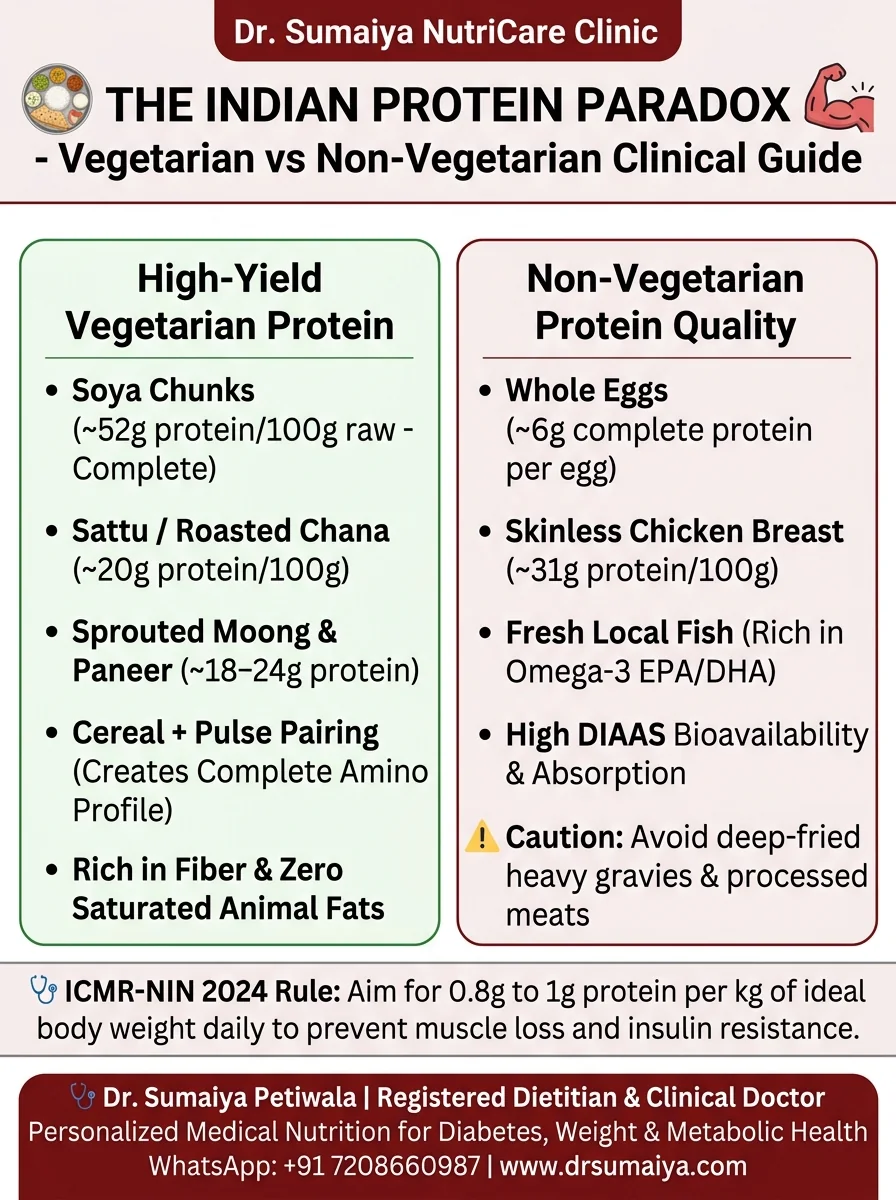
- 2. Elevate Whole Food Protein. Up to 20 percent of daily calories should come from real protein. Choose dal, paneer, curd, eggs, fish, and chicken. ICMR strongly warns against unprescribed synthetic protein supplements.
- 3. 500 Grams of Daily Produce. Eat at least 400 grams of vegetables and 100 grams of fresh fruit daily. These provide vital micronutrients and prebiotic (plant fibers that nourish good gut bacteria) fiber for gut health.
- 4. Limit Fat, Salt, and Added Sugars. Keep total fat below 30 percent of daily energy. Limit cooking salt to 5 grams per day. Restrict added sugar to under 25 grams.
📊 Clinical Dietary Standards: Solving the Indian Grain Excess and Protein Deficit with ICMR Guidelines.
Why Excess Carbohydrates Harm Indian Metabolic Health
Overeating refined grains triggers severe metabolic damage across your body:
- The South Asian Carb Spike. Refined white rice and maida have a high glycemic index (a scale measuring how fast foods raise blood sugar). When eaten in large portions, they create a heavy glycemic load (a ranking system for carbohydrate content and blood sugar impact). This causes severe postprandial (occurring after a meal) sugar surges.
- Cellular Sugar Resistance and Belly Fat. Constant high-carb meals cause insulin resistance (where cells do not absorb glucose well). Surplus sugars turn into visceral fat (deep belly fat packed around internal organs). Over time, this raises your HbA1c (a 3-month average of blood sugar levels) and spikes fasting insulin (a morning blood test measuring baseline insulin levels).
- Liver Fat and Dyslipidemia. Excess carbs convert into hepatic fat. This causes fatty liver (a condition where fat builds up inside liver cells) and NAFLD (non-alcoholic fatty liver disease, a condition with excess liver fat). It elevates SGPT (a liver enzyme showing hepatic irritation) and SGOT (a liver enzyme released during cell damage). It also drives up blood triglycerides (blood fats tied to insulin levels).
- Kidney Balance and Hormones. Eating whole-food proteins within ICMR targets protects your kidneys. Drinking clean water flushes uric acid (a natural waste product from protein digestion) smoothly. Proper eating cools systemic inflammation (cellular immune stress that harms tissues). It aids your thyroid (the neck gland that controls how fast your body burns energy), checked by TSH (a blood test that checks your thyroid pace). It also improves cycle timing in women with PCOS (polycystic ovary syndrome, a hormonal imbalance).
Comparison: Typical Indian Diet vs ICMR-NIN 2024 Standards
See how average Indian meals compare to the updated medical guidelines:
| Nutritional Parameter | Typical Indian Diet | ICMR-NIN 2024 Target |
|---|---|---|
| Cereal Energy Share | 65 to 75 percent. High grain load. | Maximum 45 percent of total energy. |
| Protein Intake | 6 to 9 percent. Chronic shortfall. | 15 to 20 percent from diverse sources. |
| Vegetables & Fruits | 100 to 180 grams daily. Low fiber. | Minimum 500 grams daily. |
| Ultra-Processed Foods | High in biscuits, chips, and colas. | Strict avoidance of packaged foods. |
Adopt ICMR Clinical Guidelines with Doctor-Led Plans
Ready to align your family’s meals with the new ICMR-NIN medical guidelines? Get a customized Indian nutrition protocol. Consult Dr. Sumaiya Petiwala today.
Book Clinical Consultation on WhatsApp →The 50/25/25 Indian Plate Rule Aligned with ICMR-NIN
Build your lunch and dinner plates using this simple clinical formula:
- 50% High-Fiber Vegetables. Fill half your plate with cucumber, palak, bhindi, beans, and salad. These offer rich antioxidant (plant defense compounds that protect gut lining) defense and bulk.
- 25% High-Quality Clean Protein First. Eat protein first at each meal. Choose paneer, boiled eggs, curd, or sprouted dal. Eating protein first prompts fullness and slows glucose absorption.
- 25% Smart Whole Grains. Finish with whole jowar, bajra, or brown rice. Keep grain portions modest to hit ICMR’s 45 percent calorie target.
Drink a small glass of fresh buttermilk with roasted jeera after lunch. It gives probiotic (live good bacteria that aid digestion) support for a healthy gut.
The Dr. Sumaiya 3-Step Medical Correction Process
At Dr. Sumaiya NutriCare Clinic, we help you implement ICMR standards in three simple steps:
- Step 1: Biomarker Analysis. We review blood sugars, fasting insulin, and liver health to set your exact calorie and protein goals.
- Step 2: Custom Indian Nutrition Plan. We build a practical home meal plan based on grocery-accessible whole foods.
- Step 3: Weekly Doctor Monitoring. We monitor your energy, body composition, and lab markers weekly for lasting health.
🌟 Transform Your Health Today
Takes only 60 seconds to get personalized clinical insights.
"Lost 4kgs in one month... plans are simple and effective! She
responds to queries promptly."
– Payal J.
Frequently Asked Questions About ICMR 2024 Guidelines
Why did ICMR reduce the recommended cereal intake to 45 percent?
Excessive grain consumption floods South Asian bodies with glucose. Capping cereals at 45 percent prevents insulin resistance, obesity, and diabetes.
What does ICMR say about commercial protein powders?
ICMR cautions against unguided protein supplements. They recommend obtaining protein from whole foods like lentils, eggs, paneer, and fish.
How much oil and fat is allowed per person daily?
Total fat should stay under 30 percent of daily calories. This translates to roughly 20 to 30 grams of visible cooking oil per adult daily.
How many vegetables should an Indian adult eat every day?
Adults should eat at least 400 grams of vegetables and 100 grams of fresh fruit daily to ensure adequate micronutrients and dietary fiber.
How does ICMR advise consumers to avoid ultra-processed foods?
Check food nutrition labels carefully. Avoid products with high sodium, added sugars, refined palm oil, and long lists of chemical additives.
About this guide
This guide provides general health information. Your own care depends on your medical history and circumstances. Speak with your treating clinician before changing medicines or treatment.