Three blood tests decide whether this plan is right for you, so let me name them first. the thyroid (the neck gland that sets your metabolism) is the first thing I check, because an overactive thyroid makes weight gain genuinely difficult. Fasting insulin (your insulin level after an overnight fast) tells me how your body handles the surplus you are about to add. HbA1c (your average blood sugar over roughly three months) confirms the same thing from a different angle.
🩺 Quick Clinical Answer: How Do Hard Gainers Put On Weight Safely?
Eat 500 to 1000 calories above your maintenance level, spread across 5 to 7 small meals rather than three huge ones. Aim for 1 to 1.5 grams of protein per kilogram of body weight daily. Then lift weights 2 to 3 times a week, or the extra calories become fat instead of muscle.
If you have tried everything and the scale still will not move, you are not doing anything wrong. You are working against a body that is built differently from most people’s, and generic advice rarely accounts for that. Let me explain what is actually happening and what changes it.
There are two hard parts to gaining weight safely. Eating enough is a logistics problem, and training enough is a discipline problem. Neither is solved by eating junk food or by copying a bodybuilder’s supplement stack.
Why Some People Struggle to Gain
Being a hard gainer is not one thing. Several things combine, and knowing which apply to you changes the plan.
- Genetics. Over 250 regions of DNA are linked to how your body regulates weight. Lean body composition runs in families.
- Your resting burn rate. You may burn more calories at rest than most people, which makes a surplus harder to build.
- Constant movement. Some people burn extra calories without ever exercising, simply by fidgeting, walking around, and standing. This is called non-exercise activity, and it can be substantial.
- Hormones. Thyroid function and other hormonal factors affect both appetite and how readily you store energy.
Understanding this is not about excuse-making. It tells you why standard advice fails and why a different approach is needed.
Seven Mistakes That Block Progress
- Eating far too much in one sitting. Your body can only process so much at once. Large single meals mostly turn into body fat, not muscle.
- Skipping meals. Each skipped meal is a day you do not close the surplus. Consistency beats intensity here.
- Cutting out carbohydrates. Carbs fuel training and muscle growth. Cutting them makes gaining harder, not easier.
- Expecting overnight results. Weight gain is a gradual process. Expecting fast results leads to giving up early.
- Relying on junk food. Calories are still calories. Quality matters even when the goal is gaining.
- Avoiding exercise entirely. Without strength training, extra calories mostly become fat.
- Following unrealistic advice. Be careful with advice from people whose physiques came from methods unsuited to you.
Nutrition Strategies That Work
Build a Sustainable Surplus
A surplus of 500 to 1000 calories above your maintenance level is a sensible starting point. For many people that means 3000 to 4000 calories a day, though some hard gainers genuinely need 1000 to 1500 above maintenance before they see anything. Raise it gradually and watch the weekly trend.
Eat More Often
Aim for 5 to 7 smaller meals instead of 3 large ones. You will find it far easier to reach a high total when no single meal feels overwhelming. Keep a routine you can sustain on a working day.
| Time | Simple Indian option |
|---|---|
| Breakfast | Eggs with paratha loaded with ghee, or poha with peanuts and ghee |
| Mid-morning | Milk or a curd and fruit bowl with nuts |
| Lunch | Dal, a paneer or sabzi dish, two to three rotis, salad |
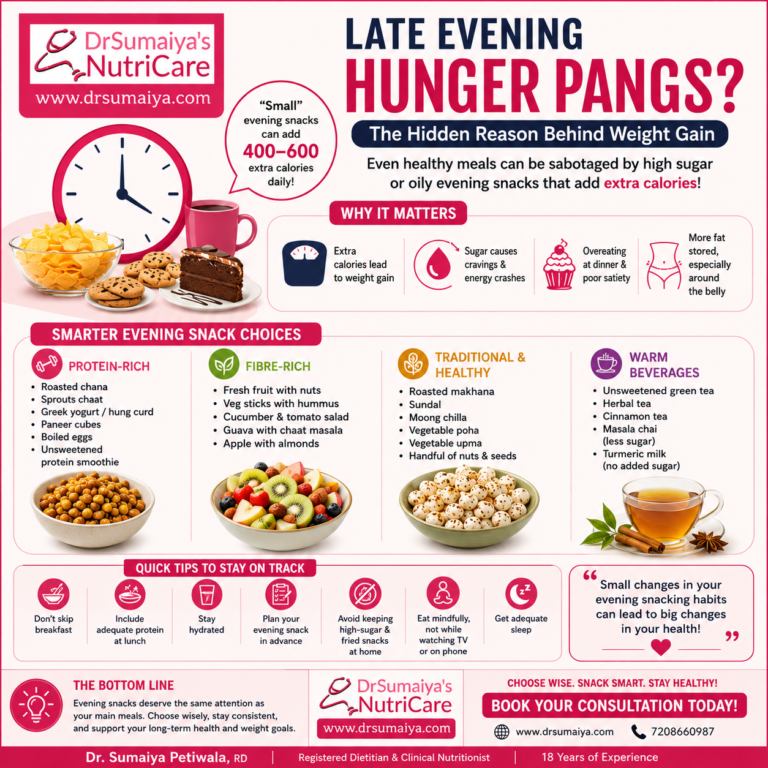
| Evening snack | Sprouts chaat, roasted chana and makhana, or a banana shake |
| Dinner | Rice or khichdi with dal and a vegetable curry |
| Bedtime | Warm milk with banana and a spoon of peanut butter |
Use Liquid Calories
Drinks are less filling than solid food, which makes them genuinely useful here. A shake with oats, nut butter, banana, and milk is one of the easiest ways to add 400 to 600 calories without feeling stuffed. Blend one between meals rather than replacing a meal.
Add Density, Not Just Volume
- Healthy fats. Avocado, almonds, walnuts, peanuts, olive oil, and ghee.
- Complex carbohydrates. Brown rice, whole grains, oats, sweet potato, and potatoes.
- Quality protein. Eggs, dairy, chicken, fish, soya, and dal.
- Calorie-dense extras. Dried fruits, nut butters, and cheese.
Hit Your Protein Target
Aim for 1 to 1.5 grams of protein per kilogram of body weight daily, spread across the day. Paneer, eggs, curd, soya, dal, chicken, and sattu all count. This matters more than any supplement, because without enough protein the surplus becomes fat.
Training for Muscle, Not Just Weight
Exercise is what decides whether your surplus becomes muscle or fat. Without it, you are simply eating more.
Use Compound Movements
Focus on lifts that work several muscle groups at once, since they stimulate growth better than single-joint moves: squats, deadlifts, bench press, overhead press, rows, and pull-ups or chin-ups.
Progressively Increase
Add weight, reps, or sets gradually over time. That progression is what keeps muscle growing. If your training does not get harder, the muscle stops responding.
Limit Cardio
Keep cardio to two or three shorter, higher-intensity sessions a week. Long steady sessions will eat the surplus you worked hard to build.
Recover Properly
- At least one full rest day each week.
- Seven to nine hours of sleep every night.
- Enough food to recover between sessions.
- Plan for bulking cycles of 12 weeks or more, since shorter ones rarely show results.
Supplements Worth Considering
Food is the foundation. These are additions, not replacements.
| Supplement | What the evidence supports | Typical use |
|---|---|---|
| Creatine monohydrate | Best supported for strength and muscle mass | 3 to 5 g daily, including rest days. Loading is optional. |
| Protein powder | Convenient when whole food is not enough | One or two servings to close the gap |
| Commercial weight gainer | Easy calories, often high in sugar | 500 to 1000 calories per serving |
| Vitamin D | Worth correcting if deficient | Test first, then dose |
| Omega-3 and zinc | Support recovery and hormone function | Food first, supplement if short |
Older protocols loaded with 20 g daily for a week. Current evidence shows that simply taking 3 to 5 g every day reaches the same saturation without the bloating or stomach upset, so loading is rarely necessary.
Sleep, Stress and Tracking
- Sleep 7 to 9 hours. Muscle recovery, hormone regulation, and appetite all depend on it.
- Manage stress. Cortisol interferes with both weight gain and muscle building. Try meditation, deep breathing, and a firm work-life boundary.
- Be consistent. This matters more than anything else. Stick with the plan when progress looks slow.
- Track properly. Record daily calories, weekly weight at the same time each day, your lifts, and body measurements. Without data you cannot tell a plateau from a mistake.
When To See A Doctor
If you have trained and eaten properly for three months with no change, investigate. A full blood panel often explains what effort alone cannot.
- Overactive thyroid. A hyperactive thyroid raises your metabolic rate and makes weight gain very difficult. A simple blood test checks this.
- Digestive problems. Coeliac disease, bowel inflammation (inflammation of the gut lining), and malabsorption all block nutrient absorption. Chronic diarrhoea, bloating, or abdominal pain deserve investigation.
- Other causes. Hormonal imbalance, certain genetic conditions, ongoing infections, and some medications can all affect weight.
You have followed a proper plan for three months without results, you have unexplained weight loss, you have ongoing digestive symptoms, or you feel exhausted despite adequate sleep.
Explore Related Clinical Guides
- 12 Kitchen Ingredients To Gain Muscle — inexpensive Indian foods that support lean gain.
- Natural Protein Sources Versus Supplements — when food genuinely beats powders.
- Maida-Free High Protein Cake — a high-calorie snack without refined flour.
- Fit and Active but the Scale Will Not Budge — when exercise is not the missing piece.
Frequently Asked Questions
References
- Ytreby AR, et al. Validation of the Life Fitness Activity Monitor for measuring energy expenditure. Medicine and Science in Sports and Exercise. 2005;37(2):371-8.
- Helms ER, et al. Evidence-based recommendations for natural bodybuilding. Journal of the International Society of Sports Nutrition. 2014;11:20.
- Kreider RB, et al. International Society of Sports Nutrition position stand: safety and efficacy of creatine supplementation in exercise, sport, and medicine. Journal of the International Society of Sports Nutrition. 2017;14:18.
- Morton RW, et al. Muscle protein synthesis response to a protein dose. British Journal of Sports Medicine. 2018;52(6):376-84.
- Indian Council of Medical Research. Recommended Dietary Allowances for Indians. National Institute of Nutrition, Hyderabad.
This guide provides general health information. Your own care depends on your medical history and circumstances. Speak with your treating clinician before changing medicines or treatment.