
Medically Verified & Evidence-Based | Authored by Dr. Sumaiya Petiwala, RD, BUMS, CDE (Registered Clinical Dietitian & Metabolic Health Specialist) | Aligned with ICMR-NIN Clinical Standards | Last Updated: October 2026
Many people believe muscle growth needs costly protein jars. But Indian kitchens hold great muscle-building foods. When paired well, simple home foods supply every amino acid. At Dr. Sumaiya NutriCare Clinic, we help you use daily groceries. You build lean muscle and protect your metabolic health.
Can You Build Lean Muscle Using Indian Kitchen Foods?
Direct Clinical Answer: You do not need expensive powders to build muscle. Indian kitchen staples like paneer, sattu, eggs, and curd give rich leucine. Eating 20 to 30 grams of protein per meal triggers muscle repair. It trims body fat and builds bone density safely.
12 Powerhouse Indian Kitchen Foods for Muscle Growth
Stock your kitchen with these twelve nutrient-dense Indian staples:
- 1. Fresh Paneer. Paneer gives slow-digesting casein protein. It gives rich calcium and key amino acids for night tissue repair.
- 2. Whole Farm Eggs. Eggs offer the gold standard in protein uptake. The golden yolk gives choline and vitamin D to trigger muscle protein repair.
- 3. Roasted Chana and Sattu. Often called poor man’s protein, sattu gives rich plant protein and fiber. It fuels steady stamina without sugar spikes.
- 4. Sprouted Green Moong. Sprouting doubles vitamin C and cuts plant phytates. Sprouted moong gives clean amino acids with little gas.
- 5. Thick Hung Curd. Straining fresh curd cuts liquid whey. This doubles protein density. It supplies probiotic (live good bacteria that aid digestion) cultures for gut balance.
- 6. Soy Chunks and Tofu. Soy gives a complete amino acid mix. It rivals animal protein in leucine to trigger muscle growth.
- 7. Sprouted Horse Gram. This humble dal is packed with iron, calcium, and protein. It aids oxygen flow during workouts.
- 8. Raw Pumpkin and Hemp Seeds. Packed with zinc and magnesium, these seeds aid male hormone balance and muscle recovery.
- 9. Soaked Peanuts and Almonds. Nuts give healthy fats, vitamin E, and arginine. They boost blood flow to active muscles.
- 10. Tender Chicken Breast. For non-vegetarians, chicken gives high protein with near-zero carbs.
- 11. Fresh Rohu or Katla Fish. Local fish gives clean protein and anti-inflammatory omega-3 fats for joint health.
- 12. Amaranth (Rajgira) and Quinoa. These grains hold all nine essential amino acids. They make a great gluten-free carb base after workouts.
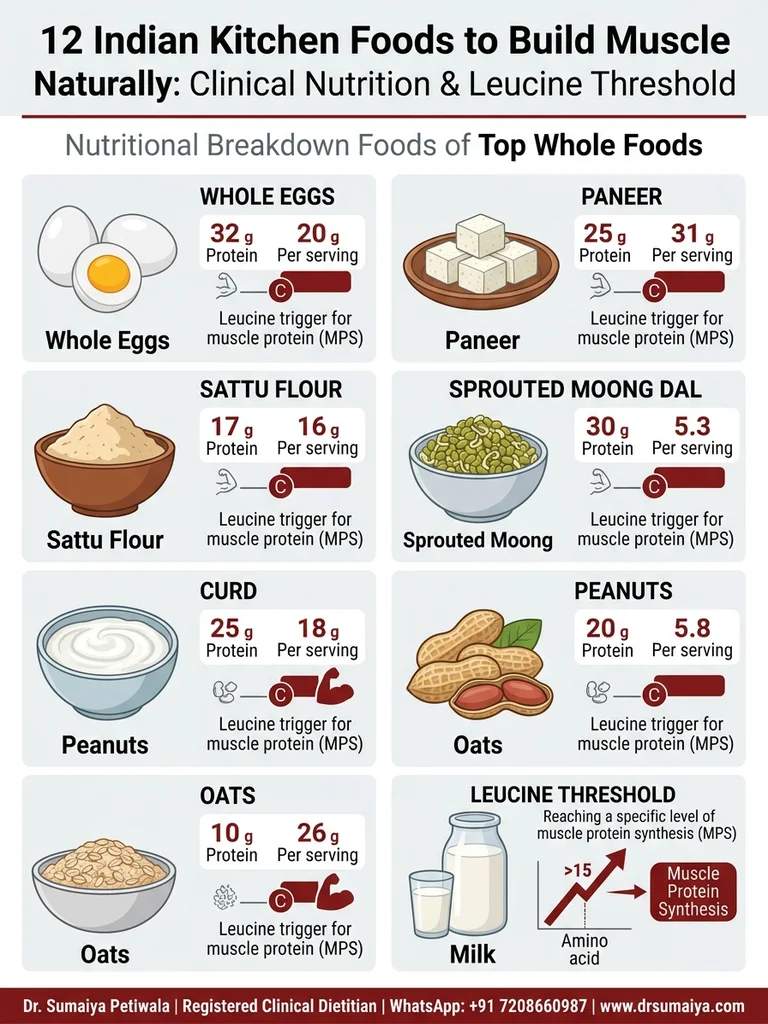
📊 Clinical Leucine Guide: Top Indian Kitchen Foods to Trigger Muscle Protein Synthesis.
How Muscle Building Protects Metabolic Health
Building lean muscle is not just for bodybuilders. Muscle is your primary metabolic organ:
- Glucose Disposal and Insulin Sensitivity. Skeletal muscle absorbs 80 percent of food glucose. Building muscle tissue reverses insulin resistance (where cells do not absorb glucose well). It halts buildup of visceral fat (deep belly fat packed around internal organs). Over time, it lowers HbA1c (a 3-month average of blood sugar levels). It also reduces fasting insulin (a morning blood test measuring baseline insulin levels).
- Liver Fat Clearance. Active muscles burn fatty acids with ease. This shields against fatty liver (a condition where fat builds up inside liver cells) and NAFLD (non-alcoholic fatty liver disease, a condition with excess liver fat). It normalizes SGPT (a liver enzyme showing hepatic irritation) and SGOT (a liver enzyme released during cell damage). It also lowers blood triglycerides (blood fats tied to insulin levels).
- Kidney Safety. Whole-food protein does not harm healthy kidneys. Drinking plenty of water clears uric acid (a natural waste product from protein digestion) smoothly.
- Hormone Health. Muscle mass prevents muscle loss. It cools systemic inflammation (cellular immune stress that harms tissues). It supports your thyroid (the neck gland that controls how fast your body burns energy), monitored by TSH (a blood test that checks your thyroid pace). It also improves cycle timing in women with PCOS (polycystic ovary syndrome, a hormonal imbalance).
Comparison: Low-Protein Indian Diet vs Clinical Muscle Protocol
See how standard eating compares with Doctor Sumaiya’s structured muscle protocol:
| Diet Element | Standard Indian Diet | Dr. Sumaiya Muscle Protocol |
|---|---|---|
| Protein per Meal | 5 to 10 grams. Mostly refined carbs. | 20 to 30 grams from diverse sources. |
| Leucine Trigger | Never crossed. Muscle repair stalls. | Hit 3 times daily for steady repair. |
| Body Composition | Skinny-fat phenotype. High belly fat. | Lean, sculpted, high muscle tone. |
| Metabolic Burn | Sluggish resting burn rate. | High 24-hour calorie expenditure. |
Build Muscle and Burn Fat with Doctor-Led Nutrition
Want to reshape your body without powders? Get a custom Indian food plan for your fitness goals. Consult Dr. Sumaiya Petiwala today.
Book Clinical Consultation on WhatsApp →The 50/25/25 Indian Plate Rule for Muscle Synthesis
Build your meals with this smart clinical balance to maximize muscle gain while burning fat:
- 50% High-Fiber Vegetables. Fill half your plate with palak, methi, tomatoes, carrots, and cucumber. These give prebiotic (plant fibers that nourish good gut bacteria) fiber. They offer antioxidant (plant defense compounds that protect gut lining) shield to curb muscle soreness.
- 25% Clean Protein First. Eat your protein first at each meal. Pick paneer, boiled eggs, grilled fish, chicken, or sprouted lentils. Eating protein first spurs fullness and muscle repair.
- 25% Smart Whole Grains. Finish with whole jowar roti, barley, or brown rice. These grains have a low glycemic index (a scale measuring how fast foods raise blood sugar). They have a low glycemic load (a ranking system for carbohydrate content and blood sugar impact). This prevents high postprandial (occurring after a meal) sugar surges.
Drink fresh chaas with roasted jeera after lunch. This habit aids digestion and speeds amino acid uptake.
The Dr. Sumaiya 3-Step Medical Correction Process
At Dr. Sumaiya NutriCare Clinic, we guide you through three structured clinical stages:
- Step 1: Biomarker Analysis. We review blood sugars, fasting insulin, and liver health. This sets your exact daily protein target.
- Step 2: Custom Indian Nutrition Plan. We create a simple home meal plan with local foods. It spreads protein evenly across the day.
- Step 3: Weekly Doctor Monitoring. We track your strength, energy, and body fat weekly. This ensures steady muscle gains.
🌟 Transform Your Health Today
Takes only 60 seconds to get personalized clinical insights.
"Lost 4kgs in one month... plans are simple and effective! She
responds to queries promptly."
– Payal J.
Frequently Asked Questions About Indian Muscle Foods
Can Indian vegetarians build significant muscle without whey protein?
Yes. Combining paneer, sattu, curd, sprouted lentils, and hemp seeds in adequate portions easily supplies enough leucine to stimulate muscle growth.
How much protein does a sedentary person need to prevent muscle loss?
Even without heavy exercise, adults require 0.8 to 1.0 gram of protein per kilogram of ideal body weight to maintain lean muscle and bone density.
Does eating dal and rice provide a complete protein profile?
Yes. Legumes are rich in lysine but low in methionine, while rice is rich in methionine but low in lysine. Together, they form a complete protein.
What is the best post-workout Indian kitchen snack?
A glass of sattu buttermilk, two boiled eggs with fruit, or 100 grams of fresh paneer with roasted chana makes an outstanding recovery snack.
Can a high-protein diet increase uric acid levels?
Uric acid rises mainly from purine-rich red meats, alcohol, and high-fructose corn syrup. Moderate plant and dairy proteins do not spike uric acid in healthy adults.