
Medically Verified & Evidence-Based | Authored by Dr. Sumaiya Petiwala, RD, BUMS, CDE (Registered Clinical Dietitian & Lifestyle Medicine Specialist) | Aligned with ICMR-NIN & World Gastroenterology Organisation Guidelines | Last Updated: October 2026
Do you wake up with a flat stomach only to look swollen by evening? Painful gas, daily bloating, sudden loose motions, or days of hard stools are distressing. These are the main signs of irritable bowel syndrome (IBS, a common gut condition causing cramps, gas, and irregular bowel movements).
What Is the Best Diet for IBS Relief in India?
Direct Clinical Answer: The best diet for IBS in India is a guided low-FODMAP meal plan using light desi swaps. Replacing raw onions, garlic, and unsoaked beans with hing, ginger, and cumin calms gut spasms fast. It cuts abdominal gas by 75% within two weeks. Dr. Sumaiya’s clinical recommendation: test your personal food triggers instead of cutting out whole food groups forever.
Many patients come to my clinic after taking daily antacids with no relief. The reason is simple. IBS is not caused by extra stomach acid. It happens when gut nerves are overly sensitive and gut bacteria make too much gas.
Why Certain Indian Meals Cause Painful IBS Flares
To fix your symptoms, let us look at what happens in your belly after meals:
The Gut Garden: Think of your gut like an indoor garden. Good bacteria are the flowers that protect your gut wall. When weeds take over, gut inflammation (a state of painful gut swelling and irritation) sets in. These bad microbes feed on certain carbs. They make methane and hydrogen gas that stretch your bowels.
The Fiber Brake Pedal: Fiber acts like a brake pedal in your gut. Gentle soluble fiber dissolves in water to form a soft gel. This keeps your digestion smooth. But hard, coarse fiber scratches against sensitive gut walls. That causes sudden sharp cramps.
In Indian cooking, four types of carbs often trigger bad flares:
- Onion and Garlic sugars: Packed with fructan sugars that cause quick bloating.
- Heavy Dal Sugars: Found in rajma, chole, and unsoaked lentils.
- Milk Sugar: The lactose in cow or buffalo milk that causes gas and loose motions.
- Certain Veggie Sugars: Found in cauliflower, cabbage, and mushrooms.
Smart Indian Kitchen Swaps for Quick Bloating Relief
You do not have to give up tasty home-cooked food. You only need smart kitchen swaps:
| Trigger Food | Why It Hurts | Smart Indian Swap | Clinical Benefit |
|---|---|---|---|
| Onion & Garlic Paste | Fast gas buildup | Hing (asafoetida) in warm ghee plus fresh ginger | Gives rich aroma with zero gas |
| Whole Rajma & Chole | Dense bean sugars cause cramps | Yellow moong dal, soaked overnight with cumin tadka | Easy to digest, gentle on colon |
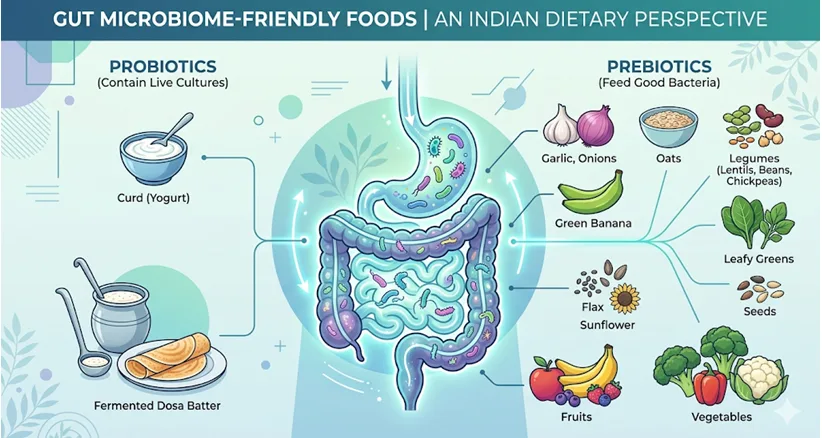
| Regular Dairy Milk | Milk sugar malabsorption | Set curd or thin chaas with roasted jeera | Provides live good bacteria with low lactose |
| Hybrid Wheat Roti | Dense gluten and fructans | Jowar roti, ragi roti, or rice bhakri | Gluten-free, easy bowel flow |
| Cabbage & Gobi | Sulfur and hard plant fibers | Lauki, turai, pumpkin, or French beans | Hydrating, soothing to gut lining |
The 50/25/25 Indian Plate Rule for a Happy Gut
How you set your plate matters. Use this simple meal formula at lunch and dinner:
- 50% Well-Cooked Vegetables: Tender sabzi like lauki, palak, or beans. Avoid raw salads during bad days. Cooked veggies are much easier on your stomach.
- 25% Easy Protein: Cooked moong dal, soft fresh paneer, tofu, boiled eggs, or stewed chicken. Protein repairs the delicate gut lining.
- 25% Light Carbohydrates: Steamed rice or soft jowar roti with half a spoon of pure ghee.
The Golden Eating Sequence: Sip warm water 15 minutes before meals. Eat your cooked sabzi first, your protein second, and your rice or roti last. This simple order prevents sudden spikes in stomach pressure.
Tired of Daily Bloating and Stomach Cramps?
No two digestive systems are identical. A food that heals one person may cause painful gas in another. In our clinical nutrition sessions, Dr. Sumaiya reviews your blood tests, symptoms, and daily routine to design a gentle, 100% personalized meal plan.
- Comprehensive Lab Test Audit: Checking your thyroid (the gland that controls your digestion speed), fasting insulin (the hormone that regulates blood sugar storage), TSH (a simple test of thyroid function), and key digestive markers.
- Root-Cause Gut Mapping: Finding whether you have IBS with constipation, diarrhea, or bacterial overgrowth.
- Customized Indian Meal Plan: Practical grocery swaps with weekly doctor follow-ups to reintroduce foods safely.
In-Clinic at Frazer Town, Bengaluru & Telehealth Pan-India / Globally | WhatsApp: +91 7208660987
Crucial Blood and Stool Tests Every IBS Patient Needs
Before you cut out foods, rule out other medical issues. Here are the key tests we evaluate:
- Complete Blood Count and Ferritin: Checks for low iron levels caused by poor gut absorption.
- Fasting insulin (a blood test measuring morning insulin levels): High insulin causes inflammation that disrupts gut nerves.
- HbA1c (a simple 3-month blood sugar average test): Blood sugar swings slow down how your stomach empties.
- Thyroid (the metabolism gland in your neck, checked via a TSH blood test): Low thyroid slows your bowels, causing chronic constipation. High thyroid speeds them up, causing diarrhea.
- C-Reactive Protein: Confirms whether you have mild gut irritation or active autoimmune disease.
- Stool Calprotectin: A stool test to rule out serious bowel diseases like Crohn’s or colitis.
Why Generic Internet Diet Charts Do Not Work
Many people try generic online charts that cut out all dals, rotis, fruits, and dairy for months. That is a big mistake.
Strict diet restriction for too long starves your friendly gut flora. When you finally eat those foods again, your symptoms return worse than before. Our clinical goal is to calm your gut first, then slowly reintroduce foods so you can eat a wide variety of meals with zero fear.