

Dr. Sumaiya Petiwala, RD, BUMS, CDE · Medical Doctor & Registered Clinical Dietitian · Evidence-Based Clinical Nutrition Guide · November 2026
Most people focus on what they buy at the grocery store, yet overlook how those ingredients are washed, soaked, cooked, and reheated at home. In Indian kitchens, everyday cooking habits can quietly decide whether your meal nourishes your cells or triggers sharp blood sugar spikes and sluggish digestion.
You do not need exotic ingredients or bland boiled food to protect your metabolic health. By pairing traditional Indian kitchen wisdom with clinical nutrition science, you can keep full flavor while protecting vitamins, gut health, and insulin sensitivity.
What are the best healthy Indian cooking tips?
Healthy Indian cooking preserves vitamins and lowers blood sugar spikes by pairing smart heat methods with meal structure. Closed-lid steaming retains water-soluble nutrients, while cooling cooked rice for 12 hours builds resistant starch. Dr. Sumaiya’s clinical recommendation: combine gentle cooking, whole spices, and the 50/25/25 plate sequence.
How Cooking Methods Shape Blood Sugar, Liver Fat, and Nutrient Retention
Every time you apply heat, water, or oil to raw food, you change its chemical structure. Gentle heat unlocks protein and minerals, while prolonged high heat destroys heat-sensitive vitamins like Vitamin C and folate.
Cooking also changes how fast starch turns into blood sugar. Think of dietary fiber and intact grain structure as a Fiber Brake Pedal inside your gut. When you over-boil or finely mash starchy foods, you remove that brake pedal. Glucose rushes into your bloodstream, forcing your body to release extra insulin.
Over time, repeated postprandial glucose spikes [sharp blood sugar rises after eating] strain your Insulin Key. Your muscle cells stop responding smoothly, and your Liver Storage Warehouse begins packing excess sugar into fat droplets inside liver cells.
What ICMR-NIN Guidelines Say About Indian Pre-Cooking and Cooking
Under Guideline 13 of the ICMR-NIN Dietary Guidelines for Indians, pre-cooking steps like washing vegetables whole before cutting, soaking pulses, sprouting, and fermentation measurably reduce anti-nutrients [natural plant compounds like phytates that block iron, zinc, and calcium absorption]. Closed-lid steaming and controlled pressure cooking protect heat-sensitive nutrients far better than open-lid boiling or deep-frying.
| Cooking Method | Nutrient Retention | Blood Sugar & Starch Impact | Best Indian Kitchen Use | Dr. Sumaiya’s Clinical Verdict |
|---|---|---|---|---|
| Closed-Lid Steaming | High retention of Vitamin C, B-complex, and plant antioxidants | Preserves cell walls and keeps the glycemic rise gentle | Idli, dhokla, leafy greens, broccoli, fish, and vegetable prep | Top Choice: Use daily for vegetables and fermented batters |
| Pressure Cooking (Controlled Water) | Preserves protein quality and destroys pulse anti-nutrients | Moderate; avoid over-cooking rice into mush | Whole dals, rajma, kala chana, and vegetable soups | Recommended: Ideal for legumes; reuse any cooking broth |
| Cook, Cool 12 Hours & Reheat | Maintains mineral content while transforming starch structure | Forms resistant starch [fiber-like starch that resists digestion] and lowers glucose spikes | Steamed rice, millets, and boiled sweet potatoes | Metabolic Upgrade: Great for diabetes and fatty liver care |
| Open-Lid Boiling & Draining | Loses up to 40–60% of water-soluble B vitamins and potassium | Removes starch water but strips valuable minerals | Avoid discarding nutrient-rich dal or vegetable stock | Limit: Switch to steaming or closed-lid simmering |
| Deep-Frying in Reheated Oil | Degrades fats and forms oxidized compounds | High calorie load delays stomach emptying and worsens insulin resistance | Pakoras, puris, samosas, and bhajiyas | Avoid Daily: Never reuse frying oil; bake or air-fry instead |
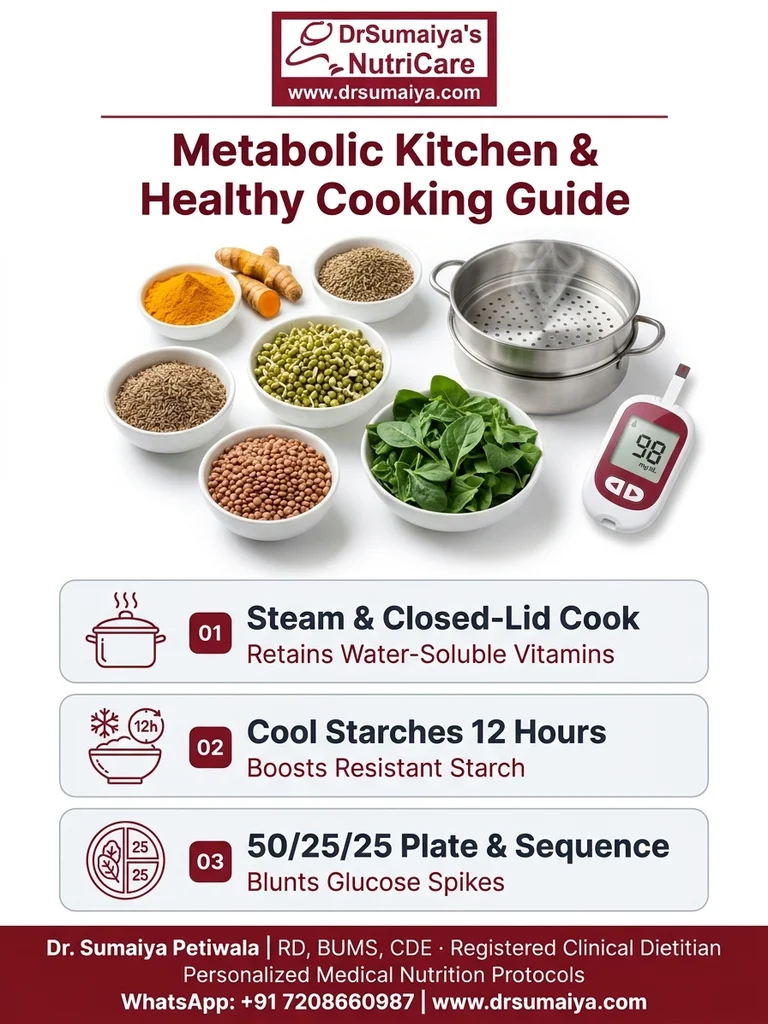
Metabolic Kitchen & Healthy Cooking Guide: nutrient-retaining heat methods, starch cooling, and the 50/25/25 plate rule by Dr. Sumaiya NutriCare Clinic.
1. Smart Flavor Upgrades Without Hidden Sugar or Refined Starches
Healthy home food never needs to taste dull. Many commercial shortcuts—like adding ketchup to gravies, malted chocolate powders to coffee, or excess cream—pack hidden sugars and refined oils. Try these clean, high-flavor kitchen upgrades instead:
- Nutrient-Dense Coriander Chutney: Blend fresh coriander and mint with walnuts, roasted almonds, or soaked pumpkin seeds instead of breadcrumbs. Nuts add healthy fats, protein, and fiber while extending refrigerator freshness.
- Tangy Fruit-Boosted Chutney: Add tart green apple, amla (Indian gooseberry), or kiwi to green chutneys. You get natural Vitamin C and brightness without refined sugar.
- Creamy Gravies Without Heavy Cream: Replace cream or cashew paste overload with blended boiled bottle gourd (lauki), cooked onion-tomato puree, or a splash of milk in kofta and paneer gravies.
- Besan-Boosted Flatbreads and Chillas: Mix 20% to 25% roasted gram flour (besan) into whole wheat or khapli atta, or make savory moong-besan chillas. Higher legume protein slows stomach emptying and softens blood sugar spikes.
- Pinch of Salt in Black Coffee: Add a tiny pinch of salt to unsweetened black coffee. Salt naturally reduces bitterness so you do not crave sugar or flavored syrups.
- Herb-Rich Tomato Soup: Finish homemade tomato soup with crushed dried mint (pudina), black pepper, and roasted cumin instead of cornstarch thickeners.
2. Boosting Nutritional Value From Everyday Staples
Some of the most powerful nutrition upgrades come from ingredients people usually throw away or rush past during meal prep:
- Use Fresh Paneer Whey: Never pour out the cloudy liquid (whey) left after curdling milk for homemade paneer. Use that mineral-rich whey to knead roti dough or simmer dal. It adds soluble protein, calcium, and natural softness to rotis.
- Cool Cooked Rice for Resistant Starch: Cook white or brown rice with a teaspoon of coconut oil or ghee, cool it in the refrigerator for 12 hours, and reheat gently before eating. Cooling recrystallizes starch into resistant starch [starch that bypasses rapid sugar absorption and feeds healthy gut bacteria].
- Wash Vegetables Whole Before Chopping: Rinse spinach, methi, cauliflower, and okra thoroughly before slicing them. Washing cut pieces leaches out Vitamin C and B vitamins into the sink.
- Soak and Sprout Whole Pulses: Soak rajma, chana, and whole moong for 8 to 12 hours and discard the soaking water before pressure cooking. Soaking reduces gas-forming compounds and improves iron and zinc absorption.
- Pair Turmeric With Black Pepper: Always add a pinch of freshly cracked black pepper when cooking with turmeric (haldi). Piperine in black pepper boosts curcumin absorption and supports your Gut Garden.
The 50/25/25 Indian Plate Rule and Golden Eating Sequence
Even the cleanest cooking method works better when you plate your meal in the right order. Fill 50% of your plate with non-starchy sabzi and raw salad, 25% with protein (thick dal, curd, paneer, eggs, fish, or chicken), and 25% with whole-grain roti or cooled rice. Eat your salad and sabzi first, protein second, and grains last to flatten post-meal glucose spikes.
3. Fixing Common Cooking Mishaps Without Ruining Nutrition
Kitchen accidents happen in every busy home. You can rescue over-salted, over-spiced, or scorched dishes without adding heavy fats or processed sauces:
- Too Much Chili Heat: Stir in whisked homemade curd (yogurt) or fresh lemon juice off the heat. Dairy protein (casein) binds capsaicin and calms spice without drowning the curry in extra ghee.
- Excess Salt in Curry or Dal: Drop a peeled raw potato half or a small ball of whole wheat dough into the simmering pot for 2 minutes, then remove and discard it. Both absorb excess surface sodium.
- Moisture-Proof Aloo Paratha Filling: If spiced potato filling feels wet and tears your dough, mix in 1 to 2 tablespoons of dry-roasted besan or sattu instead of white breadcrumbs. You add protein and fiber while keeping the paratha crisp.
- Softening Clumped Asafoetida (Hing): Place a fresh green chili inside your hing container for 24 hours. Natural moisture softens hardened hing without needing any chemical anti-caking agents.
4. Extending Shelf Life and Safe Food Prep Habits
Smart storage protects both food safety and nutrient quality across busy workweeks in India or abroad:
- Clean Cauliflower Safely: Soak cauliflower florets in warm water with a pinch of turmeric and salt or 1 tablespoon of white vinegar for 10 minutes, then rinse well.
- Keep Dough Fresh Without Excess Oil: Brush leftover whole-wheat dough lightly with a few drops of cold-pressed oil, store in an airtight glass container, and use within 24 hours.
- Whole Curry Leaf Sprigs: Add whole curry leaf (kadi patta) stems to tadkas so family members can lift them out easily if preferred, while still infusing aromatic antioxidants into the dish.
- Kitchen Scissors for Greens: Use dedicated food-safe scissors to snip fresh coriander, mint, and green chilies directly over bowls. Faster prep encourages daily use of fresh herbs.
- Prevent Potato Sprouting: Store potatoes in a cool, dark basket away from onions, or keep an apple nearby to slow sprouting naturally.
Clinical Safety Note: Stop Reusing Frying Oil and Skip “Health” Shortcuts
Repeatedly reheating cooking oil past its smoke point creates oxidized fats and aldehydes that stress blood vessels and liver cells. Keep oil modest, rotate cold-pressed mustard, groundnut, or sesame oil, and discard leftover deep-frying oil. Also remember that commercial “natural” sweeteners like jaggery, honey, and palm sugar still raise blood glucose and liver fat similarly to table sugar.
When Kitchen Tips Are Not Enough: Lab Tests Worth Checking
Clean home cooking is your strongest daily foundation. However, if you notice stubborn belly fat, afternoon crashes, hair fall, or irregular cycles despite eating home-cooked meals, kitchen hacks alone cannot reveal which metabolic pathway is blocked.
Consider checking these baseline markers with your physician: HbA1c [a 3-month average blood sugar test], Fasting Insulin and HOMA-IR [a score measuring insulin resistance], Lipid Profile with triglycerides, and SGPT/ALT [a liver enzyme linked to fatty liver stress].
Frequently Asked Questions (People Also Ask)
1. Which Indian cooking method retains the most vitamins and minerals?
Closed-lid steaming retains the highest amount of heat- and water-soluble vitamins such as Vitamin C and B-complex because food does not sit directly in boiling water. For lentils and beans, controlled pressure cooking destroys anti-nutrients while preserving protein quality, especially when you reuse the cooking broth.
2. Does cooling cooked rice really lower its blood sugar impact?
Yes. Cooling cooked rice in the refrigerator for about 12 hours triggers starch retrogradation, converting a portion of rapidly digestible starch into resistant starch. Even after gentle reheating, resistant starch slows glucose absorption in the small intestine and nourishes beneficial gut bacteria.
3. Should I wash vegetables before or after cutting them?
Always wash vegetables whole under running water before peeling or chopping them. Cutting vegetables first exposes the interior tissue to water, which washes away water-soluble vitamins and potassium before the food even reaches your pan.
4. Is it safe to reuse cooking oil left over after deep-frying?
No, repeatedly reheating the same cooking oil breaks down fatty acids and creates oxidized compounds that promote inflammation and metabolic stress. Use minimal oil for sautéing or roasting, and discard leftover deep-frying oil rather than reusing it for daily meals.
5. How can I make daily rotis and Indian meals more blood-sugar friendly?
Blend 20% to 25% roasted besan or millet flour into your whole-wheat atta, or knead dough using protein-rich paneer whey. Follow the 50/25/25 plate rule and eat your salad and sabzi first, protein second, and roti or rice last to blunt post-meal glucose spikes.
Clinical Evidence Sources: Indian Council of Medical Research – National Institute of Nutrition (ICMR-NIN Dietary Guidelines for Indians, 2024, Guideline 13: Pre-cooking and Cooking Methods). American Diabetes Association (ADA Standards of Care in Diabetes, 2026). National Institutes of Health Office of Dietary Supplements (NIH Calcium Fact Sheet). Sonia S, Witjaksono F, Ridwan R. Effect of cooling of cooked white rice on resistant starch content and glycemic response. Asia Pacific Journal of Clinical Nutrition. 2015;24(4):620–625.
🌟 Transform Your Health Today
Takes only 60 seconds to send a booking enquiry.
"Lost 4kgs in one month... plans are simple and effective! She
responds to queries promptly."
– Payal J.
About this guide
This guide provides general health information. Your own care depends on your medical history and circumstances. Speak with your treating clinician before changing medicines or treatment.