
By Dr. Sumaiya Petiwala, RD, BUMS, CDE (Registered Clinical Dietitian & Medical Doctor)
How Do Immune Cells Switch Off Insulin Release in Minutes?
For decades, patients with Type 2 diabetes and prediabetes were told that insulin resistance and pancreas fatigue take years of slow wear and tear. However, a landmark November 12, 2026 study by researchers at the Indian Institute of Technology Kanpur (IIT Kanpur) published in the Journal of Clinical Investigation proved that immune cells sitting inside your pancreas can actively silence insulin release within minutes using lipid messengers—not slow inflammation.
A November 2026 IIT Kanpur study revealed that pancreatic immune cells called macrophages release signaling fats (sphingolipids) via the GPR18 receptor to switch off insulin secretion within minutes. This rapid lipid signal occurs even before classic inflammatory markers rise. Dr. Sumaiya’s clinical recommendation: calm pancreatic macrophages with anti-inflammatory, low-GI whole-food meals.
The Science: Pancreatic Macrophages, Sphingolipids & Your “Insulin Key”
Inside your pancreas, insulin-producing beta cells sit right next to protective immune cells called macrophages [white blood cells that guard tissue health and regulate local inflammation]. When you eat ultra-processed snacks or refined carbohydrates, your Liver Storage Warehouse overflows, activating a receptor called GPR18 [a molecular switch on pancreatic macrophages that triggers rapid fat-signal release] (IIT Kanpur 2026 Study).
Once switched on, macrophages immediately export sphingolipids [lipotoxic fat-messenger molecules that enter beta cells and block insulin secretion]. Instead of releasing your Insulin Key smoothly after a meal, beta cells freeze up—causing stubborn post-meal blood sugar spikes even when standard inflammatory blood tests look normal (Indian Diabetes Reversal Guide).
| Metabolic Trigger | Macrophage & Sphingolipid Response | Blood Sugar Outcome | Clinical Kitchen Swap |
|---|---|---|---|
| Refined Seed Oils & Deep-Fried Snacks | Activates macrophage GPR18 and boosts toxic sphingolipid synthesis | Blunts first-phase beta-cell insulin release within minutes | Use cold-pressed mustard/olive oil + roasted makhana |
| Polished White Rice & Maida Meals | Floods portal blood with glucose, driving lipid spillover | Sharp post-meal spike followed by afternoon fatigue | Swap for khapli wheat or foxtail millet + kala chana |
| Hidden Erythritol & Sugary Chai | Increases cellular oxidative stress and microvascular strain | Worsens HOMA-IR (insulin resistance score) and kidney stress | Flavor tea with crushed cardamom, cinnamon, and ginger |
| 50/25/25 Anti-Inflammatory Plate | Calms macrophage signaling and lowers ceramide/sphingolipid tone | Smooth post-meal glucose curve and protected beta cells | Methi greens + whole moong/paneer + flaxseed podi |
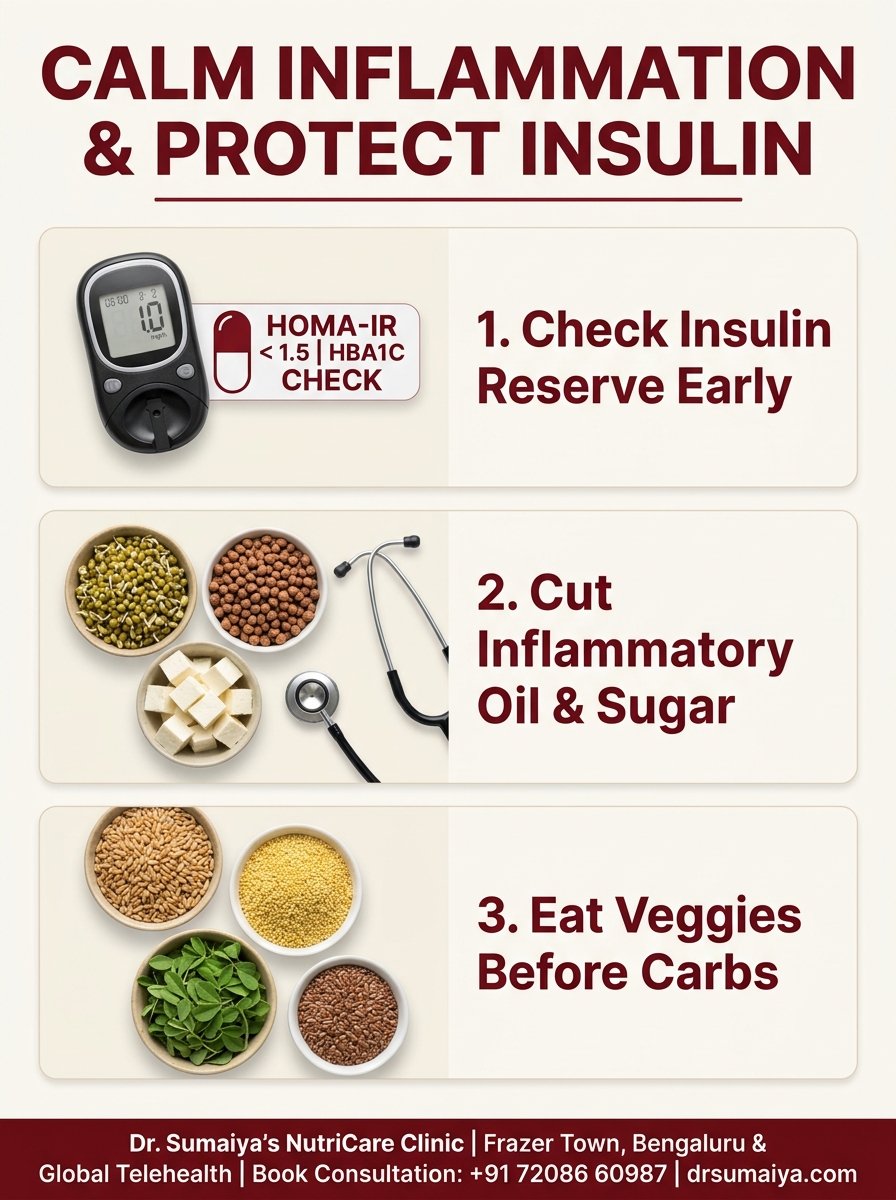
📊 Visual Clinical Summary: Diabetes Diet Plan India: How Immune Cells Silence Insulin & Calm Inflammation (2026) — Dr. Sumaiya NutriCare Clinic.
How to Protect Beta Cells: 4-Region Actionable Kitchen Guidance
Calming pancreatic macrophages requires pressing the Fiber Brake Pedal with The 50/25/25 Plate Architecture (50% non-starchy vegetables, 25% protein, 25% intact whole grains) and The Golden Eating Sequence (Fiber first → Protein second → Complex Carbs last) (Foods That Spike Blood Glucose).
1. Actionable Indian Kitchen Guidance (South Asian & Desi Home Cooking)
- Morning Beta-Cell Anchor: Swap plain poha or biscuits for savoury whole moong chillas stuffed with 75g of homemade paneer and fresh methi greens, or vegetable dalia.
- Lunch & Dinner Thali: Start with bhindi, palak, or lauki sabzi, follow with boiled kala chana or rajma, and finish with one khapli wheat phulka or unpolished foxtail millet topped with roasted flaxseed podi (Choosing the Right Wheat for Blood Sugar).
- Evening Swap: Drink roasted-jeera chaas after lunch and snack on roasted makhana instead of fried namkeen.
2. Actionable US & North American Kitchen Guidance
- Breakfast & Salad Primer: Replace sweetened cereals and bagels with steel-cut oats topped with chia seeds and walnuts, or pasture-raised eggs and avocado on sprouted Ezekiel toast.
- Lunch & Dinner Bowl: Eat a kale-broccoli slaw in apple cider vinegar and olive oil first, then enjoy wild Alaskan salmon or grilled tofu over quinoa and black beans, plus plain 2% Greek yogurt with berries.
3. Actionable European & Mediterranean Kitchen Guidance
- Polyphenol Starter: Open meals with bitter greens (arugula, radicchio) and roasted artichoke or fennel drizzled with cold-pressed extra-virgin olive oil (EVOO).
- Protein & Intact Grain: Pair Atlantic mackerel, sardines, or Puy green lentils and hummus with dense whole-grain rye bread (Rugbrød) and plain Icelandic Skyr.
4. Actionable East & Southeast Asian Kitchen Guidance (China, Singapore, Thailand & Beyond)
- Grain & Broth Upgrade: Swap white jasmine rice and hor fun for unpolished red cargo rice, brown rice, or 100% buckwheat soba paired with clear tom yum or miso-wakame broths.
- Lean Protein & “Kosong” Rule: Choose steamed sea bass with ginger-scallion, silken tofu, edamame, or tempeh alongside bok choy, gai lan, and bitter melon, ordering tea/coffee strictly “kosong” (zero sugar).
The Diagnostic Gap: Check Your Pancreatic & Inflammatory Markers
Because immune cells can silence insulin release before classic inflammation markers spike, waiting for a high fasting glucose report misses early beta-cell stress. A generic downloadable diet chart cannot calibrate lipid and carbohydrate thresholds to your individual insulin reserve.
🩺 Dr. Sumaiya’s Clinical Diagnostic Checklist for Beta-Cell Protection
- Fasting C-Peptide & Fasting Insulin: Measures actual pancreatic beta-cell insulin output and calculates HOMA-IR (target <1.5).
- HbA1c & 2-Hour Postprandial Glucose: Tracks 3-month glycation (<5.6%) and post-meal beta-cell responsiveness (<140 mg/dL).
- Triglycerides, HDL & hs-CRP: Screens for lipotoxic lipid spillover (TG/HDL <2.0) and systemic vascular inflammation (<1.0 mg/L).
- SGPT/ALT & GGT Liver Panel: Evaluates hepatic fat load driving pancreatic lipid signaling (target GGT <27.5 U/L).
For physician-supervised Medical Nutrition Therapy tailored to your biomarkers, visit Dr. Sumaiya’s NutriCare Clinic (In-Clinic at Frazer Town, Bengaluru & Global Telehealth across India, the US, UK/Europe, Singapore, and the Middle East), with consultation plans starting at ₹800 (drsumaiya.com/plans-pricing/ | Call/WhatsApp: +91 7208660987 | Email: doc@drsumaiya.com).
Diabetes Diet Plan India: How Immune Cells Silence Insulin & Calm Inflammation (2026)
Dr. Sumaiya Petiwala explains the core metabolic mechanism in 30 seconds.
🌟 Transform Your Health Today
Takes only 60 seconds to send a booking enquiry.
"Lost 4kgs in one month... plans are simple and effective! She
responds to queries promptly."
– Payal J.
Frequently Asked Questions (People Also Ask)
1. What did the November 2026 IIT Kanpur diabetes study discover?
IIT Kanpur researchers discovered that pancreatic immune cells called macrophages can switch off insulin secretion within minutes by releasing sphingolipids through the GPR18 receptor. This rapid lipid communication occurs in human pancreatic tissue without waiting for slow, classical inflammatory damage.
2. Which foods calm pancreatic macrophage inflammation and protect insulin?
Replacing refined seed oils, fried snacks, and white rice with intact high-fiber grains (khapli wheat, foxtail millet), legumes (kala chana, whole moong), and omega-3-rich flaxseed podi reduces lipotoxic spillover. Sequencing non-starchy greens like methi and palak first further blunts post-meal beta-cell strain.
3. Can early beta-cell insulin silencing be reversed without lifelong medication increases?
Yes, when fasting C-peptide confirms active beta-cell reserve, physician-supervised Medical Nutrition Therapy can rapidly lower post-meal glucose and lipid spillover. Always work with your doctor and clinical dietitian before adjusting any prescribed diabetes tablets.
About this guide
This guide provides general health information. Your own care depends on your medical history and circumstances. Speak with your treating clinician before changing medicines or treatment.