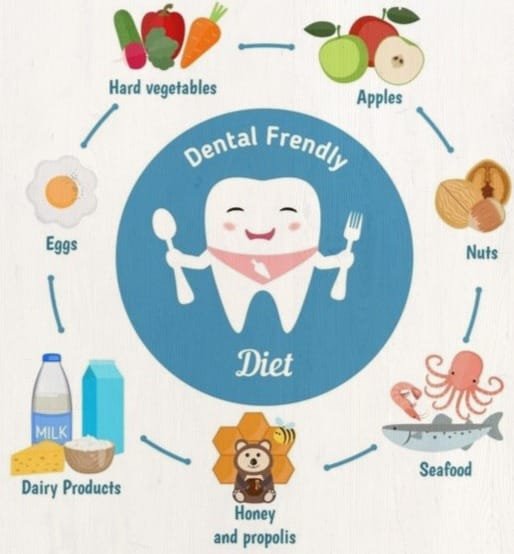

Five dental words appear below, so let me define them once. Enamel (the hard outer layer of each tooth) is what decay eats into. Plaque (the sticky bacterial film that forms on teeth) is where that decay starts. Collagen (the protein that keeps gums firm and tight) is what vitamin C builds. Remineralization (the repair process that puts minerals back into enamel) is what saliva does for you all day. A probiotic (live helpful bacteria in fermented food) is what curd and chaas deliver.
🩺 Quick Clinical Answer: What Does Diet Do for Your Teeth?
Diet decides your dental health twice over. Sugary and sticky foods feed plaque bacteria, which pump out acid that eats enamel. Calcium, vitamin D, vitamin C, and water rebuild and defend. End meals with cheese or curd, snack less often, and your next dental checkup usually shows the difference.
What This Guide Covers
- How food causes cavities
- The nutrient shortlist for teeth and gums
- Foods that help and foods that harm
- Diabetes and gum disease: the two-way street
- Bad breath: diet causes and fixes
- Habits that multiply the diet effect
- A day of tooth-friendly Indian eating
- A seven-day starter plan
- Frequently asked questions
- References
How Food Causes Cavities
Every mouth carries bacteria. After you eat or drink anything sugary, those bacteria ferment the sugar and produce acid for the next twenty to thirty minutes. Each acid attack dissolves a little mineral from enamel. Between attacks, saliva neutralises the acid and repairs the surface. That repair is remineralization at work.
Two things decide who gets cavities: how much sugar you eat, and how often. Frequent sipping and snacking keep acid on the teeth for hours, which is why three exposures a day beats eight, even if the total sugar is the same. Sticky foods such as toffees, dried fruit, and biscuits cling to enamel and extend the attack. Clear them away with water or a meal-ending bite of cheese.
The Nutrient Shortlist for Teeth and Gums
No single nutrient saves teeth. Four shortages show up most in my clinic, and each has an ordinary kitchen fix.
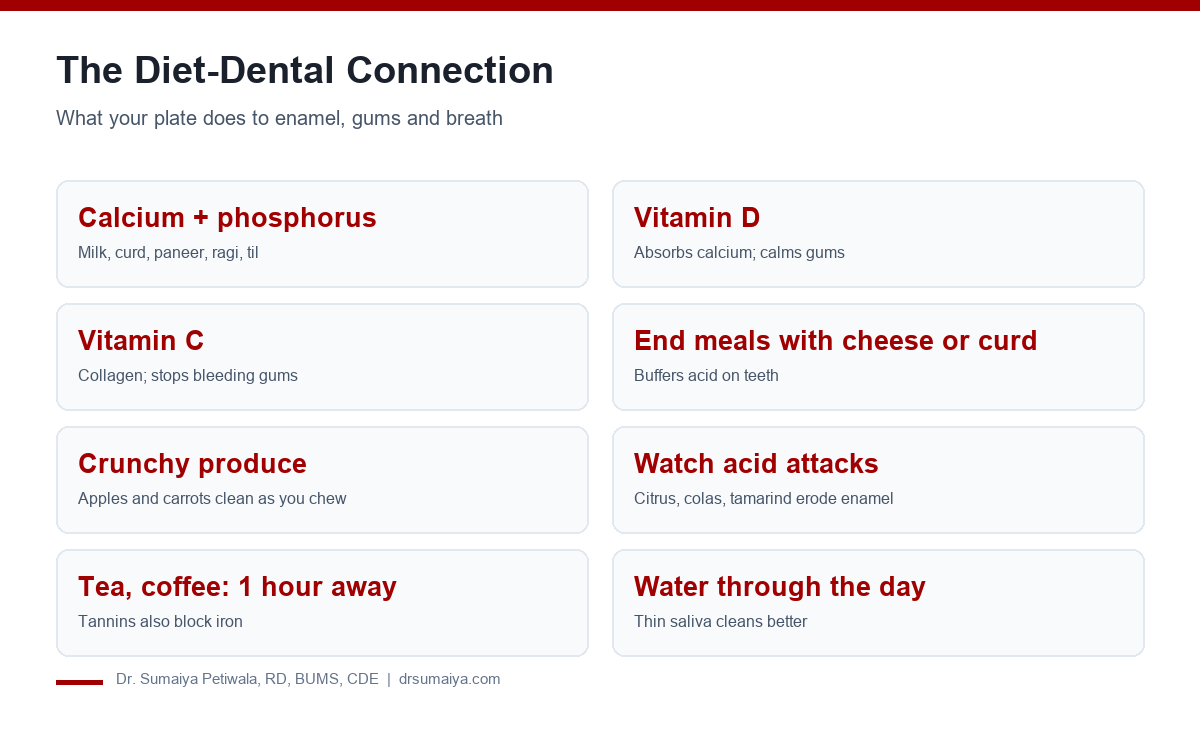
Calcium and phosphorus form the hard structure of teeth, and dairy is the easiest source: milk, curd, paneer, and cheese. Ragi, til, and ragi-based rotis carry calcium for vegetarians. Vitamin D lets your gut absorb that calcium, and it calms gum inflammation (swelling and irritation inside the body) too. Twenty minutes of midday sun, eggs, and fortified milk cover most needs. Vitamin C builds collagen, so gums can hold teeth tight; without it, gums bleed at the slightest brush. Amla, guava, citrus, and capsicum are rich sources. Vitamin A protects the soft lining of the mouth; carrots, papaya, and leafy greens supply it.
| Nutrient | Best Indian sources | What it does for your mouth |
|---|---|---|
| Calcium + phosphorus | Milk, curd, paneer, cheese, ragi, til | Builds and repairs enamel |
| Vitamin D | Midday sun, eggs, fortified milk | Absorbs calcium; calms gums |
| Vitamin C | Amla, guava, citrus, capsicum | Builds collagen; stops bleeding gums |
| Vitamin A | Carrot, papaya, spinach, methi | Protects the mouth lining |
| Probiotics | Curd, chaas, idli, dosa batter | Balances mouth bacteria |
| Water + fluoride | Plain water through the day | Washes debris; strengthens enamel |
Foods That Help and Foods That Harm
Your daily choices split cleanly into two lists.
Choose these
- Crunchy produce. Apple, guava, carrot, and cucumber scrub teeth while you chew and make saliva flow.
- Dairy. Cheese and curd buffer acid. Ending a meal with either is the single easiest habit to adopt.
- Plain water. It washes food debris away and keeps saliva thin. Carry a bottle; sip all day.
- Green tea. Its compounds support gum health, as long as sugar stays out of the cup.
Limit these
- Sugary sips and sticks. Chai with biscuits, colas, juices, and mithai feed plaque for hours. Keep them to meals, not between.
- Acid attacks. Citrus, tomatoes, tamarind dishes, and sodas erode enamel directly. Rinse with water afterwards and wait thirty minutes before brushing.
- Sticky foods. Raisins, granola bars, and dried fruit cling to teeth longer than chocolate does. Brush or rinse soon after.
Diabetes and Gum Disease: The Two-Way Street
Gum disease and diabetes feed each other. High blood sugar weakens immune defence in the gums and dries the mouth, so infection takes hold faster. In the other direction, inflamed gums raise body-wide inflammatory signals, which make blood sugar harder to control. My patients with diabetes who fix their gum health usually see steadier sugar readings too.
The same logic extends to the rest of the body. Gum inflammation is linked with higher heart-disease risk, and mouth bacteria can travel to the lungs in susceptible people. The mouth is not separate from the body; it is the front door. I cover the diabetes side in detail in my guide to blood sugar control and gum disease in diabetes.
Bad Breath: Diet Causes and Fixes
Bad breath, called halitosis (the medical word for it), usually starts with the same plaque bacteria. Garlic and onion odours pass through the blood and linger for a day. A dry mouth lets bacteria multiply, which is why morning breath and dehydration go together. Very low-carb diets produce a distinct fruity breath from ketones. And persistent bad breath despite good hygiene can point to acid reflux, sinus infection, or gum disease, which need treatment, not mints.
What helps: water through the day, curd or chaas with meals, crunchy fruit and vegetables as cleansers, fennel or cloves after dinner, and less sugar feeding the bacteria. Chewing sugar-free gum is a legitimate short-term fix because it floods the mouth with saliva.
Habits That Multiply the Diet Effect
- Brush twice daily for two minutes with fluoride toothpaste, using gentle circles.
- Clean between teeth once a day. Floss or a water flosser reaches where brushes cannot.
- Wait thirty minutes after an acidic meal before brushing, so enamel can re-harden.
- Book dental checkups every six months. Cavities caught early are cheap and painless.
- Drop tobacco in any form. It multiplies gum-disease risk and oral-cancer risk.
A Day of Tooth-Friendly Indian Eating
- Breakfast: idli with sambar, or roti-sabzi, plus one amla or a glass of milk. Finish with water.
- Mid-morning: an apple or guava instead of biscuits. The crunch cleans as you chew.
- Lunch: dal, sabzi, roti, and salad. End with a small bowl of curd, which buffers acid and adds probiotics.
- Evening: chai without sugar, or with less. Skip the biscuit on the side. Roasted chana or makhana instead.
- Dinner: two hours before bed. If dessert is on the table, keep it with the meal rather than an hour later, then rinse.
A Seven-Day Starter Plan
- Day 1: park a bottle of plain water on your desk. Sip hourly.
- Day 2: buy amla or guava for the week; one fruit after breakfast daily.
- Day 3: move chai biscuits out of the house. Keep roasted chana in the jar instead.
- Day 4: end lunch with curd all week. Note whether morning breath changes.
- Day 5: set a reminder for the thirty-minute gap between acidic food and brushing.
- Day 6: check your toothbrush. Older than three months? Replace it.
- Day 7: book the pending dental checkup, and if you have diabetes, review your last gum check too.
Bleeding Gums or Frequent Cavities?
Bleeding gums, recurring cavities, and bad breath have dietary drivers you can fix. At Dr. Sumaiya NutriCare Clinic we review your diet, blood sugar, and nutrition markers together, then build a plan your teeth and your reports will both show.
- Comprehensive Blood & Biomarker Audit (blood sugar, vitamin D, B12, calcium panel)
- Root-Cause Assessment with Diet Recall and Oral Health History
- 100% Customised Indian Meal Protocol with Continuous Weekly Monitoring
In-Clinic at Frazer Town, Bengaluru & Telehealth Pan-India / Globally | Call/WhatsApp: +91 7208660987
Frequently Asked Questions
References
- Pihlstrom BL, Michalowicz BS, Johnson NW. Periodontal diseases. Lancet. 2005;366(9499):1809-1820. PMID 16298220
- Humphrey LL, Fu R, Buckley DI, Freeman M, Helfand M. Periodontal disease and coronary heart disease incidence: a systematic review and meta-analysis. J Gen Intern Med. 2008;23(12):2079-2086. PMID 18807098
- Taylor GW, Borgnakke WS. Periodontal disease: associations with diabetes, glycemic control and complications. Oral Diseases. 2008;14(3):191-208. PMID 18336370
- Scannapieco FA. Oral Health, Periodontitis, and Respiratory Diseases: Biological Pathways. J Periodontal Res. 2026. PMID 42364134
- Indian Council of Medical Research – National Institute of Nutrition. Recommended Dietary Allowances for Indians. Hyderabad: NIN.