

Dr. Sumaiya Petiwala, RD, BUMS, CDE · Medically Reviewed & Evidence-Based · Updated November 2026
Bringing a newborn into the world is an extraordinary, transformative journey—but for millions of new mothers between 3 and 12 months postpartum, the postpartum reality is clouded by profound, unyielding exhaustion, debilitating brain fog, uncontrollable emotional weeping, and a frustrating inability to shed gestational weight despite breastfeeding and eating clean home-cooked meals.
When these mothers voice their concerns, they are almost universally met with well-intentioned dismissals from family and busy clinicians: ‘You just had a baby,’ ‘You’re just sleep-deprived,’ or ‘Just wait until your baby sleeps through the night.’ Yet for up to 10% of new mothers, this crushing fatigue and weight retention is not routine postnatal tiredness—it is the signature manifestation of an undiagnosed autoimmune condition known as Postpartum Thyroiditis.
Why is it so hard to lose weight postpartum with thyroiditis?
Postpartum thyroiditis affects up to 10% of new mothers, causing autoimmune inflammation of the thyroid gland. As thyroid hormone production drops into a hypothyroid phase, basal metabolic rate plummets and fluid retention surges. Simultaneously, elevated prolactin blunts insulin sensitivity, making conventional postpartum weight loss physiologically impossible without metabolic restoration.
The ‘Breastfeeding Melts Weight Away’ Myth & The Reality of Postnatal Metabolism
One of the most persistent and psychologically damaging myths told to new mothers is that exclusive breastfeeding guarantees rapid, effortless weight loss. While human lactation does expend approximately 300 to 500 calories per day, maternal physiology is governed by complex evolutionary survival circuits, not simple calorie mathematics.
To sustain breast milk production, the maternal pituitary gland secretes elevated levels of prolactin. Prolactin acts as an evolutionary metabolic brake, reducing peripheral insulin sensitivity to ensure that glucose is preferentially spared for mammary glands. If a new mother simultaneously suffers from thyroid inflammation, her resting basal metabolic rate drops precipitously, forcing the body into aggressive energy-conservation mode regardless of nursing frequency.
| Symptom or Marker | Routine Postpartum Fatigue | Postpartum Thyroiditis (Hypothyroid Phase) |
|---|---|---|
| Core Underlying Mechanism | Sleep deprivation and physical demands of infant care | Autoimmune lymphocytic infiltration and destruction of thyroid follicular cells |
| Thermal Sensitivity | Normal; comfortable in standard ambient temperature | Intense cold intolerance; freezing hands, feet, and shivering indoors |
| Weight Trajectory | Gradual weight normalization with balanced home meals | Unexplained weight retention or sudden weight gain despite exclusive breastfeeding |
| Cognitive & Emotional State | Tiredness relieved after a 2-hour restorative nap | Deep brain fog, memory lapses, persistent depressive dysphoria, and apathy |
| Hair & Skin Condition | Mild telogen effluvium shedding that resolves by month 6 | Severe diffuse hair thinning, loss of outer eyebrow hair, cracked dry skin |
| Bowel Motility | Occasional sluggishness related to fluid intake | Severe, unyielding constipation unresponsive to routine water or fiber increases |
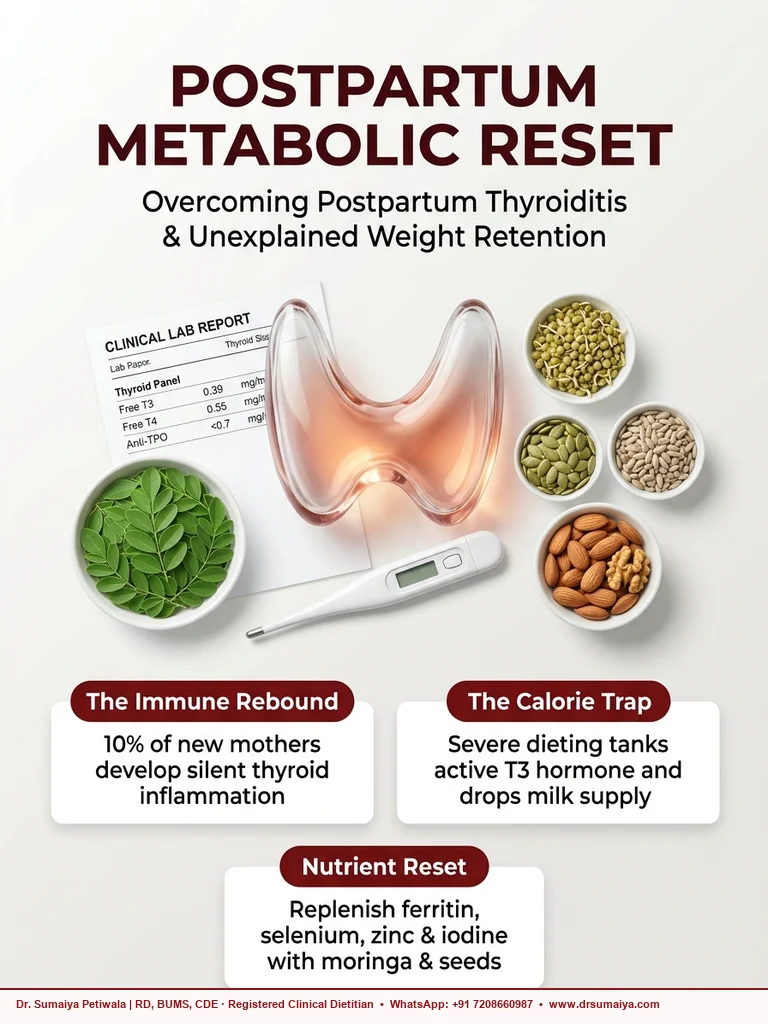
Overcoming Autoimmune Thyroid Shifts & Postnatal Metabolic Slowdown: evidence-based clinical protocols from Dr. Sumaiya NutriCare Clinic.
The Biphasic Endocrine Trajectory: What Clinical Thyroid Research Reveals
Clinical guidance from the American Thyroid Association (ATA) and postnatal endocrinology reviews emphasize that pregnancy is a state of physiological immune suppression, designed to prevent the maternal immune system from rejecting fetal tissue. Following childbirth, this immune tolerance undergoes a dramatic, rapid rebound.
In women with underlying autoimmune predisposition (particularly those carrying thyroid peroxidase antibodies), this immune rebound triggers lymphocytic infiltration of the thyroid gland. The condition unfolds in a classic biphasic clinical pattern:
1. The Silent Hyperthyroid Phase (1 to 4 Months Postpartum): Inflamed thyroid follicular cells burst, releasing stored thyroid hormones into the bloodstream. Mothers often experience heart palpitations, internal tremors, anxiety, and insomnia—symptoms frequently misattributed to newborn stress.
2. The Overt Hypothyroid Phase (4 to 12 Months Postpartum): Once stored hormone reserves are depleted, the damaged gland cannot synthesize adequate thyroxine (T4) and triiodothyronine (T3). Metabolic rate collapses. Mothers experience debilitating exhaustion, severe cold intolerance (shivering indoors), diffuse hair shedding that worsens after 6 months, chronic constipation, and rapid, unexplained weight retention.
3 Safe Clinical Nutrition Strategies to Reset Metabolism While Protecting Milk Supply
1. Cease Severe Caloric Restriction Immediately
When new mothers realize the scale is not moving, their instinctive reaction is often to slash calories down to 1,200 or skip meals. In postpartum physiology, severe caloric restriction signals immediate famine to the hypothalamus. The body responds by downregulating the 5′-deiodinase enzyme responsible for converting inactive T4 hormone into active metabolic T3, pushing the thyroid deeper into hypothyroid torpor while drastically compromising breast milk volume. Nourishment, not starvation, is the clinical imperative.
2. Replenish Gestationally Depleted Thyroid Micronutrient Stores
Growing a human infant and producing breast milk severely depletes maternal micronutrient reserves. The enzymatic synthesis of thyroid hormone requires specific cofactors: selenium, zinc, bioavailable iron (ferritin), iodine, and choline. Integrate traditional Indian nutrient powerhouses: freshly cooked drumstick leaves (moringa) providing non-heme iron and antioxidants, soaked sunflower and pumpkin seeds for organic selenium and zinc, pastured eggs or sprouted lentils, and judicious amounts of iodized salt to support thyroid enzyme synthesis.
3. Stabilize Postpartum Blood Sugar with Protein-Anchored Lactation Snacks
Lactation induces sudden, intense sugar cravings due to rapid blood glucose drops during nursing sessions. Succumbing to refined sugar biscuits or sweetened teas triggers violent insulin spikes that exacerbate postpartum hormonal chaos. Replace sugary snacks with protein-anchored, blood-sugar-steady Indian choices: lightly roasted paneer cubes sprinkled with roasted jeera, boiled chana sundal with mustard seeds and curry leaves, or homemade lactation laddoos made with whole roasted nuts, gond (edible gum), and flaxseeds without refined sugar.
The Diagnostic Gap: Why a Single TSH Test Misses Postpartum Thyroiditis
When an exhausted mother finally convinces a physician to check her thyroid, laboratories routinely order only a standalone TSH (Thyroid Stimulating Hormone) test. Because postpartum thyroiditis is a dynamic, fluctuating condition, TSH levels can briefly cross ‘normal’ reference ranges while transitioning between the hyperthyroid and hypothyroid phases, leading clinicians to falsely reassure the patient that her thyroid is fine.
An accurate clinical diagnosis demands a complete postnatal endocrine panel: Free T3, Free T4, Anti-TPO (Thyroid Peroxidase) antibodies, Anti-Thyroglobulin (Anti-Tg) antibodies, and serum ferritin. Ferritin levels below 50 ng/mL directly impair thyroid hormone utilization at the cellular receptor level. Reclaiming your energy, vitality, and body confidence requires identifying and treating the true endocrine root cause.
Free “Postpartum Hormone & Thyroid Health Check”
Differentiate normal postnatal recovery fatigue from endocrine thyroid dysfunction in 2 minutes. Unlock the safe lactation meal template, micronutrient replenishment guide, and thyroid lab interpretation checklist.
- 5-Point Postpartum Thyroid Screener: Clinical questions to identify autoimmune thyroiditis before permanent damage occurs.
- Milk-Supply Safe Meal Template: How to stimulate resting metabolic rate without compromising breast milk volume or quality.
- Postpartum Micronutrient Replenishment Guide: Targeted food sources for ferritin, selenium, zinc, and iodine.
- Complete Postnatal Lab Checklist: Why testing Free T3, Free T4, and Anti-TPO is critical when TSH looks borderline.
Frequently asked questions
What is postpartum thyroiditis and how common is it?
Postpartum thyroiditis is an autoimmune condition that occurs in roughly 7% to 10% of women within the first 12 months after childbirth. Following the immune rebound after delivery, maternal antibodies attack thyroid tissue, typically causing a transient hyperthyroid phase followed by a more prolonged, symptomatic hypothyroid phase.
Why am I gaining weight or unable to lose weight while breastfeeding?
While lactation burns approximately 300 to 500 calories daily, high levels of prolactin (the milk production hormone) decrease peripheral insulin sensitivity. If postpartum thyroiditis develops simultaneously, cellular metabolism slows significantly, causing your body to prioritize fat conservation and fluid retention regardless of energy expenditure.
How can I tell the difference between normal new mother fatigue and a thyroid disorder?
Normal postnatal fatigue improves noticeably when you manage to get a few consecutive hours of sleep. Postpartum thyroiditis causes debilitating exhaustion accompanied by physical warning signs: extreme sensitivity to cold, unyielding constipation, muscle weakness, diffuse hair loss that worsens after 6 months, and intense mental brain fog.
Is it safe to go on a strict calorie-deficit diet while nursing?
No. Aggressive caloric restriction triggers an immediate neuroendocrine alarm in the hypothalamus. This downregulates the deiodinase enzyme responsible for converting inactive T4 hormone into active metabolic T3, further suppressing basal metabolic rate while severely compromising breast milk volume.
What lab tests are needed to diagnose postpartum thyroiditis accurately?
A routine TSH test alone is frequently inadequate because hormone levels fluctuate during the biphasic course of the disease. A complete evaluation requires Free T3, Free T4, Anti-Thyroid Peroxidase (Anti-TPO) antibodies, Anti-Thyroglobulin (Anti-Tg) antibodies, and serum ferritin.
Sources: American Thyroid Association (ATA) Guidelines for the Diagnosis and Management of Thyroid Disease During Pregnancy and the Postpartum. Hesta Health Clinical Review: Postnatal Endocrine Shifts, Metabolism, and Thyroid Recovery (2026). Endocrine Society Clinical Practice Guidelines on Postpartum Endocrine Disorders.
🌟 Transform Your Health Today
Takes only 60 seconds to send a booking enquiry.
"Lost 4kgs in one month... plans are simple and effective! She
responds to queries promptly."
– Payal J.
About this guide
This guide provides general health information. Your own care depends on your medical history and circumstances. Speak with your treating clinician before changing medicines or treatment.