

Medically Verified & Evidence-Based | Authored by Dr. Sumaiya Petiwala, RD, BUMS, CDE (Registered Clinical Dietitian & Metabolic Health Specialist) | Aligned with ICMR-NIN Clinical Standards | Last Updated: October 2026
Walk into any pharmacy or scroll online, and you see endless vitamin jars. Colorful gummies and shiny pills promise fast stamina and clear skin. But can a factory pill truly replace a plate of real food? At Dr. Sumaiya NutriCare Clinic, we help you separate drug ads from real science. We show you when pills are truly needed and when real food is your best medicine.
Are Synthetic Nutritional Supplements Really Necessary?
Direct Clinical Answer: Most retail dietary supplements are unneeded when meals contain diverse Indian whole foods. Natural foods supply co-factors, fiber, and plant defenses that lab pills lack. Pills are only required for verified deficiencies like low vitamin B12, vitamin D drops, or iron anemia.
4 Reasons Whole Foods Outperform Synthetic Pills
Real food works inside human biology through natural food synergy:
- 1. Complete Food Balance. A pill gives an isolated chemical. A whole amla fruit gives vitamin C with fiber and plant defense compounds that protect gut lining, acting as an antioxidant (plant defense compounds that protect gut lining) shield. These plant helpers speed nutrient uptake.
- 2. Gut Wall Defense and Flora Food. Pills do not feed your gut microbes. In contrast, whole plant foods provide prebiotic (plant fibers that nourish good gut bacteria) food. Friendly microbes convert these fibers into short fats that calm systemic inflammation (cellular immune stress that harms tissues) in gut tissues.
- 3. Zero Liver Strain. High doses of factory pills stress the liver. In people with fatty liver (a condition where fat builds up inside liver cells) and NAFLD (non-alcoholic fatty liver disease, a condition with excess liver fat), unneeded pills can elevate SGPT (a liver enzyme showing hepatic irritation) and SGOT (a liver enzyme released during cell damage). Whole home food never causes this strain.
- 4. Lasting Blood Sugar Balance. Nutrient-rich meals prevent sudden post-meal sugar spikes. This protects against insulin resistance (where cells do not absorb glucose well) and stops visceral fat (deep belly fat packed around internal organs). Over time, clean food lowers HbA1c (a 3-month average of blood sugar levels) and reduces fasting insulin (a morning blood test measuring baseline insulin levels). It also helps normalize blood triglycerides (blood fats tied to insulin levels). Real meals protect your thyroid (the neck gland that controls how fast your body burns energy), monitored by TSH (a blood test that checks your thyroid pace). They also aid hormonal balance in women with PCOS (polycystic ovary syndrome, a hormonal imbalance).
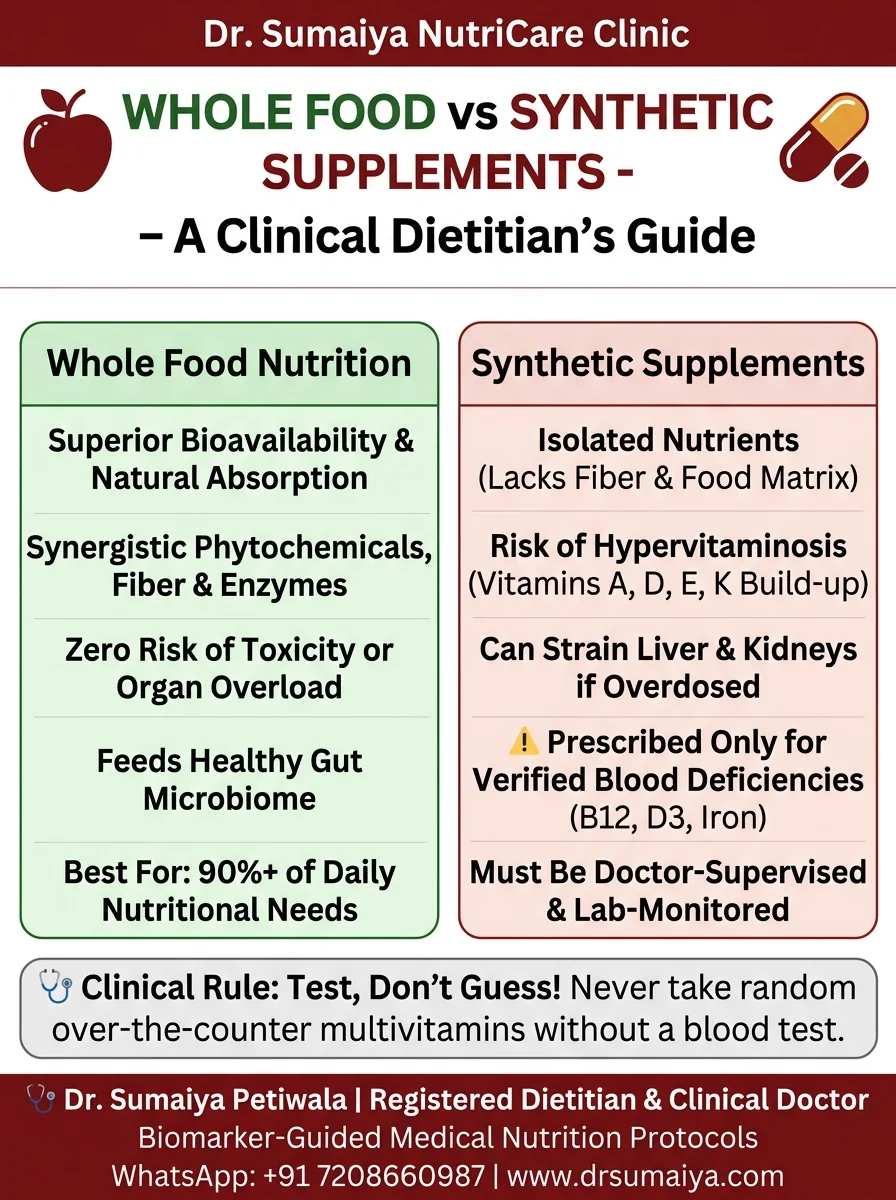
📊 Whole Food Synergy vs Synthetic Isolates: Bioavailability, Fiber Matrix, and Organ Safety.
When Are Supplements Medically Indicated?
Doctor Sumaiya advises supplements only in clear medical cases:
- Diagnosed Vitamin D3 Drops. Modern indoor life cuts sun exposure. When blood levels drop below thirty units, medical drops are necessary.
- Vitamin B12 Needs in Vegetarians. Plants do not make vitamin B12. Indian vegetarians need regular B12 to protect nerves and guard against anemia.
- Severe Low Iron Stores. When iron stores drop very low, food alone takes months to catch up. A doctor-prescribed iron course bridges the gap.
- Pregnancy and Breastfeeding. Higher nutrient needs during pregnancy often require tailored medical supplements.
Comparison: Synthetic Supplements vs Whole Indian Foods
See how factory pills compare with home-cooked Indian meals:
| Nutritional Trait | Synthetic Supplement Pills | Dr. Sumaiya Whole Food Plan |
|---|---|---|
| Body Uptake | Isolated pills. Low natural uptake. | High synergy. Easy bodily uptake. |
| Gut Feeling | Nausea, acidity, and loose stools. | Feeds good gut flora with fiber. |
| Liver Safety | High doses strain liver and kidneys. | Safe natural food. Zero organ strain. |
| Monthly Cost | Costly recurring pharmacy bills. | Affordable home food for the family. |
Stop Wasting Money on Unnecessary Pills
Do not guess which supplements your body needs. Get your blood markers checked and build a nourishing Indian meal plan with doctor-led nutrition. Consult Dr. Sumaiya Petiwala today.
Book Clinical Consultation on WhatsApp →The 50/25/25 Indian Plate Rule for Nutrient Density
Build your meals with this simple plan to absorb vitamins naturally:
- 50% Fresh Veggies and Greens. Fill half your plate with palak, methi, tomatoes, carrots, and cucumber. These foods give rich minerals and gentle fiber.
- 25% Clean Protein First. Eat your protein first. Pick paneer, boiled eggs, fish, chicken, or sprouted lentils. Protein gives vital amino acids to carry vitamins through your blood.
- 25% Low-GI Smart Grains. Finish with whole jowar roti, barley, or brown rice. These foods carry a low glycemic index (a scale measuring how fast foods raise blood sugar) and modest glycemic load (a ranking system for carbohydrate content and blood sugar impact). They stop sudden postprandial (occurring after a meal) sugar surges.
Add fresh home-set curd for probiotic (live good bacteria that aid digestion) gut balance. A healthy gut microbiome ensures maximum micronutrient absorption.
The Dr. Sumaiya 3-Step Medical Correction Process
At Dr. Sumaiya NutriCare Clinic, we guide you through three structured clinical stages:
- Step 1: Biomarker Audit & Nutrient Review. We check blood tests for vitamin D, B12, iron, and liver health to find real deficits.
- Step 2: Personalized Indian Nutritional Prescription. We build a simple home food plan using local staples. Fresh foods fill your nutrient needs.
- Step 3: Clinical Pacing & Supplement Weaning. We wean you off unneeded pills with care. We track blood tests to ensure lasting vigor.
🌟 Transform Your Health Today
Takes only 60 seconds to get personalized clinical insights.
"Lost 4kgs in one month... plans are simple and effective! She
responds to queries promptly."
– Payal J.
Frequently Asked Questions About Supplements vs Food
Can a multivitamin tablet compensate for a poor daily diet?
No. Factory pills lack dietary fiber, active enzymes, and plant defenses. They cannot undo the metabolic harm caused by junk food.
Why do high-dose vitamin supplements often cause stomach upset?
Isolated lab vitamins can irritate the gut wall and disturb flora, causing nausea, gas, acidity, and loose stools.
Which dietary supplements are truly essential for Indian vegetarians?
Vitamin B12 is mandatory for strict vegetarians, and vitamin D3 is frequently required due to limited sun exposure. Other vitamins are best obtained from whole foods.
Can taking too many antioxidant supplements cause bodily harm?
Yes. Large doses of factory antioxidant pills can disrupt cell repair and place heavy filtering stress on the liver and kidneys.
How can I test whether my body actually needs vitamin supplements?
Consult a medical doctor for a targeted blood test covering serum ferritin, 25-OH vitamin D, and serum B12 before purchasing any over-the-counter supplements.