Quick Answer: How Much Fibre Do You Really Need?
Fibre is the part of plant food your body cannot digest. It slows sugar entry, feeds good gut bacteria and keeps you full. Adults need about 25 to 30 grams a day, but most Indians eat only half. Dr. Sumaiya’s recommendation: add one dal, one salad and one fruit every day.
Why This Guide Is Worth Your Time
- Fibre is the cheapest tool you have for sugar control and appetite.
- The table below shows where fibre sits in everyday Indian food.
- You will get a simple plate and swap plan, not a strict diet chart.
| Food (usual serving) | Fibre | How to add it today |
|---|---|---|
| Rajma or chole, 1 katori cooked | about 6 to 7 g | Add to lunch instead of a second roti |
| Whole masoor or moong dal, 1 katori | about 4 g | Keep the dal thick, not watery |
| Oats, 40 g dry with milk | about 4 g | Choose plain oats, not sweet flavoured sachets |
| Guava, 1 medium | about 5 g | A 4 pm snack with roasted chana |
| Apple or pear with skin, 1 medium | about 4 g | Eat the skin, skip the juice |
| Flaxseed or chia, 1 tablespoon | about 2 to 3 g | Soak overnight and add to curd |
| Salad bowl: cucumber, carrot, tomato | about 3 g | Eat it first, before the roti |
| Isabgol, 1 teaspoon in water | about 3 g | Take at night with plenty of water |
In the realm of nutrition, few elements are as underappreciated—and yet as vital—as dietary fibre. Often overshadowed by protein or the latest superfood trend, fibre quietly performs critical roles in our body that can transform our health. Think of it as the unsung hero of your digestive system and beyond.
In this article, we’ll explore why fibre is indispensable, where to find it, and how to make it a more prominent part of your daily routine.
What is Fibre?
Fibre is a type of carbohydrate that your body cannot digest. Unlike other carbs that are broken down into sugar molecules, fibre passes through your digestive tract mostly intact. This might sound unimportant, but that very characteristic is what makes it so beneficial.
Fibre comes in two main forms:
- Soluble fibre: Dissolves in water and forms a gel-like substance. It helps lower blood cholesterol and glucose levels.
Sources: Oats, apples, citrus fruits, barley, psyllium. - Insoluble fibre: Adds bulk to the stool and helps food pass more quickly through the stomach and intestines. It is essential for preventing constipation.
Sources: Whole wheat flour, wheat bran, nuts, beans, vegetables like cauliflower and potatoes.
The Health Benefits of Fibre
Fibre plays several superhero roles in our bodies:
1. Digestive Health
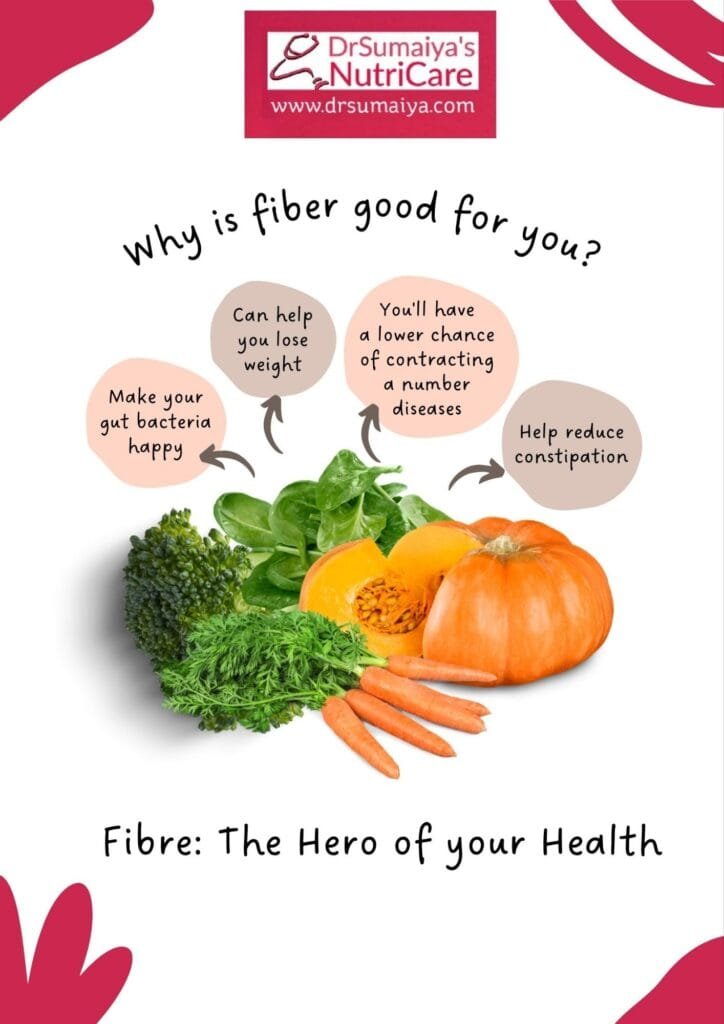
Fibre improves bowel regularity and prevents constipation. A healthy gut microbiome thrives on fermentable fibres, particularly those found in legumes, fruits, and vegetables.
2. Heart Health
Soluble fibre can help lower LDL (bad) cholesterol by binding to cholesterol particles in the digestive system and removing them from the body. This may reduce the risk of heart disease and stroke.
3. Blood Sugar Control
Fibre slows the absorption of sugar, improving blood sugar levels. For people with diabetes or insulin resistance (when your cells stop responding well to insulin), this is a powerful tool for steady blood sugar.
4. Weight Management
High-fibre foods are more filling, reducing hunger and helping you eat fewer calories naturally. Fibre-rich diets are associated with lower body weights and healthier body composition.
5. Cancer Prevention
A fibre-rich diet may lower the risk of certain cancers, particularly colorectal cancer. The exact mechanisms are still being studied, but fibre’s role in gut health and toxin elimination is significant.
6. Hypertension prevention
Fibre also plays an important indirect but powerful role in managing hypertension (high blood pressure). While not a replacement for medication or medical management, a high-fibre diet is a key component of dietary strategies such as the DASH (Dietary Approaches to Stop Hypertension) diet, which is widely recommended for controlling blood pressure.
Studies have shown that increasing fibre intake by 10–25 grams per day can lower systolic blood pressure by 2–4 mmHg on average.
Soluble fibre has shown better effects when combined with potassium-rich diets.
How Much Fibre Do You Need?
The Indian Council of Medical Research (ICMR) recommends:
- Men: ~38 grams per day
- Women: ~25 grams per day
However, most Indians consume far less—often under 15 grams daily—due to low intake of vegetables, fruits, and whole grains.
Easy Ways to Increase Fibre Intake
- Start your day with oats or multigrain porridge instead of refined breakfast cereals.
- Include whole fruits (not juice) as snacks. Guava, pears, papaya, and apples are excellent choices.
- Choose whole grains like brown rice, millets (ragi, jowar, bajra), and whole wheat chapatis.
- Add legumes and lentils (chana, rajma, moong, masoor) to your lunch or dinner.
- Sprinkle seeds (chia, flax, sesame) over your meals or curd bowls.
- Consume vegetables with peels wherever appropriate, e.g. cucumbers, bitter gourd etc
A Word of Caution
When increasing fibre, go slow and hydrate well. A sudden spike without enough water can cause bloating or discomfort. Gradual increase over 7–10 days is ideal.
Conclusion: Fibre as a Daily Habit
Fibre isn’t just a tool for bowel regularity—it’s your body’s natural ally in preventing disease, stabilising blood sugar, managing weight, and nurturing your gut.
As a doctor and dietitian, I’ve witnessed the transformative effects of simple dietary changes. By making fibre-rich foods a daily habit, you’re investing in lifelong health and vitality.
If you need personalised dietary advice or a fibre-optimised meal plan tailored to your health needs, feel free to connect with us at Dr Sumaiya NutriCare Clinic.
Contact Details:
Phone: 7208660987
Email: doc@drsumaiya.com
Address: 7, Moore Rd, off Coles Road, Pulikeshi Nagar, Frazer Town, Bengaluru, Karnataka 560005
The Simple Fibre Plate
- Half the plate vegetables and salad, quarter plate protein such as dal, chana, paneer, curd, eggs or fish, quarter plate whole carbs such as phulka or matta rice.
- Eat salad and sabzi first, then dal or protein, and roti or rice last. This order slows the sugar rise after the meal.
- Three easy swaps: rava upma to vegetable dalia, white rice to half rice and half millet, and biscuits to roasted chana.
- Add fibre slowly over two weeks and drink more water, so your stomach stays comfortable.
Looking for a Personalized Clinical Nutrition Protocol?
Managing your health requires addressing your unique metabolic biomarkers, digestive transit, and root causes. Dr. Sumaiya provides individualized medical nutrition therapy tailored to your lifestyle.
- Comprehensive Blood & Biomarker Audit: HbA1c (a blood test showing your three-month average blood sugar), fasting insulin (a blood test that shows how hard your body is working to control blood sugar), lipid ratios, and thyroid (the gland in your neck that sets how much energy you burn)
- Root-Cause Metabolic Mapping & Dietary Assessment
- 100% Customized Indian Meal Protocol with Continuous Weekly Monitoring
In-Clinic at Frazer Town, Bengaluru & Telehealth Pan-India / Globally | Call/WhatsApp: +91 7208660987