

Dr. Sumaiya Petiwala, RD, BUMS, CDE · Medical Doctor & Registered Clinical Dietitian · Updated 20 October 2026
Between the sacred fasts of Navratri and the luminous feasts of Diwali, millions of Indian households enter a four-week festive marathon. Boxes of dry fruit laddoos arrive at your doorstep, relatives lovingly insist on “just one bite,” and celebratory family banquets stretch late into the night. But for individuals living with Type 2 Diabetes, prediabetes, or insulin-resistant PCOS, this joyous season frequently triggers an exhausting psychological cycle of social guilt, severe bloating, morning fatigue, and terrifying glucometer spikes.
Recent festive clinical advisories from S.L. Raheja Hospital and the National Nutrition and Wellness Academy (NNWA) highlight that October–November is the primary window responsible for shocking January HbA1c spikes. The culprit is not merely lack of willpower; it is a dangerous biological rollercoaster driven by religious fasting extremes and the widespread deceptive trap of commercial “sugar-free” mithai.
How can diabetics control blood sugar spikes during Diwali and festive fasting?
Diwali blood sugar spikes stem from dense saturated fats in commercial sweets, maltitol sugar alcohols, and high-glycemic fasting starches like sabudana. Control postprandial glucose by eating vegetables and protein fifteen minutes before sweets, swapping fried farali for amaranth, and taking a brisk ten-minute walk after heavy festive dinners.
The Science Behind the Festive Spike: Why January HbA1c Reports Skyrocket
In clinical practice, post-festive laboratory panels routinely show HbA1c jumps of 0.8% to 1.5% alongside significant increases in serum triglycerides. This metabolic deterioration happens because the Indian festive season subjects the body to extreme glycemic variability [GV (the magnitude of upward and downward blood glucose swings throughout the day)], which inflicts far greater oxidative stress on blood vessel linings than a stable, elevated blood sugar baseline.
Two primary dietary illusions drive this festive metabolic damage:
1. The Commercial “Sugar-Free Mithai” Trap
Walk into any sweet shop or supermarket before Diwali, and you will find shelves stocked with brightly packaged “Diabetic-Friendly” and “Sugar-Free” kaju katlis, besan laddoos, and soan papdis. What manufacturers do not advertise on the front label is the metabolic reality of their ingredients:
- The Maltitol Spike: Most commercial sugar-free sweets replace sucrose with sugar alcohols [polyols like maltitol and sorbitol (sugar substitutes that are incompletely absorbed in the gut)]. However, maltitol possesses a glycemic index between 35 and 52 and digests partially into pure glucose. Consuming 2 to 3 pieces generates a substantial postprandial glucose spike while triggering osmotic diarrhea, severe flatulence, and uncomfortable abdominal distension.
- Saturated Fat & Khoya Density: Removing white table sugar does nothing to eliminate the base of khoya [mawa (concentrated whole milk solids packed with saturated fat and dairy sugars)] and hydrogenated vanaspati or ghee. A single “sugar-free” ladoo still packs 180 to 250 calories. When saturated fats flood liver cells alongside carbohydrates, they trigger acute hepatic insulin resistance [a condition where liver cells fail to stop glucose production despite high circulating insulin], locking blood sugar in an elevated state for 8 to 12 hours.
2. The Fasting-to-Feasting Farali Rebound
During Navratri and pre-Diwali religious observances, many patients observe strict fasts. The traditional “vrat” or “farali” foods chosen—such as fried sabudana vadas, sabudana khichdi, and potato wafers—are among the highest glycemic items in Indian gastronomy.
Sabudana (tapioca pearl) is pure extracted starch completely devoid of dietary fiber or protein, carrying a glycemic index exceeding 70. Starving through the day drops glucose levels, prompting your liver to upregulate glycogen breakdown. When you break your fast at night with fried sabudana and potatoes, your body experiences an acute glucose flood. This triggers rebound hyperglycemia [a rapid surge in morning blood sugar triggered when the liver releases emergency glucose stores after a nocturnal crash], leaving you exhausted and craving more carbohydrates the following morning.
| Festive Food Item | Glycemic Index & Starch Profile | Lipid & Caloric Density | Clinical Metabolic Verdict |
|---|---|---|---|
| Commercial “Sugar-Free” Mithai (Maltitol Kaju Katli / Besan Ladoo) | Moderate-to-high (GI 35–52 from maltitol); contains hidden starches and milk lactose. | Extreme caloric density (180–240 kcal/piece); dense khoya, saturated dairy fat, and ghee. | Deceptive; elevates postprandial blood sugar, promotes visceral liver fat, and causes severe gut bloating. |
| Traditional Fried Sweets (Gulab Jamun, Jalebi, Motichoor Ladoo) | Very high (GI > 75); deep-fried refined maida or besan saturated in sucrose syrup. | High fat and sugar synergy (250–350 kcal/piece); stimulates rapid postprandial insulin surges. | Maximum metabolic disruption; rapidly elevates triglycerides and triggers acute endothelial stress. |
| Fried Farali Starches (Sabudana Vada, Fried Aloo Chips, Sweet Potato Puri) | Extremely high (GI > 70); refined tapioca starch combined with deep-fried cooking oil. | High calories (300–450 kcal per plate); stripped of intact fiber, proteins, or antioxidants. | Drives severe glycemic variability; triggers evening glucose spikes followed by nocturnal crashes. |
| Clinical Festive Swaps (Fresh Chhena Sandesh, Roasted Makhana, Rajgira Roti) | Low glycemic load; intact amaranth proteins, resistant fiber, and bioavailable dairy amino acids. | Moderate, nutrient-dense calories (80–120 kcal/serving); low saturated fat and rich in magnesium. | Safe and stabilizing; blunts postprandial glucose excursions, preserves gut microbiome, and supports satiety. |
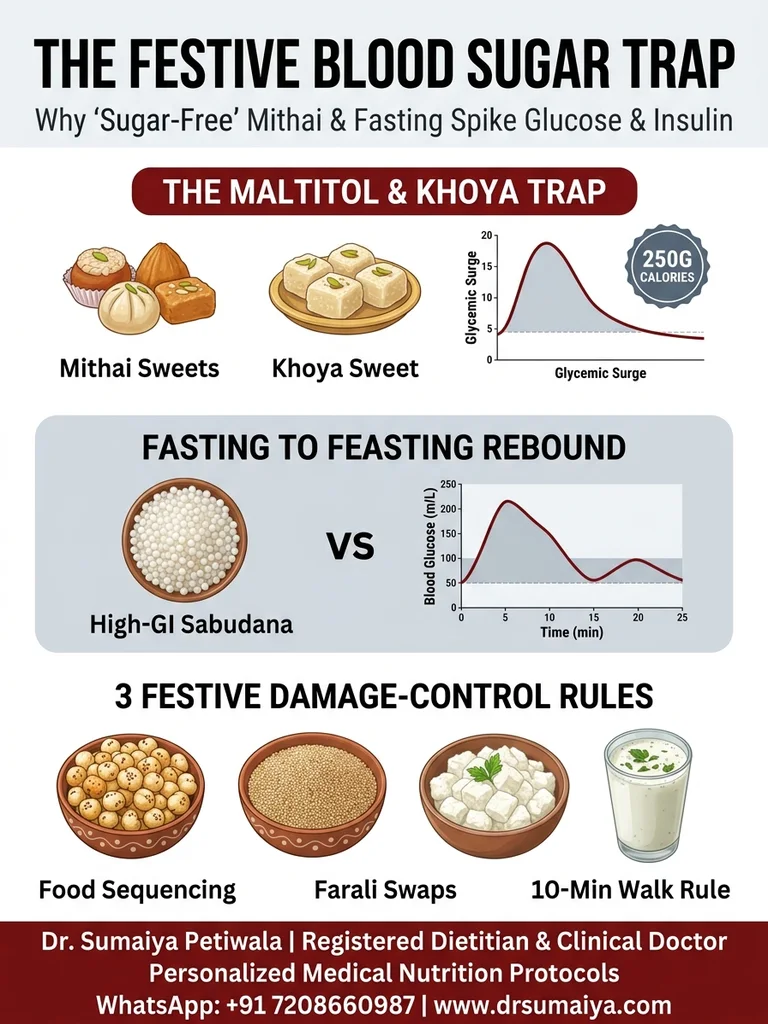
The festive blood sugar trap: why commercial sugar-free sweets and fasting extremes spike glucose, and how to apply clinical damage control.
Clinical evidence sources: S.L. Raheja Hospital Festive Advisory (2026); NNWA Diabetes Guidelines (2026); ICMR-NIN Guidelines for Indians (2024).
Three Clinically Proven Festive Damage-Control Strategies
You do not need to isolate yourself from family celebrations, sit in a corner eating boiled vegetables, or insult your host by refusing all hospitality. By applying three scientific physiological principles, you can celebrate Diwali joyfully while shielding your metabolism from harm.
1. Apply the Clinical Food Sequencing Protocol (Vegetables & Protein First)
The order in which nutrients enter your digestive system dictates the velocity of glucose absorption. Landmark clinical feeding studies published in diabetes literature demonstrate that consuming dietary fiber and protein 10 to 15 minutes before carbohydrates reduces postprandial [the hours following a meal] glucose excursions by up to 36.7% and cuts insulin secretion by over 30%.
When attending a Diwali dinner or family party, follow this non-negotiable sequence:
- Phase 1 (Fiber Coat): Start with a generous katori of raw cucumber and carrot salad or lightly sautéed green beans and methi. The viscous soluble fiber creates an internal gel mesh in the duodenum.
- Phase 2 (Protein Anchor): Eat your protein serving—such as grilled paneer tikka, boiled kala chana chaat, sprouted moong, or grilled fish—which stimulates GLP-1 hormone release and slows gastric emptying.
- Phase 3 (Festive Carbs & Sweet): Only now consume your roti, pulao, or a single chosen piece of festive mithai. The pre-existing fiber-protein cushion prevents the rapid spike-and-crash phenomenon.
2. Swap High-GI Farali Starches for Low-Glycemic Rajgira, Makhana, and Chaas
If observing festive fasts, eliminate pure tapioca pearls and deep-fried tubers. Replace them with nutrient-dense ancient Indian alternatives:
- Rajgira (Amaranth Flour): Unlike sabudana, rajgira possesses a low glycemic load, twice the calcium of milk, and complete plant proteins containing lysine. Prepare soft phulkas or parathas cooked with minimal ghee.
- Roasted Makhana (Foxnuts): A low-glycemic, high-magnesium crunch that prevents emotional snacking. Roast lightly in a dry pan with roasted jeera powder, black pepper, and rock salt.
- Probiotic Chaas (Spiced Buttermilk): Drink fresh homemade buttermilk spiced with ginger, curry leaves, and roasted cumin between meals to prevent gut dysbiosis [an imbalance in intestinal microbial flora that promotes systemic inflammation and intestinal permeability] and manage false hunger pangs.
- Fresh Chhena Sweets: If choosing a sweet, pick a single piece of fresh homemade chhena sandesh or paneer kheer prepared with stevia rather than flour-heavy, deep-fried mithai.
3. Use the 10-Minute Post-Meal Walk Rule Immediately After Late Dinners
Diwali celebrations often involve dinner served well after 10:00 PM, followed by sedentary chatting or sleeping on a full stomach. During rest, glucose uptake depends entirely on circulating insulin. But when skeletal muscle contracts, it activates an insulin-independent pathway known as GLUT4 translocation [the physical movement of glucose-transport proteins to the muscle cell membrane, pulling sugar directly out of the blood without requiring extra insulin].
A continuous 10 to 15-minute gentle stroll immediately following your festive meal reduces evening glucose peaks by approximately 22% and prevents severe nocturnal glucose swings. Even pacing slowly around the living room or terrace while conversing with family provides significant metabolic protection.
The Diagnostic Gap: Why “Eat in Moderation” Advice Fails
Every festive season, patients are advised to “just exercise willpower” and “eat in moderation.” But moderation is a subjective concept that fails completely in the face of hyper-palatable festive treats, altered circadian sleep schedules, and shifting meal timings. When your body experiences chronic insulin resistance, even a modest sweet intake can trigger severe nocturnal glycemic swings and next-day lethargy.
A true festive metabolic reset requires objective diagnostic calibration rather than generic willpower advice:
- Continuous Glucose Monitoring (CGM): Evaluating your real-time interstitial glucose wave to identify exactly which festive foods trigger your personal spikes.
- HOMA-IR & Fasting Insulin: Assessing whether your body is operating under high baseline insulin resistance, which dictates your individual carbohydrate tolerance.
- Medication Timing Calibration: Patients taking sulfonylureas or insulin must have their dosages and timing clinically adjusted by their prescribing physician to prevent dangerous fasting hypos and rebound spikes.
To help you navigate festive spreads safely, request our Free Festive Mithai & Thali Swap Cheat Sheet, which outlines exact calorie, carbohydrate, and glycemic impact comparisons for 15 popular Indian festive sweets.
Choose Your NutriCare Clinical Support Level
Restore metabolic stability with doctor-led medical nutrition therapy:
- Single Consultation — ₹2,599: Ideal for immediate festive damage control. Comprehensive review of blood reports, custom Diwali meal strategy, and 7 days of clinical WhatsApp guidance.
- Be Healthy Program — ₹3,999/month: Continuous clinical nutrition support featuring 3 consultations per month, weekly meal plan adjustments, and direct monitoring for diabetes, prediabetes, and weight management through the festive corridor.
- Special Diets Program — ₹4,999/month: Intensive therapeutic care for patients managing complex metabolic conditions, diabetic nephropathy, severe insulin resistance, or Grade 2–3 fatty liver disease.
Fees reflect standard clinic pricing as of October 2026. Explore our complete plans and pricing to begin.
Frequently Asked Questions
Are commercial sugar-free Diwali sweets safe for diabetics and insulin resistance?
Not automatically. Most commercial sugar-free mithai relies on maltitol, a sugar alcohol that carries a glycemic index of 35 to 52 and digests into glucose, raising blood sugar. Furthermore, sweets made from dense khoya and ghee remain extremely calorie-dense, worsening hepatic insulin resistance and causing significant abdominal bloating and digestive distress.
Why does fasting with sabudana cause severe blood sugar spikes?
Sabudana (tapioca pearl) is refined pure starch stripped of fiber, protein, and micronutrients, carrying an exceptionally high glycemic index above 70. When fried with potatoes and peanuts into vadas or khichdi, it floods the bloodstream with glucose, causing an immediate postprandial spike followed by a precipitous insulin-driven crash.
How does food sequencing reduce festive blood sugar spikes?
Consuming non-starchy vegetables, cucumber salad, and protein (such as paneer, curd, or dal) 15 minutes before festive starches or a sweet creates a physical viscous gel barrier in the small intestine. This slows down gastric emptying and alpha-amylase starch digestion, reducing postprandial glucose peaks by up to 36%.
What should I do immediately after overeating festive sweets?
Do not skip your next meal or perform punishing workouts, as extreme compensation triggers rebound hypoglycemia. Instead, take a brisk 10 to 15-minute walk immediately following your meal to activate muscle GLUT4 glucose transporters without requiring extra insulin, drink warm water or roasted cumin buttermilk, and return to balanced whole-food meals.
Which Indian sweets have the lowest glycemic impact for diabetics?
Fresh chhena-based (unripened paneer/cottage cheese) sweets such as light homemade sandesh or paneer kheer prepared with stevia have the lowest glycemic impact. They provide bioavailable dairy protein and fats that buffer glucose absorption, unlike dense flour-based fried sweets like jalebi, gulab jamun, or maida-rich soan papdi.
Enquire About Festive Clinical Care
Do not let festive celebrations derail months of health progress. Share your recent glucometer readings and health goals with our clinical team to create your custom Diwali metabolic protection plan.
🌟 Transform Your Health Today
Takes only 60 seconds to send a booking enquiry.
"Lost 4kgs in one month... plans are simple and effective! She
responds to queries promptly."
– Payal J.
About this guide
This guide provides general health information. Your own care depends on your medical history and circumstances. Speak with your treating clinician before changing medicines or treatment.