

Medically Verified & Evidence-Based | Authored by Dr. Sumaiya Petiwala, RD, BUMS, CDE (Registered Clinical Dietitian & Metabolic Health Specialist) | Aligned with ICMR-NIN Clinical Standards | Last Updated: October 2026
When patients struggle with stubborn belly fat or rising blood sugar despite clean eating, the real root cause is often missed. In clinical nutrition practice, sleep is not just passive rest. It is an active hormonal reset. Without deep sleep, your body stores glucose as fat. At Dr. Sumaiya NutriCare Clinic, we treat sleep as a primary metabolic medicine.
How Does Quality Sleep Drive Weight Loss and Blood Sugar Balance?
Direct Clinical Answer: Deep 7 to 8-hour sleep acts as a powerful metabolic reset. It lowers evening stress hormones, restores cell glucose absorption, and suppresses intense hunger signals. Sleeping under 6 hours drops cell response and spikes next-day sugar cravings. Lasting fat loss requires combining circadian sleep timing with personalized Indian clinical nutrition.
The Biological Cost of Chronic Sleep Debt
Missing just one or two hours of restorative sleep triggers four major metabolic roadblocks:
- Cellular Glucose Resistance: Poor sleep directly triggers insulin resistance (where cells do not absorb glucose well). Over time, this elevates your 3-month sugar marker, HbA1c (a 3-month average of blood sugar levels).
- Deep Abdominal Fat Storage: Chronically elevated nighttime stress hormones redirect circulating calories into visceral fat (deep belly fat packed around internal organs). This directly fuels fatty liver (a condition where fat builds up inside liver cells).
- Elevated Blood Fats: Sleep disruption impairs lipid clearance. This pushes up triglycerides (blood fats tied to insulin levels) in your blood.
- Metabolic Rate Slowdown: Fatigue slows the thyroid (the neck gland that controls how fast your body burns energy). We check TSH (a blood test that checks your thyroid pace) in clinic to monitor metabolic pacing.
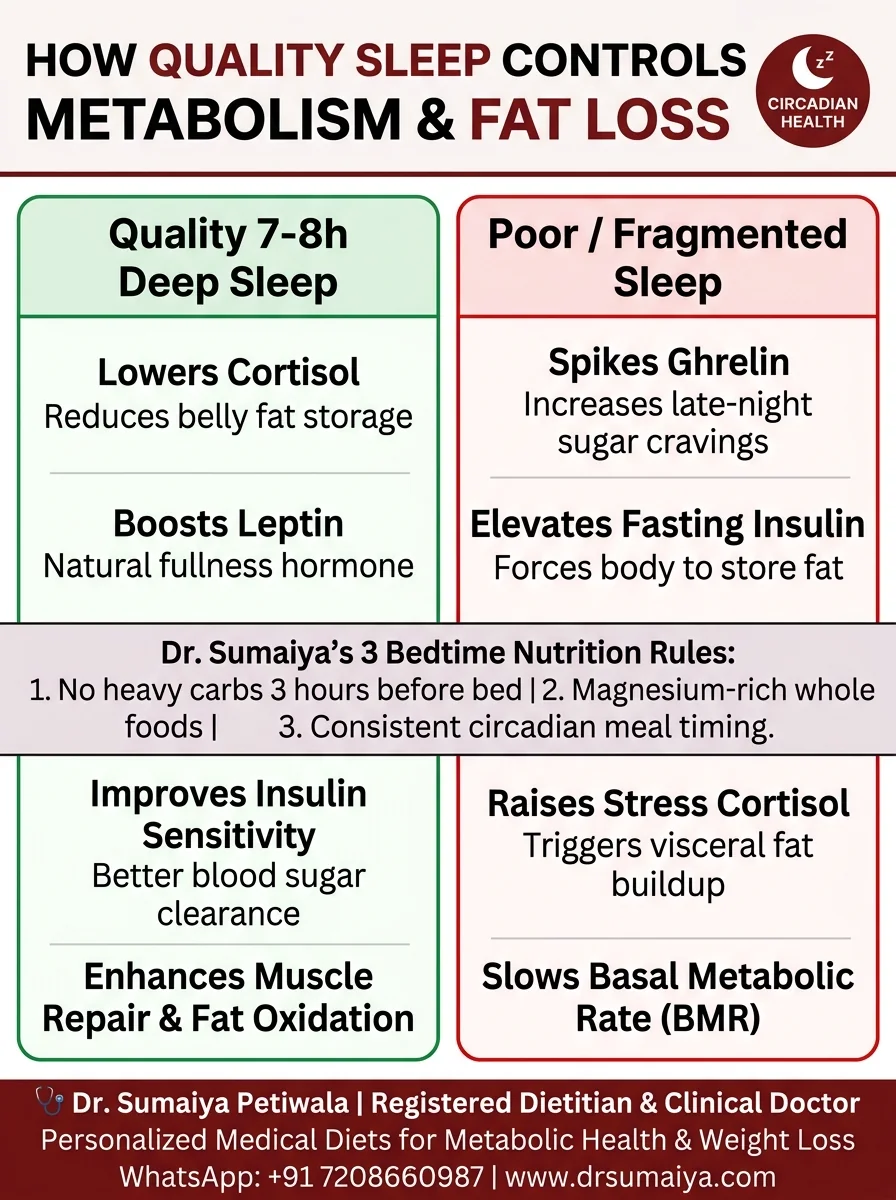
📊 Visual Summary: Hormonal Pathways of Sleep & Dr. Sumaiya’s Bedtime Nutrition Guidelines.
Comparison: 7-Hour Deep Sleep vs Chronic Sleep Deprivation
See how your nightly sleep duration directly impacts your hormones and fat burn:
| Metabolic Metric | Quality Deep Sleep (7–8 Hours) | Poor Sleep (< 6 Hours) | Impact on Fat Loss |
|---|---|---|---|
| Insulin Response | Optimal; clears glucose fast | Resistant; locks fat inside cells | Enables daytime fat burning |
| Hunger Hormones | High leptin (natural fullness) | High ghrelin (intense sugar urges) | Prevents 400-calorie late binges |
| Stress Hormones | Low night cortisol; cellular healing | Elevated evening cortisol spikes | Protects against abdominal obesity |
| Muscle Repair | High nighttime growth hormone | Accelerated muscle tissue breakdown | Maintains your resting burn |
Struggling with Stubborn Weight & Poor Sleep?
Chronic sleep issues disrupt your metabolic hormones. Consult Dr. Sumaiya Petiwala to align your meal timing, balance hormones, and reverse metabolic roadblocks safely.
Book Clinical Consultation on WhatsApp →Dr. Sumaiya’s 3 Bedtime Nutrition Rules for Restorative Sleep
Follow these three evidence-based nutritional rules to fall asleep faster and boost fat burn:
- 1. The 3-Hour Dinner Gap: Eat dinner at least 3 hours before sleeping. Digestion raises core body temperature. Late heavy meals trigger postprandial (occurring after a meal) sugar surges and disrupt slow-wave sleep.
- 2. Natural Sleep Minerals: Incorporate pumpkin seeds, almonds, or walnuts with dinner. These foods provide natural magnesium and tryptophan to stimulate peaceful sleep.
- 3. Warm Spiced Milk: Enjoy a small cup of warm turmeric milk with a pinch of nutmeg before bed. This calms the nervous system and lowers chronic inflammation (cellular immune stress that hinders recovery).
The 50/25/25 Indian Kitchen Plate Rule
Support restorative nighttime sleep by eating a balanced Indian dinner:
- 50% High-Fiber Sabzi & Salad: Fill half your plate with cucumber, palak, methi, bhindi, or cabbage. These give you prebiotic (plant fibers that nourish good gut bacteria) fuel and keep you full.
- 25% High-Quality Protein First: Eat your protein first. Have paneer, boiled eggs, curd, sprouts, chicken, or fish. Protein shields your muscles.
- 25% Smart Complex Carbs: Finish with jowar roti, daliya, or brown rice. These carry a moderate glycemic index (a scale measuring how fast foods raise blood sugar) and modest glycemic load (a ranking system for carbohydrate content and blood sugar impact). This prevents bedtime glucose spikes.
Add fresh curd for probiotic (good live bacteria that support digestion) gut support. Use turmeric and mild spices for antioxidant (compounds that defend cells against daily wear and tear) protection.
The Dr. Sumaiya 3-Step Medical Correction Process
At Dr. Sumaiya NutriCare Clinic, we eliminate guesswork through structured clinical care:
- Step 1: Biomarker Analysis & Metabolic Audit: We review your complete blood panel. We check your visceral fat and daily food habits.
- Step 2: Personalized Indian Nutritional Prescription: We create an easy home meal plan with Indian foods. We calibrate it for safe fat loss.
- Step 3: Weekly Doctor-Led Monitoring: We evaluate your body measurements weekly. We adjust meal portions to keep your energy high.
🌟 Transform Your Health Today
Takes only 60 seconds to get personalized clinical insights.
"Lost 4kgs in one month... plans are simple and effective! She
responds to queries promptly."
– Payal J.
Frequently Asked Questions About Sleep and Metabolism
How many hours of sleep are needed for optimal fat loss?
Most adults need 7 to 8 hours of restful sleep every night. Clinical trials show that people sleeping under 6 hours lose more muscle and retain body fat, even on a calorie deficit.
Can sleeping too much cause weight gain?
Yes. Regularly sleeping more than 9 to 10 hours slows metabolic pacing. It often signals underlying conditions such as a sluggish thyroid or sleep apnea that need medical care.
Why do I crave sweets and carbs when I am tired?
When sleep is poor, your brain craves quick glucose for fuel. Sleep deprivation spikes hunger hormones and reduces willpower, driving intense cravings for sugary foods.
Can drinking warm milk before bed improve sleep quality?
Yes. Milk contains natural tryptophan, calcium, and magnesium. A small cup of warm turmeric milk one hour before bed relaxes the nervous system and aids deep sleep.
Does late-night eating cause belly fat storage?
Yes. Eating heavy carbohydrates close to bedtime keeps blood sugar elevated. Because energy needs drop during sleep, the body stores these extra calories as visceral fat.