
Dr. Sumaiya Petiwala, RD, BUMS, CDE · Medically Reviewed & Evidence-Based · Updated November 2026
The global revolution in metabolic medicine and medical weight loss has brought unprecedented hope to individuals battling chronic obesity, type 2 diabetes, and severe insulin resistance. Medications belonging to the GLP-1 receptor agonist class—including semaglutide (Ozempic, Wegovy, Rybelsus) and dual GIP/GLP-1 agonists like tirzepatide (Mounjaro)—have delivered profound weight reductions and improved cardiovascular outcomes.
Yet behind the celebrated clinical success stories, a growing number of patients are quietly experiencing disturbing side effects that affect their body image and physical comfort. Weeks into their injection cycle, they notice brittle, lifting fingernails, unusual discoloration of the nail bed, terrifying clumps of hair shedding in the shower drain, and an intensely itchy, burning scalp. This phenomenon is now widely recognized in dermatological literature as ‘Ozempic Nails’ and GLP-1 telogen effluvium.
Why do GLP-1 medications like Ozempic cause nail problems and hair loss?
A multinational October 2026 EADV study revealed that 66% of GLP-1 users experience nail disorders and 50% face hair shedding. Delayed gastric emptying and severe appetite suppression impair the absorption of ferritin, zinc, B12, and sulfur-containing amino acids needed for keratin cross-linking, while metabolic shifts provoke scalp inflammation.
The ‘Rapid Weight Loss’ Myth: Why the 2026 EADV Study Changes the Conversation
When patients report thinning hair and fragile nails to their prescribing physicians, they are routinely reassured with a standard clinical explanation: ‘It is just telogen effluvium caused by rapid weight loss; your body is in shock, and it will resolve once your weight stabilizes.’ While rapid catabolism does contribute to shedding, this explanation fails to address the unique severity and presentation seen with GLP-1 medications.
In October 2026, the European Academy of Dermatology and Venereology (EADV) presented the first large-scale multinational controlled study of 1,904 patients on GLP-1 therapy. The researchers revealed that nail and scalp pathology is far more pervasive than previously documented: 66% of GLP-1 users experienced significant nail disorders, including a 4-fold higher rate of onycholysis (nail detachment from the nail bed: 39% vs. 9%) and 46% nail discoloration, while 50% reported acute hair shedding paired with a 3-fold higher rate of scalp erythema and inflammation.
| Clinical Manifestation | Prevalence in GLP-1 Users (2026 EADV Data) | Underlying Biochemical & Nutritional Mechanism |
|---|---|---|
| Nail Detachment (Onycholysis) | 39% (4x higher than non-users) | Deficiency of sulfur-containing amino acids (cysteine/methionine) weakening nail bed attachment |
| Nail Discoloration & Brittleness | 46% of all patients on GLP-1 therapy | Impaired trace mineral uptake (zinc, iron, selenium) secondary to hypochlorhydria and low intake |
| Diffuse Hair Shedding (Telogen Effluvium) | 50% of users experiencing acute shedding | Systemic metabolic stress and rapid depletion of ferritin iron stores below the 50 ng/mL follicle threshold |
| Scalp Redness & Inflammation | 3x higher incidence compared to controls | Imbalance in omega-6:3 fatty acid ratio and rapid catabolic cytokine release during tissue breakdown |
| Loss of Skeletal Muscle Mass | Up to 25–40% of total lost body weight | Inadequate daily protein density (<1.2g/kg) resulting in muscle catabolism and metabolic slowdown |
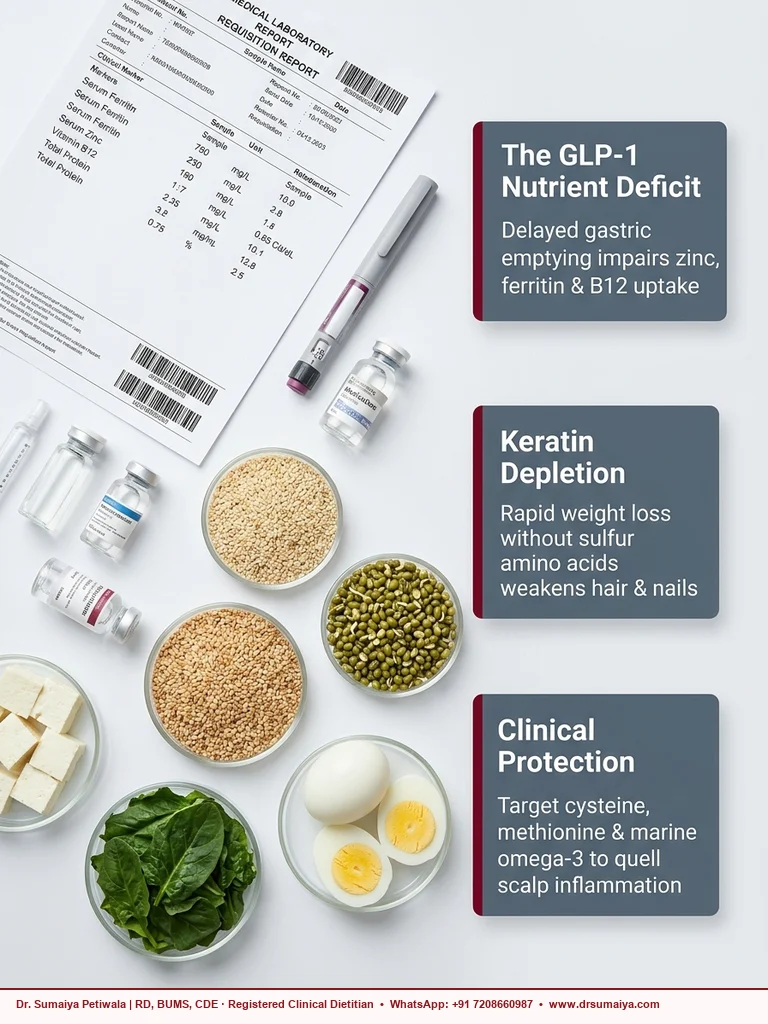
Clinical Micronutrient Protection During GLP-1 Medical Weight Loss: evidence-based clinical protocols from Dr. Sumaiya NutriCare Clinic.
The Triad Pathophysiology: Delayed Gastric Emptying & Keratin Starvation
The EADV researchers demonstrated that nail lifting and follicular shedding on GLP-1 drugs are driven by a distinct triad of physiological mechanisms:
1. Severe Appetite Suppression & Hypochlorhydria: GLP-1 agonists dramatically slow gastric motility and reduce gastric acid secretion. While this quiets appetite, it severely impairs the breakdown and extraction of key micronutrients—specifically iron/ferritin, zinc, vitamin B12, and selenium—which require acidic gastric environments for optimal intestinal absorption.
2. Keratin Structural Starvation: Hair and nails are composed primarily of hard alpha-keratin, a structural protein dependent on high concentrations of sulfur-containing amino acids, predominantly L-cysteine and L-methionine. When caloric intake drops precipitously and protein density falls below 1.2 g/kg, the body halts non-essential keratin cross-linking to spare amino acids for cardiac and liver function, leading to nail plate detachment and hair shaft breakage.
3. Scalp Immune and Cytokine Shifts: The rapid breakdown of adipose tissue releases stored inflammatory cytokines into circulation. Paired with low dietary omega-3 intake, this creates localized follicular micro-inflammation, manifesting as an itchy, red scalp.
3 Targeted Nutritional Protocols to Protect Hair Density and Nail Strength
1. Prioritize Sulfur-Rich Amino Acids in Digestible Micro-Portions
Because delayed gastric emptying makes large meals uncomfortable, GLP-1 patients must maximize amino acid density per bite. Focus on sulfur-rich foods that provide direct building blocks for keratin synthesis: fresh paneer cubes, whole pastured eggs (rich in bioavailable cysteine, choline, and biotin), roasted white and black sesame seeds (til, providing 200 mg of methionine per serving), sprouted moong dal, and steamed fish. Consume protein first at every meal before touching carbohydrates.
2. Quell Scalp Micro-Inflammation with High-Dose Marine Omega-3s
To combat the 3-fold higher risk of scalp erythema and follicular inflammation, restore your systemic omega-6 to omega-3 fatty acid ratio. Supplement with high-purity marine or microalgal EPA and DHA (1,500 to 2,000 mg combined daily) under clinical guidance. Simultaneously, eliminate ultra-processed seed oils (refined corn, sunflower, and soybean oils) from home cooking, replacing them with cold-pressed mustard oil or extra virgin olive oil to quell arachidonic acid inflammatory cascades.
3. Replete Ferritin and Zinc Away from Iron-Blocking Tannins
Hair follicles require a minimum serum ferritin level of 50 ng/mL to remain anchored in the anagen (active growth) phase. If ferritin drops below 30 ng/mL, diffuse shedding is inevitable. Support gastric acid with a teaspoon of fresh lemon juice or amla juice in water before protein-rich meals to enhance non-heme iron and zinc absorption, and ensure that iron supplements or iron-rich foods are consumed at least two hours away from tannin-rich chai, coffee, or calcium-dense dairy.
The Diagnostic Gap: Why Biotin Gummies Fail (And Falsify Lab Tests)
When hair starts falling out, most patients instinctively purchase over-the-counter ‘hair and nail biotin gummies.’ This is not only medically useless for GLP-1 telogen effluvium—it is clinically dangerous. Mega-dose biotin (5,000 to 10,000 mcg) does not fix underlying ferritin, zinc, or protein deficits. More alarmingly, excess circulating biotin directly interferes with streptavidin-biotin immunoassays used in hospital laboratories, producing falsely low TSH and falsely elevated Free T4/T3 readings that mimic severe hyperthyroidism.
Every patient undergoing medical weight loss on semaglutide or tirzepatide deserves a comprehensive 12-week micronutrient safety panel: Serum Ferritin, Serum Zinc, Vitamin B12, Red Blood Cell Folate, 25-Hydroxy Vitamin D, and Total Protein/Albumin. Medical weight loss should enhance your vitality and confidence—not sacrifice your hair, skin, and nail health.
Free “GLP-1 Hair, Nail & Micronutrient Protection Lab Checklist”
Protect your hair density and nail strength while losing weight. Download the complete 12-week clinical lab panel checklist and sulfur-amino-acid Indian meal guide.
- The 6 Vital GLP-1 Labs: Target ranges for Ferritin, Serum Zinc, B12, Folate, Vitamin D, and Serum Albumin.
- Sulfur-Rich Keratin Menu: Digestible, small-portion Indian staples (paneer, eggs, roasted til, sprouted moong) for keratin synthesis.
- Scalp Anti-Inflammatory Protocol: How to balance omega fatty acids to quench the 3x higher scalp redness risk.
- The Biotin Warning: Why over-the-counter biotin gummies fail to fix GLP-1 hair fall and dangerously distort thyroid lab tests.
Frequently asked questions
Why are my nails lifting or changing color on Ozempic and Wegovy?
The landmark October 2026 European Academy of Dermatology and Venereology (EADV) study revealed that 66% of GLP-1 users develop nail changes, including a 4-fold higher risk of onycholysis (nail plate lifting). This is caused by combined deficits in sulfur-containing amino acids (cysteine and methionine) and zinc, which are vital for keratin structural cross-linking.
Does Mounjaro or semaglutide cause scalp inflammation and hair shedding?
Yes. The EADV study found that 50% of GLP-1 patients report hair loss, accompanied by a 3-fold higher rate of scalp erythema and inflammation. Rapid weight loss shifts hair follicles prematurely into the telogen (shedding) phase, while systemic cytokine shifts and low omega-3 status irritate the scalp.
Which vitamin deficiencies cause hair loss on GLP-1 weight loss drugs?
The primary deficiencies are serum ferritin (stored iron, which must remain above 50 ng/mL for hair regrowth), serum zinc, vitamin B12, folate, and total bioavailable protein. Because GLP-1 drugs delay gastric emptying and reduce stomach acid, micronutrient extraction from food drops significantly.
Can I take over-the-counter biotin gummies to stop GLP-1 hair fall?
No. Commercial hair gummies rarely contain adequate bioavailable protein, iron, or zinc. Furthermore, high-dose biotin supplements artificially interfere with laboratory immunoassay tests, causing falsely low TSH and falsely elevated thyroid hormone readings.
What should I eat to protect my hair and nails on a GLP-1 drug?
Prioritize high-density protein (1.2 to 1.5 grams per kg of ideal body weight) spread across small, frequent portions: eggs, paneer, tofu, roasted sesame seeds (til), pumpkin seeds, and sprouted lentils. Ensure adequate hydration with electrolytes and separate tea/coffee consumption from meals to avoid blocking iron absorption.
Sources: European Academy of Dermatology and Venereology (EADV) 2026 Congress / ScienceDaily (October 2026): Multinational study of 1,904 patients on GLP-1 receptor agonists and nail/hair/scalp disorders. Journal of the American Academy of Dermatology: Telogen Effluvium Associated with Rapid Weight Loss. Endocrine Society Clinical Guidelines on Pharmacological Management of Obesity.
🌟 Transform Your Health Today
Takes only 60 seconds to send a booking enquiry.
"Lost 4kgs in one month... plans are simple and effective! She
responds to queries promptly."
– Payal J.
About this guide
This guide provides general health information. Your own care depends on your medical history and circumstances. Speak with your treating clinician before changing medicines or treatment.