

Nuts and seeds may look small, but they hold an impressive range of essential nutrients. They pack vitamin E, magnesium, plant protein, and healthy fats. They also supply gut-friendly fiber. These foods bring deep value to everyday meals. They are often called nature’s tiny multivitamins.
They do not replace medical care. But they raise the quality of everyday Indian meals. They help steady blood sugar. They help manage fatty liver (fat buildup in liver cells). They also guard heart arteries and feed helpful gut bacteria.
🩺 Quick Clinical Verdict: Nuts and Seeds as Nature’s Multivitamins
Nuts and seeds deliver concentrated doses of magnesium, plant omega-3s, vitamin E, and soluble fiber. A daily portion of 15 to 30 grams supports blood sugar balance, arterial health, and satiety. Rotating varieties like almonds, walnuts, pumpkin, and flaxseeds optimizes nutrient intake without exceeding daily caloric needs.
Why Include Nuts and Seeds in Your Daily Diet?
Nuts and seeds supply a unique mix of protective compounds that are hard to get from grains alone:
- Healthy Unsaturated Fats: Most varieties contain monounsaturated and polyunsaturated fats. Walnuts and flaxseeds deliver alpha-linolenic acid (ALA), a vital plant omega-3 fat.
- Plant Protein: They supply amino acids that build muscle tissue and help keep hunger away between meals.
- Dietary Fiber: Flaxseeds, methi seeds, and chia seeds deliver prebiotic (food for beneficial gut bacteria) fibers that aid easy bowel movements.
- Cell-Defending Antioxidants: Vitamin E and plant polyphenols act as an antioxidant (compounds that defend cells against oxidative stress), safeguarding cell walls from daily wear and tear.
- Key Minerals: Depending on the variety, they deliver zinc for immunity, calcium for bone density, and magnesium for steady muscle and nerve signals.
The secret is variety. No single nut or seed gives you every micronutrient. Rotating three or four varieties across the week provides broad nutritional balance.
A Quick Nutritional Comparison of 10 Powerhouse Nuts and Seeds
Here is a quick comparison of all ten varieties. Each row shows a standard 15-gram serving (about one tablespoon of seeds or 10 to 12 nuts).
| Nut / Seed (15g Serving) | Star Micronutrients | Protein & Fiber | Top Clinical Benefit | Indian Kitchen Serving Tip |
|---|---|---|---|---|
| 1. Almonds (Badam) | Vitamin E, Magnesium, Riboflavin | 3.2g Protein | 1.8g Fiber | Protects cellular membranes, blunts glucose spikes | Eat whole as an evening snack or blend into morning oats |
| 2. Walnuts (Akhrot) | Plant Omega-3 (ALA), Copper, Manganese | 2.3g Protein | 1.0g Fiber | Lowers vascular inflammation (internal tissue swelling), supports brain health | Crush over cucumber salads or take with morning tea |
| 3. Flaxseeds (Alsi) | Omega-3 ALA, Lignans, Vitamin B1 | 2.7g Protein | 4.1g Fiber | Relieves constipation, balances hormonal estrogen | Roast, powder fresh, and stir 1 tsp into curd or roti atta |
| 4. Methi Seeds (Fenugreek) | Galactomannan Fiber, Iron, Magnesium | 3.5g Protein | 3.7g Fiber | Slows stomach emptying, supports glycemic control | Soak 1 tsp in warm water overnight or temper in dal tadka |
| 5. Pumpkin Seeds | Zinc, Magnesium, Phosphorus, Iron | 4.5g Protein | 1.0g Fiber | Aids prostate health, restful sleep, and immunity | Lightly dry-roast with a pinch of rock salt for 4 PM hunger |
| 6. Poppy Seeds (Khus Khus) | Calcium, Phosphorus, Manganese | 2.7g Protein | 2.9g Fiber | Bone density support, calming nervous system support | Grind into vegetable gravies or warm bedtime turmeric milk |
| 7. Pistachios (Pista) | Vitamin B6, Potassium, Lutein, Zeaxanthin | 3.0g Protein | 1.6g Fiber | Protects eye retina, aids endothelial nitric oxide flow | Enjoy unsalted in-shell pistachios to slow down snacking |
| 8. Brazil Nuts | Selenium, Magnesium, Copper | 2.1g Protein | 1.1g Fiber | Aids thyroid (the metabolic master gland in your neck) function | Limit to 1 nut twice weekly; never consume by the handful |
| 9. Sesame Seeds (Til) | Calcium, Sesamin Lignans, Copper | 2.6g Protein | 1.8g Fiber | High bioavailable calcium for joints and bone strength | Sprinkle on roasted vegetables, add to podis, or make til laddoos |
| 10. Sunflower Seeds | Vitamin E, Selenium, Vitamin B1 | 3.1g Protein | 1.3g Fiber | Fights oxidative cell stress, supports skin elasticity | Toss into homemade vegetable soups or morning muesli bowls |
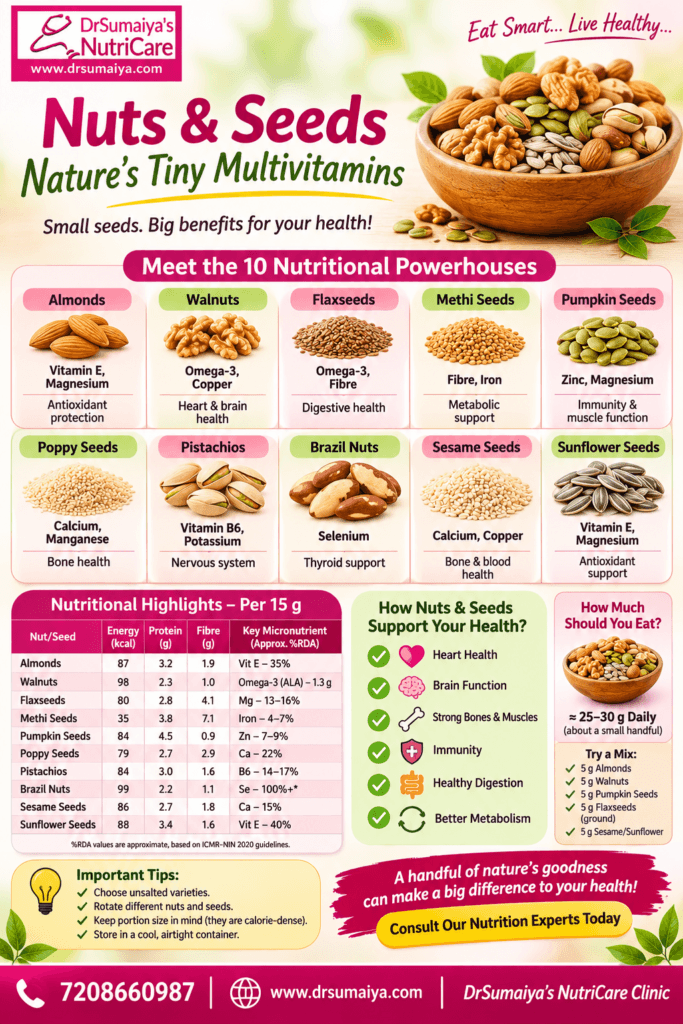
📊 Visual Breakdown: Key Micronutrients, Plant Protein, and Dietary Fiber in 10 Powerhouse Nuts and Seeds.
1. Almonds: A Vitamin E and Magnesium Powerhouse
Almonds stand out for their high vitamin E content. They also supply magnesium, plant protein, and healthy monounsaturated fats.
Why include them? Vitamin E acts as an antioxidant that protects delicate cell membranes from oxidative stress. Magnesium supports smooth muscle relaxation, normal blood pressure, and strong bones. Eating a small handful of almonds before a carb-heavy meal blunts post-meal glucose spikes.
How to eat them: Enjoy a small handful of 8 to 10 almonds as an afternoon snack. You can also chop them over morning oats or curd. Soaking overnight is optional. While soaking softens the skin, it does not alter the nutritional content much.
2. Walnuts: Nature’s Brain and Vascular Support
Walnuts look like the human brain for good reason. They are unique among nuts for their rich levels of alpha-linolenic acid (ALA), a vital plant omega-3 fatty acid.
Why include them? ALA helps ease arterial inflammation (the body’s internal swelling and tissue stress). It supports healthy cholesterol levels. Replacing junk snacks with walnuts keeps your brain sharp and hunger low.
How to eat them: Add two or three walnut halves to vegetable salads, fruit bowls, or homemade mint chutneys. Walnuts turn rancid if kept in warm rooms, so store them in a cool container.
3. Flaxseeds: Fiber and Hormonal Balance
Flaxseeds, known as alsi across India, provide a dual punch of plant omega-3 fats and soluble fiber. They also supply plant compounds called lignans.
Why include them? Soluble fiber in flaxseeds binds bile in the gut. This helps clear excess cholesterol. It also eases slow bowels gently. Flax lignans give mild plant hormone support for women with PCOS (polycystic ovary syndrome, a hormonal condition).
How to eat them: Whole flaxseeds often pass through the digestive system undigested. Always consume them lightly roasted and ground into a coarse powder. Stir one teaspoon into a bowl of curd, daily dal, or roti atta.
4. Methi Seeds: The Traditional Glycemic Anchor
Methi (fenugreek) seeds are a time-tested pillar in Indian cooking. They provide unique soluble fibers called galactomannans, alongside iron and magnesium.
Why include them? Galactomannan fiber slows the rate at which your stomach empties carbs into the small intestine. This softens the postprandial (after-meal) blood sugar curve. However, methi is a nutritional aid, not a substitute for prescribed diabetes medicines.
How to eat them: Use small amounts in vegetable preparations, sambar, and dal tempering. You can soak half a teaspoon in warm water overnight and drink it in the morning. Pregnant women and individuals on glucose-lowering drugs should avoid high supplemental extracts without dietitian supervision.
5. Pumpkin Seeds: Zinc and Restful Sleep Support
Pumpkin seeds (pepitas) are green powerhouses of plant protein, zinc, magnesium, and healthy fats.
Why include them? Zinc supports immunity, skin repair, and hormone balance. Pumpkin seeds also supply natural tryptophan. Your brain turns tryptophan into melatonin for restful sleep.
How to eat them: Sprinkle one tablespoon over vegetable soups, poha, or sprouted salads. Light dry roasting enhances their nutty crunch without destroying fragile fatty acids.
6. Poppy Seeds (Khus Khus): Calming Mineral Density
Poppy seeds are tiny culinary gems widely used in traditional Indian cooling drinks and rich gravies. They pack remarkable amounts of calcium, phosphorus, copper, and manganese.
Why include them? Calcium and phosphorus work together for strong bones. Traditional Indian cooking uses khus khus to calm the nerves during hot weather or stress.
How to eat them: Soak and grind one teaspoon into vegetable gravies, chutneys, or a warm cup of bedtime milk with a pinch of nutmeg. Use them in measured amounts, as they are energy-dense.
7. Pistachios: Potassium and Retinal Protection
Pistachios are known for their vibrant green and purple color. They deliver plant protein, potassium, vitamin B6, and eye-protective plant pigments like lutein and zeaxanthin.
Why include them? Potassium balances sodium intake. This supports smooth blood flow and healthy blood pressure. Lutein also guards your eyes from blue light.
How to eat them: Choose plain, unsalted in-shell pistachios. Shelling them by hand slows down eating speed, preventing mindless overeating.
8. Brazil Nuts: The Potent Thyroid Selenium Source
Brazil nuts are famous for their rich selenium levels. Selenium is a vital trace mineral your thyroid gland requires to convert inactive T4 hormone into active T3 hormone.
Important Dosing Caution: Brazil nuts must never be eaten by the handful. Just one single Brazil nut can deliver 68 to 90 micrograms of selenium, covering your entire daily adult need. Eating multiple Brazil nuts daily risks chronic selenium toxicity. Enjoy one nut two or three times a week at most.
9. Sesame Seeds (Til): Plant Calcium for Strong Bones
Sesame seeds are among the oldest oilseeds known to Indian cooking. They provide high levelss of plant calcium, copper, iron, and lignans like sesamin.
Why include them? A tablespoon of unhulled sesame seeds provides noticeable calcium, making them valuable for individuals who do not consume dairy. Sesamin also helps defend liver cells from lipid oxidation.
How to eat them: Sprinkle lightly roasted til over dry vegetable sabzis, knead into missi rotis, or prepare healthy traditional til-jaggery laddoos in winter.
10. Sunflower Seeds: The Skin and Vascular Vitamin E Shield
Sunflower seeds are rich in vitamin E, thiamine (vitamin B1), copper, and selenium.
Why include them? Vitamin E protects lipid structures throughout your skin and vascular walls. Thiamine supports enzymatic carbohydrate breakdown and steady nerve conduction.
How to eat them: Add a tablespoon of unsalted sunflower seeds to homemade trail mixes, salads, or cold buttermilk.
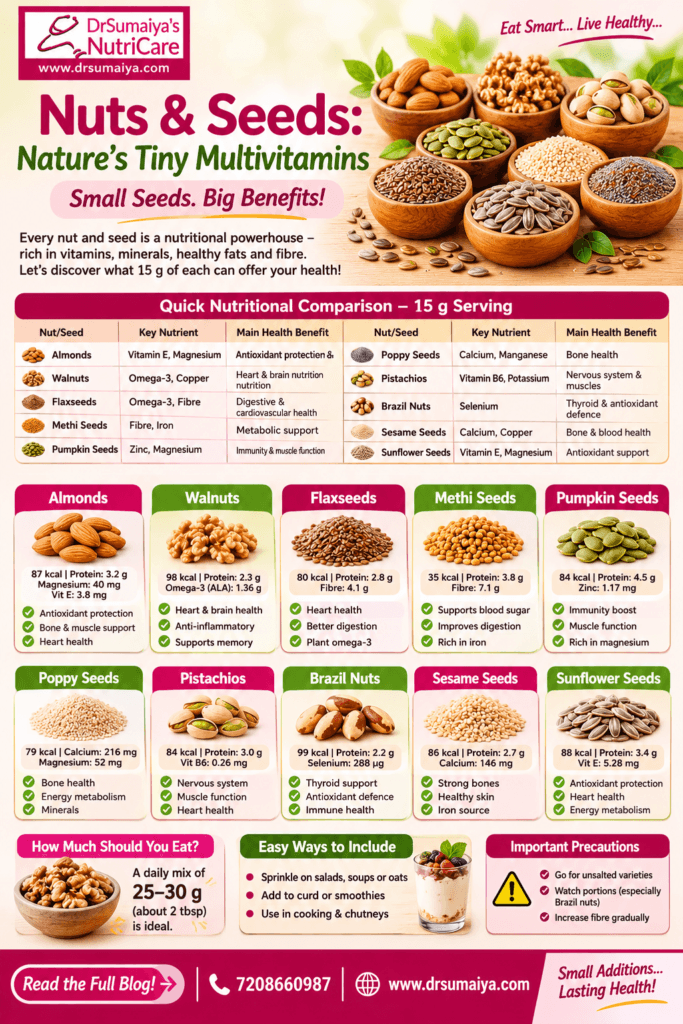
📊 Practical Guide: Everyday Indian Kitchen Portions, Storage Rules, and Smart Food Combinations for 10 Powerhouse Nuts and Seeds.
How Much Should You Eat Daily?
Nuts and seeds are intensely nutritious, but they are also calorie-dense. More is not automatically better.
For most adults, a combined portion of 15 to 30 grams per day (about one closed fistful) represents the clinical sweet spot. This provides valuable micronutrients without exceeding daily energy needs. You do not need to eat all ten every day. Rotate two or three types throughout the week.
Do You Need to Soak Nuts and Seeds?
Soaking is a matter of personal digestion and texture preference, not a strict medical rule. Almonds can be eaten soaked or raw. Walnuts and pistachios are best eaten as they are. Flaxseeds should be roasted and ground for absorption. Methi seeds soften pleasantly with soaking. Pick the preparation that suits your digestive comfort.
Essential Safety Precautions
- Portion Control: Measure your seeds with a spoon rather than snacking straight from large storage jars.
- Allergy Vigilance: Tree nuts and sesame seeds can provoke severe allergic responses. Never consume foods you react to.
- Proper Storage: Unsaturated fats spoil when exposed to heat and sunlight. Store walnuts, ground flaxseeds, and seeds in airtight containers inside the refrigerator.
📋 Need a Personalized Indian Nutrition Blueprint?
Get a doctor-guided meal plan tailored to your medical lab markers, home cooking routine, and metabolic health.
🌟 Transform Your Health Today
Takes only 60 seconds to send a booking enquiry.
"Lost 4kgs in one month... plans are simple and effective! She
responds to queries promptly."
– Payal J.
Frequently Asked Questions (FAQs)
About this guide
This guide provides general health information. Your own care depends on your medical history and circumstances. Speak with your treating clinician before changing medicines or treatment.