
🩺 Quick Clinical Verdict: Can Diet and Nutrition Relieve Senior Knee Pain?
Yes. The right food plan clearly reduces knee pain and inflammation (the swelling and soreness in an irritated joint). Every extra 1 kg of body weight puts about 4 kg of pressure on your knee, so weight loss helps a lot. Turmeric, omega-3 fats and gentle fat loss calm the joint and improve movement. Dr. Sumaiya’s recommendation: protect your muscles with protein at every meal instead of depending on painkillers for years.
For seniors and adults over 50, persistent knee pain is one of the most debilitating conditions, severely restricting daily walking, climbing stairs, and independent living. While many accept knee stiffness as an inevitable part of aging, the primary driver of joint degeneration is knee osteoarthritis (the gradual breakdown of cartilage and loss of lubricating synovial fluid inside the knee joint capsule). In clinical practice, managing osteoarthritis requires more than temporary painkiller gels—it requires an evidence-based anti-inflammatory diet combined with strategic weight reduction to relieve joint mechanical stress.
Clinical Nutrition Matrix: Joint-Healing Foods vs. Pro-Inflammatory Triggers
Understanding how specific foods either rebuild joint lubrication and reduce swelling, or accelerate cartilage degradation:
| Nutrient Category | Joint-Healing Foods (Green List) | Pro-Inflammatory Triggers (Red List) | Biochemical & Joint Mechanism |
|---|---|---|---|
| Natural Anti-Inflammatories | Turmeric with Black Pepper, Fresh Ginger, Garlic, Moringa leaves | Ultra-Processed Snacks, Artificial Food Dyes, High-Sodium Sauces | Curcumin and gingerol inhibit COX-2 inflammatory enzymes, naturally lowering joint swelling without stomach irritation. |
| Essential Joint Fats | Omega-3 Rich Foods (Walnuts, Flaxseeds, Chia Seeds, Fatty Fish) | Reheated Seed Oils, Vanaspati, Palm Oil, Deep-Fried Indian Snacks | Omega-3 fatty acids reduce the production of inflammatory cytokines (TNF-alpha & IL-6) that attack knee cartilage. |
| Collagen & Cartilage Cofactors | Amla (Indian Gooseberry), Guava, Bell Peppers, Citrus, Sesame Seeds | Refined White Sugar, Bakery Pastries, Sweetened Carbonated Beverages | Vitamin C and zinc are vital cofactors for endogenous collagen synthesis, preserving joint elasticity. |
| Bone & Muscle Minerals | Ragi (Finger Millet), Low-Fat Curd (Dahi), Soaked Almonds, Tofu | Excessive Commercial Tea/Coffee (>4 cups daily), Carbonated Colas | Bioavailable calcium, magnesium, and Vitamin D3 maintain subchondral bone density supporting the knee joint. |
| Carbohydrate Quality | Khapli (Emmer) Wheat, Jowar, Whole Steel-Cut Oats, Sprouted Dals | Maida (Refined Flour), White Bread, Fried Puris and Bhaturas | Refined carbs trigger rapid insulin surges and AGEs (advanced glycation end-products) that stiffen joint collagen fibers. |
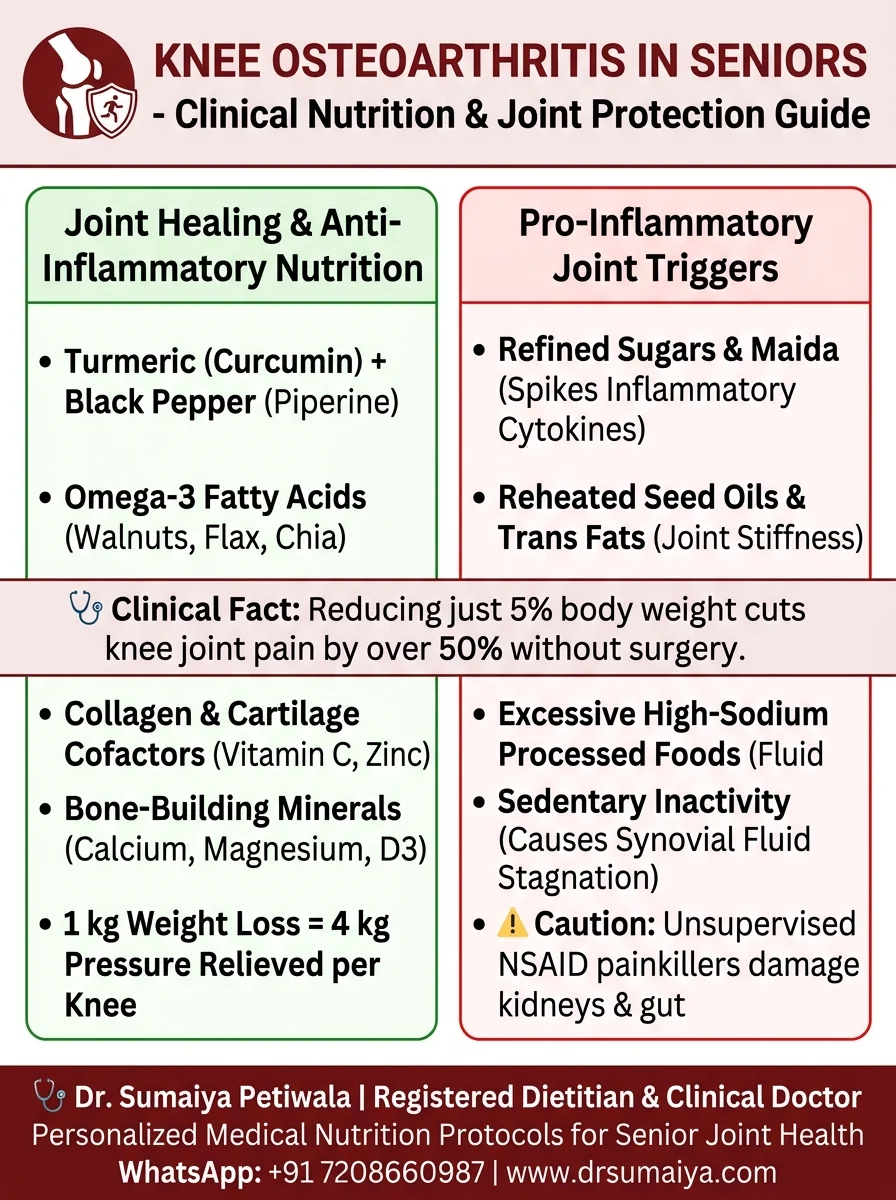
📊 Visual Summary: Joint-Healing Nutrition vs. Inflammatory Triggers & Dr. Sumaiya’s Joint Protection Rules.
The 4:1 Biomechanical Rule: How Weight Loss Relieves Knee Pain
During normal level walking, the biomechanical load placed across your knee joints is roughly 4 times your total body weight. When climbing stairs, this force increases to 7 times your body weight.
💡 The Power of Medical Joint Unloading:
Losing just 5 kg of visceral body fat relieves 20 kg of cumulative mechanical force off each knee joint with every single step you take. Over a standard 5,000-step day, that represents 100,000 kilograms less impact pounding against your sensitive joint cartilage!
4 Evidence-Based Clinical Nutrition Strategies for Senior Joint Health
1. Pair Turmeric with Piperine for 2,000% Better Absorption
Curcumin (the active yellow polyphenol in turmeric) is one of nature’s most potent joint anti-inflammatories. However, raw turmeric powder has very low intestinal absorption. Always consume turmeric alongside a pinch of black pepper containing piperine (a natural alkaloid that enhances curcumin absorption by up to 2,000%) and a drop of healthy fat (like olive oil or warm milk).
2. Protect Against Muscle Loss With Age
Many seniors lose muscle mass quickly. Doctors call this muscle loss with age. When the quadriceps and hamstring muscles around the thigh weaken, they can no longer absorb shock, forcing the knee joint bone surfaces to grind directly against each other. Ensure you consume 20–25g of high-quality protein (paneer, sprouted lentils, sattu, eggs) at every meal to keep joint-supporting muscles strong.
3. Avoid Unsupervised Long-Term NSAID Painkiller Use
Relying chronically on non-steroidal anti-inflammatory drugs (NSAIDs like ibuprofen or diclofenac) can damage the stomach lining, cause severe gastritis, and impair renal kidney function in seniors. Clinical Medical Nutrition Therapy works to lower systemic baseline inflammation naturally so painkiller dependence can be safely minimized under medical supervision.
4. Optimize Vitamin D3 & Synovial Hydration
Cartilage is composed of 70% to 80% water bound to proteoglycan molecules. Dehydration causes cartilage to become dry, brittle, and prone to flaking. Drink 2 to 2.5 liters of clean water daily, and ensure your serum 25-hydroxy Vitamin D3 levels are maintained above 30 ng/mL to support bone mineralization beneath the joint cartilage.
Relieve Knee Pain & Reclaim Your Mobility
Do not let knee pain keep you confined. Consult Dr. Sumaiya Petiwala for a personalized, doctor-supervised Medical Nutrition Therapy protocol designed to reduce joint inflammation, unload mechanical weight, and strengthen your muscles.
- Comprehensive Joint & Metabolic Audit: Medical review of your X-rays, uric acid (a waste product that can build up in joints), Vitamin D3, HbA1c (a blood test showing your three-month average blood sugar), and inflammatory markers (ESR / CRP).
- Anti-Inflammatory Indian Meal Prescription: A customized home meal plan rich in joint-protecting spices, high-calcium traditional grains, and optimal protein.
- Doctor-Supervised Weekly Progress Reviews: Step-by-step guidance for steady, muscle-preserving weight loss that permanently removes pressure from your knees.
In-Clinic at Frazer Town, Bengaluru & Telehealth Pan-India / Globally | WhatsApp: +91 7208660987