

Medically Verified & Evidence-Based | Authored by Dr. Sumaiya Petiwala, RD, BUMS, CDE (Registered Clinical Dietitian & Metabolic Health Specialist) | Aligned with ICMR-NIN Clinical Standards | Last Updated: October 2026
Traditional cultures used wholesome healing foods for ages. Today, modern clinical food science confirms these benefits. From barley and dates to black seed and olive oil, these whole foods offer strong healing compounds. At Dr. Sumaiya NutriCare Clinic, we blend traditional food wisdom with clinical medicine. We help you use these foods to protect your metabolic health.
What Is the Clinical Science Behind Traditional Sunnah Foods?
Direct Clinical Answer: Sunnah foods are traditional whole foods rich in active healing compounds. Barley gives soluble fiber to curb cholesterol. Black seed delivers thymoquinone to cool tissue stress. Extra virgin olive oil shields heart arteries. When eaten in wise portions, they support steady blood sugar and gut health.
12 Healing Sunnah Foods Validated by Modern Science
Modern clinical trials confirm the metabolic benefits of these twelve healing staples:
- 1. Whole Grain Barley. Barley is rich in soluble fiber. It binds bile salts in the gut to lower bad cholesterol. It also gives prebiotic (plant fibers that nourish good gut bacteria) food to soothe your gut.
- 2. Black Seed (Kalonji). Black seed contains thymoquinone. This compound lowers oxidative stress. It improves cell glucose uptake. It cools systemic inflammation (cellular immune stress that harms tissues).
- 3. Extra Virgin Olive Oil. Rich in oleic acid, raw olive oil shields blood vessels. It keeps arteries supple and lowers heart strain.
- 4. Mineral-Dense Dates. Whole dates supply potassium and polyphenols. Pair one or two dates with raw almonds to slow glucose uptake.
- 5. Raw Natural Honey. Real honey carries active enzymes. It feeds friendly gut microbes. Use in small portions if managing diabetes.
- 6. Fresh Pomegranate. Rich in fruit polyphenols, pomegranate protects nitric oxide in blood vessels. It supports healthy blood pressure and blood flow.
- 7. Ripe Figs (Anjeer). Figs supply rich soluble fiber and calcium. They aid bowel transit and relieve sluggish digestion.
- 8. Whole Grapes and Raisins. Grapes offer berry polyphenols. These compounds shield brain and heart cells from cell damage.
- 9. Cultured Curd and Milk. Curd delivers easy-to-absorb calcium and protein. It supplies probiotic (live good bacteria that aid digestion) cultures to balance gut flora.
- 10. Hydrating Cucumbers and Melons. Melons and cucumbers hold over 90 percent water. They hydrate cells and support kidney cleansing.
- 11. Raw Vinegar. Acetic acid slows stomach emptying. Taking diluted vinegar before meals blunts high postprandial (occurring after a meal) sugar surges.
- 12. Whole Mushrooms. Fungi offer beta-glucans and plant sterols. They support immune defenses and daily vitality.
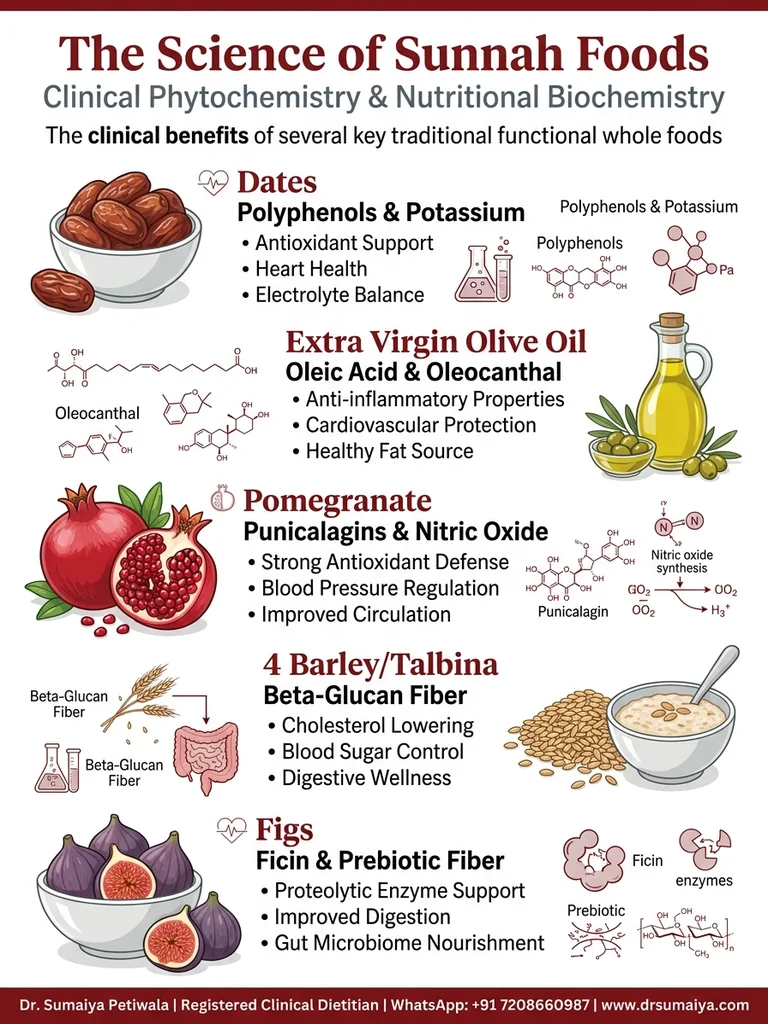
📊 Clinical Phytochemistry: Evidence-Based Science and Metabolic Actions of Traditional Healing Foods.
How Healing Foods Protect Your Metabolic Organs
Eating clean whole foods defends your primary metabolic systems from disease:
- Blood Sugar Control and Fat Loss. Swapping refined flour for whole barley creates a low glycemic index (a scale measuring how fast foods raise blood sugar). It gives a low glycemic load (a ranking system for carbohydrate content and blood sugar impact). This prevents insulin resistance (where cells do not absorb glucose well). It stops buildup of visceral fat (deep belly fat packed around internal organs). Over time, it lowers HbA1c (a 3-month average of blood sugar levels). It also reduces fasting insulin (a morning blood test measuring baseline insulin levels).
- Liver Health and Lipid Balance. Olive oil and black seed protect against fatty liver (a condition where fat builds up inside liver cells) and NAFLD (non-alcoholic fatty liver disease, a condition with excess liver fat). They normalize SGPT (a liver enzyme showing hepatic irritation) and SGOT (a liver enzyme released during cell damage). They also lower blood triglycerides (blood fats tied to insulin levels).
- Kidney Balance and Fluid Flow. Potassium foods and clean water ease kidney strain. Good hydration flushes uric acid (a natural waste product from protein digestion) smoothly.
- Hormone Balance and Vitality. Healing whole foods support your thyroid (the neck gland that controls how fast your body burns energy), monitored by TSH (a blood test that checks your thyroid pace). They also help cycle timing in women with PCOS (polycystic ovary syndrome, a hormonal imbalance).
Comparison: Modern Processed Diet vs Sunnah Whole-Food Protocol
See how industrial food habits compare with Doctor Sumaiya’s structured whole-food protocol:
| Nutritional Area | Standard Modern Diet | Dr. Sumaiya Clinical Protocol |
|---|---|---|
| Grain Selection | Refined white rice and maida. | Whole barley (Talbina), oats, millets. |
| Cooking Fats | Refined seed oils, trans fats. | Cold-pressed olive oil, moderate ghee. |
| Sweeteners | High-fructose corn syrup, white sugar. | Whole single dates, raw tested honey. |
| Gut Health | Dysbiosis, bloating, poor transit. | Thriving microbiome, smooth motility. |
Combine Ancient Food Wisdom with Clinical Medicine
Want a doctor plan that honors healing foods and your lab tests? Consult Dr. Sumaiya Petiwala today.
Book Clinical Consultation on WhatsApp →The 50/25/25 Indian Plate Rule with Healing Whole Foods
Balance your meals with this smart clinical framework to maximize nutrient absorption:
- 50% High-Fiber Vegetables. Fill half your plate with cucumber, gourds, and salad. Drizzle with cold-pressed olive oil. These give antioxidant (plant defense compounds that protect gut lining) shield.
- 25% Clean Protein First. Eat protein first at each meal. Choose paneer, boiled eggs, fish, chicken, or sprouted dal. Eating protein first spurs fullness and steadies blood sugar.
- 25% Whole Grains. Finish with whole barley roti or brown rice. Keep grain servings small to avoid sugar surges.
Drink warm water with crushed kalonji and lemon after breakfast. This habit aids smooth digestion.
The Dr. Sumaiya 3-Step Medical Correction Process
At Dr. Sumaiya NutriCare Clinic, we guide you through three structured healing stages:
- Step 1: Biomarker Analysis. We check blood sugars, fasting insulin, and liver health. This spots nutrient gaps.
- Step 2: Custom Indian Nutrition Plan. We build a home food plan with healing staples and clinical targets.
- Step 3: Continuous Doctor Monitoring. We track your energy, body composition, and labs weekly.
🌟 Transform Your Health Today
Takes only 60 seconds to get personalized clinical insights.
"Lost 4kgs in one month... plans are simple and effective! She
responds to queries promptly."
– Payal J.
Frequently Asked Questions About Sunnah Foods
Can diabetic patients eat dates and honey on a clinical diet?
Yes, but with strict portion control. Eat one date alongside almonds or walnuts to slow sugar uptake. Count honey strictly within daily carb limits.
Why is Talbina (barley porridge) so beneficial for heart health?
Talbina is rich in beta-glucan soluble fiber. This binds bile acids in the gut and flushes them out, prompting the liver to clear excess blood cholesterol.
How should extra virgin olive oil be consumed for medical benefits?
Consume olive oil raw over fresh salads or warm cooked vegetables. Avoid high-heat frying to preserve delicate polyphenol compounds like oleocanthal.
What are the evidence-based benefits of black seed (kalonji)?
Black seed contains thymoquinone. Clinical trials show it reduces systemic inflammation, improves insulin sensitivity, and supports immune balance.
How does Dr. Sumaiya integrate traditional foods into modern care?
With credentials in Unani Medicine (BUMS), clinical nutrition (RD), and diabetes care (CDE), Dr. Sumaiya balances traditional foods with lab diagnostics.
About this guide
This guide provides general health information. Your own care depends on your medical history and circumstances. Speak with your treating clinician before changing medicines or treatment.