
Medically Verified & Evidence-Based | Authored by Dr. Sumaiya Petiwala, RD, BUMS, CDE (Registered Clinical Dietitian & Metabolic Health Specialist) | Aligned with ICMR-NIN Clinical Standards | Last Updated: October 2026
For people with diabetes, fasting during Ramadan requires careful medical planning. Fasting without guidance can trigger dangerous blood sugar drops. It can also cause severe evening spikes. At Dr. Sumaiya NutriCare Clinic, we create tailored fasting protocols. We help you fulfill your spiritual goals while protecting your health.
Can You Fast Safely with Diabetes During Ramadan?
Direct Clinical Answer: Fasting with diabetes requires doctor clearance and meal pacing. Suhoor must focus on slow-release complex carbs and clean protein. Breaking your fast gently stops sudden sugar spikes. It also prevents low glucose drops. Doctor supervision ensures safe fasting throughout Ramadan.
4 Essential Medical Rules for Fasting with Diabetes
Follow these four clinical rules to keep your blood glucose stable while fasting:
- 1. Pre-Ramadan Biomarker Assessment. Before fasting, check your baseline HbA1c (a 3-month average of blood sugar levels). We also check fasting insulin (a morning blood test measuring baseline insulin levels). This helps assess insulin resistance (where cells do not absorb glucose well). It confirms fasting safety.
- 2. Suhoor Glucose Shield. Never skip your pre-dawn meal. Combine rolled oats, eggs, or paneer with plenty of water. This prevents postprandial (occurring after a meal) crashes. It keeps your energy high for hours.
- 3. Burning Deep Belly Fat Safely. With correct meal pacing, daylight fasting taps into deep visceral fat (deep belly fat packed around internal organs). A clear plan protects lean muscle while burning stored body fat.
- 4. Hepatic Protection and Enzyme Health. Balanced fasting helps reverse fatty liver (a condition where fat builds up inside liver cells) and NAFLD (non-alcoholic fatty liver disease, a condition with excess liver fat). It lowers high SGPT (a liver enzyme showing hepatic irritation). It also normalizes SGOT (a liver enzyme released during cell damage). It reduces high triglycerides (blood fats tied to insulin levels). It cools chronic inflammation (cellular immune stress that hinders recovery). Clean meals also protect your thyroid (the neck gland that controls how fast your body burns energy), monitored by TSH (a blood test that checks your thyroid pace).
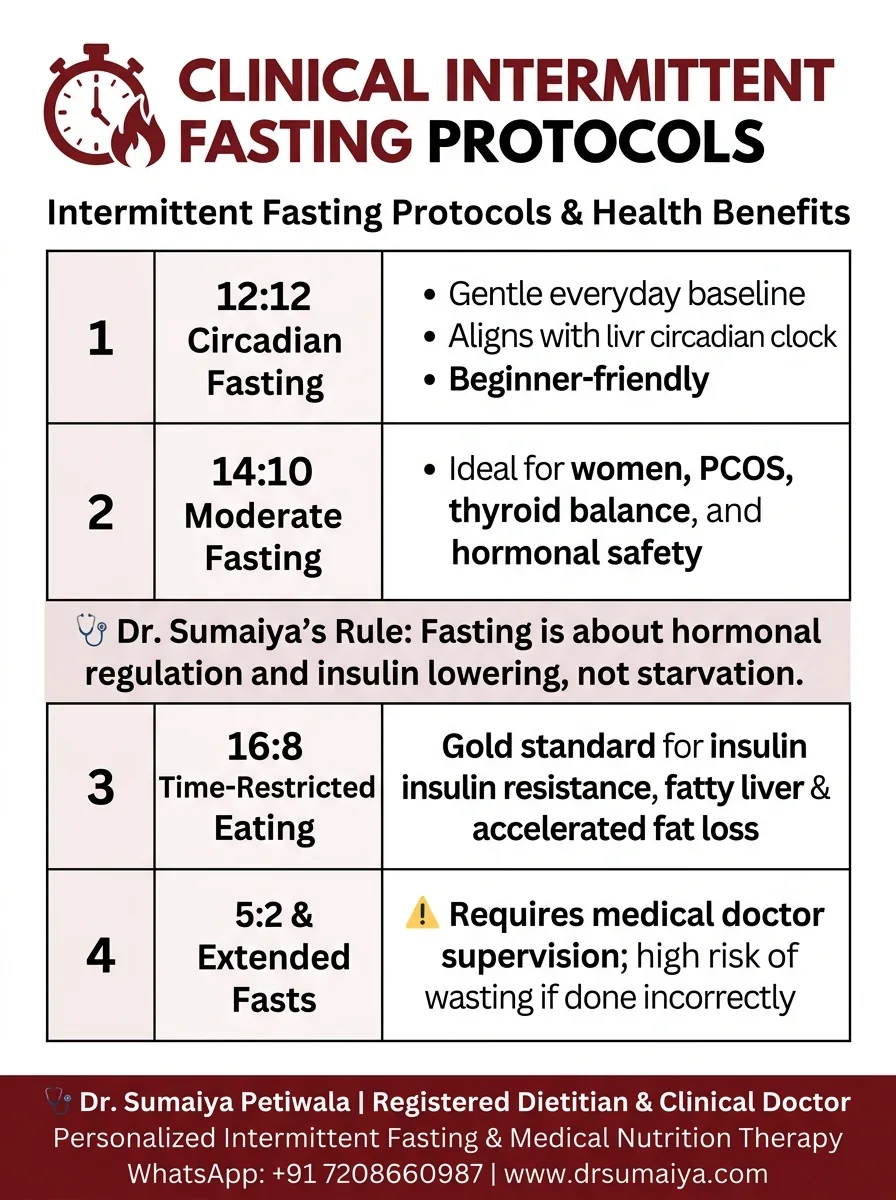
📊 Clinical Protocol: Glucose Tracking and Medication Alignment for Diabetic Fasting.
Comparison: Unguided Diabetic Fasting vs Doctor-Led Protocol
See the clinical differences between unguided fasting and doctor-supervised care:
| Health Factor | Unguided Diabetic Fasting | Dr. Sumaiya Clinical Protocol |
|---|---|---|
| Glucose Stability | Severe spikes and dangerous drops | Smooth blood sugar in safe target zones |
| Suhoor Formulation | Refined bread, tea, or skipped entirely | Low-GI carbs, eggs, curd, and water |
| Iftar Opening | Fried snacks and sweet fruit sherbets | Water, single date, and fiber salad first |
| Medical Safety | High risk of dehydration and illness | Doctor supervision and emergency rules |
Fast with Medical Confidence and Safety
Manage your diabetes safely throughout Ramadan. Get a personalized nutrition protocol with medication guidance from Dr. Sumaiya Petiwala today.
Book Clinical Consultation on WhatsApp →The 50/25/25 Indian Kitchen Plate Rule for Diabetic Iftar
Structure your main dinner after Iftar using our balanced plate rule:
- 50% High-Fiber Sabzi & Salad. Fill half your plate with cucumber, palak, methi, cabbage, or bhindi. These foods provide prebiotic (plant fibers that nourish good gut bacteria) food. They also keep you full.
- 25% High-Quality Protein First. Eat your protein first. Choose grilled chicken, fish, paneer, boiled eggs, or sprouts. Protein shields your muscles during fasting.
- 25% Complex Smart Carbs. Finish with jowar roti, daliya, or brown rice. These carry a low glycemic index (a scale measuring how fast foods raise blood sugar) and modest glycemic load (a ranking system for carbohydrate content and blood sugar impact). This avoids sudden sugar spikes.
Add fresh curd for probiotic (good live bacteria that support digestion) gut health. Cook with cold-pressed olive or coconut oil for antioxidant (compounds that defend cells against daily wear and tear) protection.
The Dr. Sumaiya 3-Step Medical Correction Process
At Dr. Sumaiya NutriCare Clinic, we remove doubt with our clear clinical plan:
- Step 1: Biomarker Analysis & Metabolic Audit. We review your complete blood panel. We check your insulin markers, liver health, and thyroid pace before fasting begins.
- Step 2: Personalized Indian Nutritional Prescription. We build an easy home food plan with local foods. We tailor it for your fasting hours.
- Step 3: Weekly Doctor-Led Monitoring. We assess your body metrics weekly. We adjust meal portions to keep your energy high.
🌟 Transform Your Health Today
Takes only 60 seconds to get personalized clinical insights.
"Lost 4kgs in one month... plans are simple and effective! She
responds to queries promptly."
– Payal J.
Frequently Asked Questions About Fasting with Diabetes
When should a person with diabetes break their fast immediately?
Break your fast at once if blood sugar drops below 70 mg/dL or climbs above 300 mg/dL. Also break it if you feel dizzy or confused.
How many dates can a diabetic eat at Iftar?
One fresh date is safe when eaten with water and protein. Avoid eating multiple dried dates or dates dipped in sweet syrup.
How often should blood glucose be checked during fasting hours?
Check blood sugar at pre-dawn, midday, late afternoon, and two hours after dinner. Testing blood does not break your fast.
Can fasting during Ramadan lower long-term HbA1c levels?
Yes. When supported by clean meals, fasting improves insulin sensitivity and burns belly fat. This lowers average blood sugar over time.
What is the safest beverage for hydration between Iftar and Suhoor?
Plain water, unsweetened lemon water, and light buttermilk are best. Avoid commercial fruit juices, sweet drinks, and sugary teas.