

Medically Verified & Evidence-Based | Authored by Dr. Sumaiya Petiwala, RD, BUMS, CDE (Registered Clinical Dietitian & Metabolic Health Specialist) | Aligned with ICMR-NIN Clinical Standards | Last Updated: October 2026
Quitting tobacco is a tough battle. Nicotine hooks brain dopamine paths. It sparks fierce cravings. But clinical food science gives powerful help. Certain foods make tobacco taste foul. Others calm anxiety and heal worn cells. At Dr. Sumaiya NutriCare Clinic, we guide you with food therapy. We help you quit tobacco for good without weight gain.
Can Functional Foods Really Help You Quit Tobacco?
Direct Clinical Answer: Yes. Whole foods like milk, curd, celery, and carrots make cigarettes and gutka taste bitter. Vitamin C foods like amla and oranges replace lost nutrients fast. Pumpkin seeds and green tea raise calming brain signals. They soothe jitters and curb cravings safely.
Functional Foods That Crush Nicotine Cravings
Stock your kitchen with these therapeutic foods to navigate withdrawal symptoms:
- 1. Fresh Milk and Plain Curd. Dairy coats your taste buds. Smoking or chewing tobacco after dairy creates a bitter taste. Curd also gives probiotic (live good bacteria that aid digestion) cultures to heal your gut.
- 2. Crunchy Celery and Carrots. Chewing raw veggies satisfies the urge to chew. It gives chewing work without extra calories. These vegetables also give prebiotic (plant fibers that nourish good gut bacteria) fiber for gut health.
- 3. Vitamin C from Amla and Guava. Each cigarette burns 25 milligrams of vitamin C. Eating fresh amla, guavas, and oranges restores this vital nutrient. They offer an antioxidant (plant defense compounds that protect gut lining) shield to heal lung and vessel cells.
- 4. Roasted Saunf, Ajwain, and Cloves. Chewing roasted fennel seeds and cloves satisfies the oral habit. Cloves numb mouth tissues gently and freshen breath.
- 5. Green Tea and Tulsi Tea. Green tea holds calming L-theanine. This amino acid sparks alpha brainwaves to lower tension and anger.
- 6. Magnesium in Pumpkin Seeds. Nicotine withdrawal sparks muscle tightness and poor sleep. Pumpkin and sunflower seeds supply magnesium to relax tense nerves.
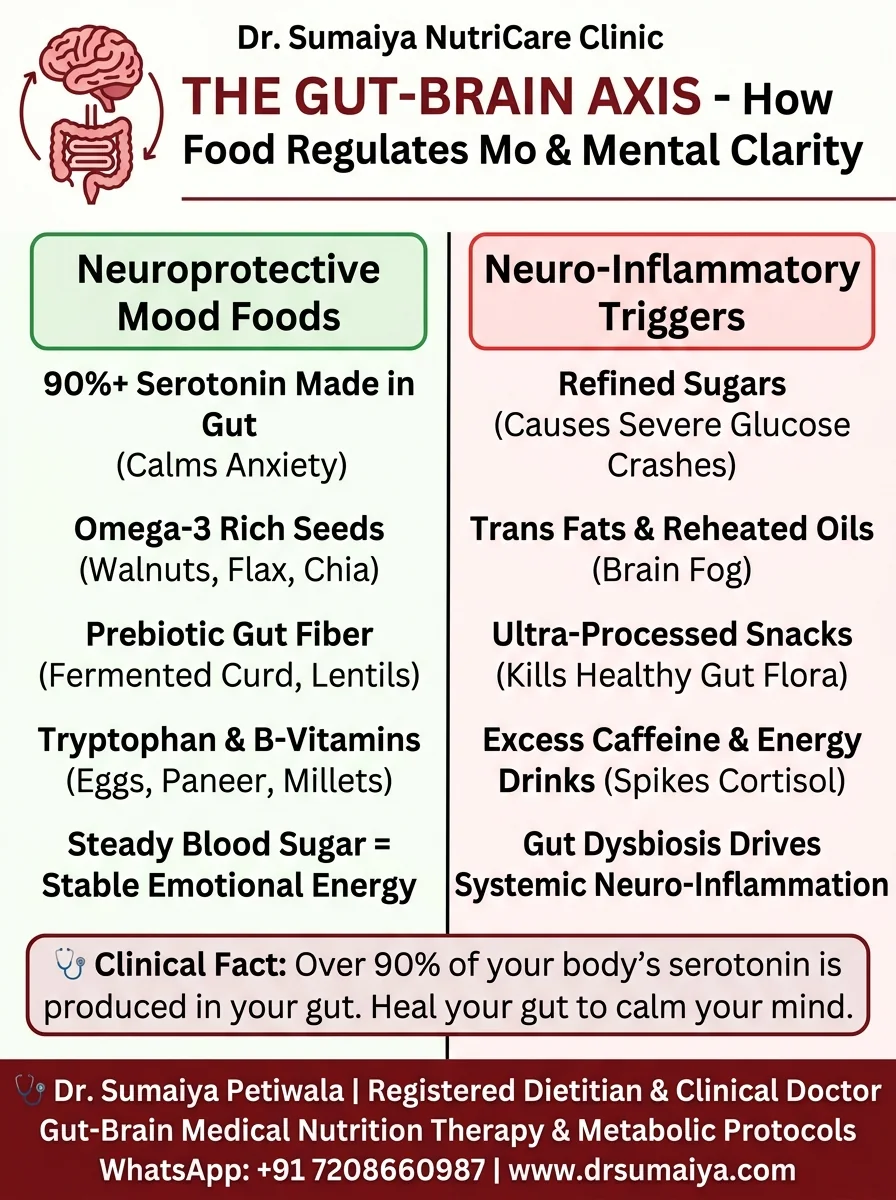
📊 Clinical Gut-Brain Axis: Repairing Dopamine, Neurotransmitters & Craving Pathways with Whole Nutrition.
Why Quitting Tobacco Causes Weight Gain and How to Stop It
Many people fear quitting tobacco because they dread rapid weight gain:
- Nicotine Slows Appetite. Nicotine speeds heart rate and blunts hunger. When you stop, your daily calorie burn drops by about 200 calories.
- Dopamine Food Urges. The brain seeks dopamine. People often replace cigarettes with sweets and fried snacks. These carry a high glycemic index (a scale measuring how fast foods raise blood sugar). In large bowls, they carry a high glycemic load (a ranking system for carbohydrate content and blood sugar impact). This sparks sharp postprandial (occurring after a meal) sugar surges.
- Cellular Sugar Block and Belly Fat. Overeating sweets after quitting causes insulin resistance (where cells do not absorb glucose well). Surplus food turns into visceral fat (deep belly fat packed around internal organs). Over time, this raises your HbA1c (a 3-month average of blood sugar levels). It also spikes fasting insulin (a morning blood test measuring baseline insulin levels).
- Liver and Kidneys. Clean eating shields against fatty liver (a condition where fat builds up inside liver cells) and NAFLD (non-alcoholic fatty liver disease, a condition with excess liver fat). It keeps SGPT (a liver enzyme showing hepatic irritation) and SGOT (a liver enzyme released during cell damage) normal. It keeps blood triglycerides (blood fats tied to insulin levels) low. Clean water clears uric acid (a natural waste product from protein digestion) smoothly.
- Cellular Health. Wholesome food cools systemic inflammation (cellular immune stress that harms tissues). It supports your thyroid (the neck gland that controls how fast your body burns energy), checked by TSH (a blood test that checks your thyroid pace). It also aids cycle timing in women with PCOS (polycystic ovary syndrome, a hormonal imbalance).
Comparison: Quitting Without Guidance vs Doctor-Led Nutrition
See why clinical dietary support makes tobacco cessation three times more successful:
| Cessation Factor | Unassisted Cold Turkey | Dr. Sumaiya Clinical Protocol |
|---|---|---|
| Craving Control | Severe cravings, high relapse rate. | Crushed via alkaline and nutrient-dense foods. |
| Weight Management | 5 to 8 kg gain from sugar snacking. | Zero fat gain via structured plate rules. |
| Mood & Jitters | Extreme anxiety, insomnia, rage. | Calm focus supported by magnesium and GABA. |
| Cellular Recovery | Slow repair, ongoing vitamin deficit. | Rapid tissue repair with high antioxidant food. |
Quit Tobacco and Protect Your Health with Doctor Support
Ready to break free from nicotine without gaining weight or suffering severe anxiety? Get a personalized cessation diet. Consult Dr. Sumaiya Petiwala today.
Book Clinical Consultation on WhatsApp →The 50/25/25 Indian Plate Rule for Craving-Free Eating
Use this balanced meal formula to prevent rebound hunger and sugar cravings:
- 50% High-Fiber Vegetables. Fill half your plate with raw cucumbers, carrots, methi, palak, and cabbage. These offer rich antioxidant defense and keep hands and teeth occupied.
- 25% Clean Protein First. Eat protein first at each meal. Choose paneer, boiled eggs, curd, grilled chicken, or sprouted dal. Eating protein first spurs dopamine and curbs sweet urges.
- 25% Whole Smart Grains. Finish with whole jowar roti, ragi, or brown rice. Keep grain servings moderate to avoid post-meal sugar crashes.
Sip warm water infused with ginger and tulsi between meals. This habit soothes throat irritation and cleanses toxins.
The Dr. Sumaiya 3-Step Medical Correction Process
At Dr. Sumaiya NutriCare Clinic, we guide you through three clear stages of recovery:
- Step 1: Biomarker Analysis. We assess liver enzymes, lipid ratios, blood sugar, and nutrient levels to measure cellular strain.
- Step 2: Custom Cessation Diet. We build an easy home meal plan with craving-busting foods and herbal oral substitutes.
- Step 3: Continuous Doctor Monitoring. We track your cravings, body weight, and sleep depth weekly to ensure permanent success.
🌟 Transform Your Health Today
Takes only 60 seconds to get personalized clinical insights.
"Lost 4kgs in one month... plans are simple and effective! She
responds to queries promptly."
– Payal J.
Frequently Asked Questions About Quitting Tobacco
Which foods make cigarettes and tobacco taste bad?
Milk, curd, celery, carrots, and citrus fruits alter taste bud pH. Consuming these foods before a craving makes tobacco taste bitter and unpleasant.
Why do people crave sweets when quitting smoking?
Nicotine artificially releases dopamine in the brain. When you stop, the brain seeks instant pleasure, driving intense cravings for sugary comfort foods.
What can I chew instead of gutka or cigarettes?
Chew roasted fennel seeds (saunf), roasted flaxseeds, whole cloves, or raw celery sticks. They provide oral stimulation without harmful chemicals.
How much vitamin C does a smoker need to recover?
Smokers require at least double the normal intake of vitamin C. Eating two fresh amla, guavas, or oranges daily rapidly restores cellular tissue reserves.
Can a clinical nutrition plan prevent weight gain after quitting?
Yes. A structured meal plan with high protein, abundant fiber, and low-glycemic carbs prevents hunger swings and keeps metabolism burning steady.