These breastfeeding guidelines for new moms help you answer four daily questions: Is the latch comfortable? How often should my baby feed? Is enough milk reaching my baby? What should I eat? You and your baby are learning together. Getting help early is part of good care.
Quick answer: what matters most?
Feed your newborn on cue, usually 8–12 times or more in 24 hours. Aim for a comfortable latch and watch swallowing, wet nappies, and weight gain. Offer breast milk alone for six months unless your clinician advises otherwise. Seek skilled feeding help early; get a nutrition plan that supports your recovery.
This guide gives general education for families with healthy, full-term babies. Premature babies and babies with medical concerns need a separate feeding plan. A paediatrician and a trained lactation professional can assess your baby’s feeding; nutrition advice does not replace that assessment.
Breastfeeding guidelines for new moms: your first-weeks checklist
| What to check | A useful guide | When to ask for help |
|---|---|---|
| Feeding pattern | Usually 8–12 feeds or more each day in the early weeks, including nights. | Your newborn feeds less often, cannot stay awake to feed, or repeatedly refuses feeds. |
| Latch and swallowing | A wide mouth, deep attachment, and rhythmic sucking with swallowing as milk flows. | Ongoing pain, damaged nipples, clicking, or little swallowing. |
| Wet nappies | By day 5 onwards, expect at least 6 heavy wet nappies in 24 hours. | Fewer than expected, a sudden drop, or other signs of illness. Contact your baby’s clinician promptly. |
| Growth | Some early weight loss is common; regular checks should then show recovery and growth. | Continuing weight loss or poor gain needs a feeding and medical assessment. |
| Your meals | Regular, varied meals with enough energy, protein, and fluids. | You are skipping meals, struggling to eat, or cutting out several food groups. |
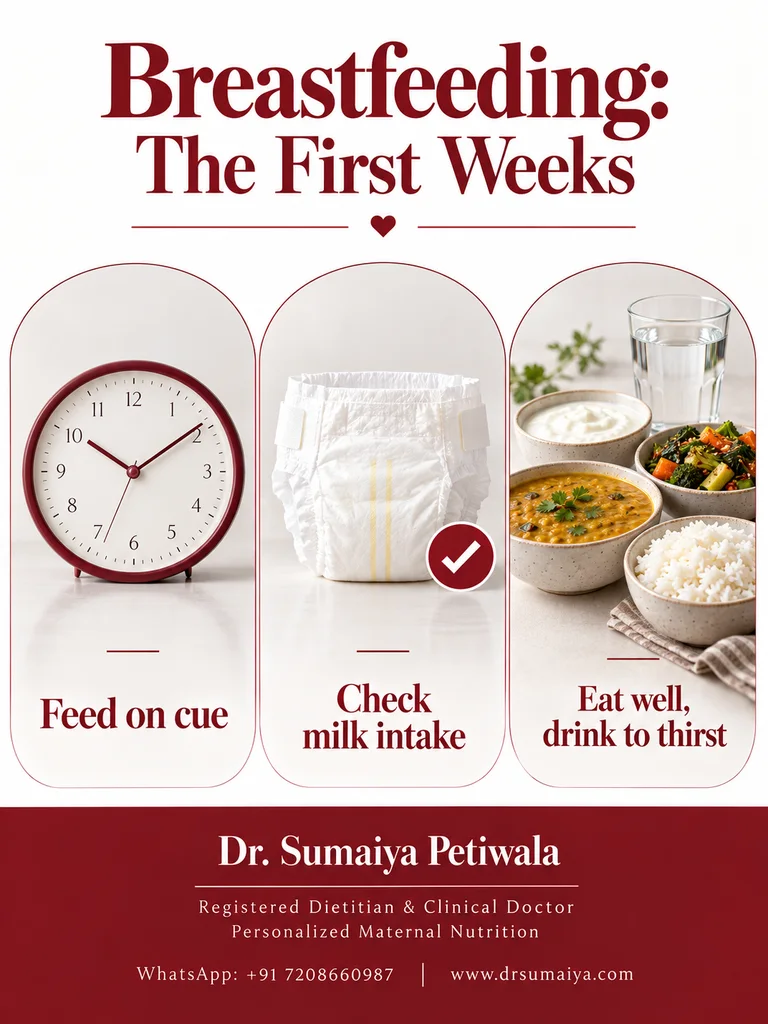
Feeding frequency and nappy guidance are based on the NHS first-days guide and its milk-intake checklist.
Starting breastfeeding after birth: the first hour and beyond
The WHO recommends starting within the first hour when possible. Skin-to-skin contact can help your baby settle and begin feeding. Ask the maternity team to help with positioning.
Your first milk is colostrum (the concentrated milk made in the first days). Small amounts are normal, but feeding and growth still need checking. Milk volume generally increases over the next few days, according to the CDC.
A caesarean birth, illness, or separation can delay your first feed. You have not missed your chance. Ask your team about supported feeding and hand expression while your baby receives the care they need.
How often should a newborn breastfeed?
Most newborns feed 8–12 times or more in 24 hours. Watch for an open mouth, head turning, and hands moving toward the mouth. Try offering the breast before crying becomes intense.
Cluster feeding (several feeds close together) can happen, especially in the evening. Frequent feeds alone do not prove low supply. Check milk transfer, nappies, and weight too.
A very sleepy newborn may not give clear hunger cues. Ask your maternity team when to wake your baby, especially with jaundice (yellowing of the skin or eyes) or weight concerns. Do not let a sleepy baby miss needed feeds.
How to get a comfortable breastfeeding latch
A latch is how your baby’s mouth attaches to your breast. A deep latch helps milk move and reduces nipple damage. These steps follow the Office on Women’s Health latch guide:
- Bring your baby close, with their head and body in a straight line.
- Place the nose near your nipple and wait for a wide-open mouth.
- Bring your baby toward you, chin first, so the mouth takes in breast tissue as well as the nipple.
- Watch for deep sucking and swallowing. The nose should remain clear, without being pressed into the breast.
- If pinching pain continues, release the seal gently with a clean finger and try again.
You may feel a strong pull at first. Ongoing pain, cracks, or bleeding deserve help rather than being endured. Ask a trained professional to watch a full feed.
Choose a position that supports you
Try cradle or cross-cradle holds, or a supported laid-back position. The football hold keeps your baby beside you and may suit recovery after a caesarean. Side-lying can be useful while you are awake; get help to position safely.
After feeding, place your baby on their back in a clear, separate cot or bassinet. Never fall asleep with your baby on a sofa or armchair. See NHS safer-sleep guidance.
Should you switch breasts or time each feed?
Let your baby feed actively on the first breast, then offer the second. They may take one or both. Follow their feeding pattern rather than a fixed number of minutes, and vary the starting side.
If your baby stops swallowing or keeps falling asleep, ask for a feeding check. You do not need to measure separate “foremilk” and “hindmilk” stages to know whether feeding works.
Does every breastfed baby need burping?
Some do; others do not. If your baby seems uncomfortable, try holding them upright with the head supported and gently rub their back. Keep it brief and comfortable. Burping is not a test of whether a feed was complete.
How do you know your baby is getting enough breast milk?
Look at several signs together. Swallowing during feeds, increasing wet nappies, and the weight trend matter more than breast fullness. Your baby’s clinician should check growth, especially during the first weeks.
- Nappies: early output is lower; by day 5 onwards, at least 6 heavy wet nappies a day is a useful guide.
- Stools: they should change from dark first stools toward yellow stools in the early days. Ask for advice if that change is delayed.
- Feeding: watch for swallowing and periods of calm, active feeding.
- Growth: keep planned weight checks. Do not judge intake by pump output alone.
If you worry about low supply, first arrange a latch and milk-transfer assessment. A feeding plan may include expression or additional milk when needed. Avoid trying to fix poor infant intake with a special food or herbal product.
Exclusive breastfeeding: what does it mean?
WHO recommends breast milk alone for the first six months, without water or other foods. Prescribed medicines and supplements are exceptions. Discuss your baby’s vitamin needs with the paediatrician.
Additional feeds may be medically needed. Follow your baby’s feeding plan; do not withhold prescribed supplementation. At about six months, introduce suitable complementary foods while continuing breastfeeding for up to two years or beyond, as desired.
What should breastfeeding mothers eat? Practical Indian food choices
You do not need a costly “milk-boosting” menu. Focus on enough food, variety, and meals you can manage. Breastfeeding needs extra energy; crash diets and skipped meals make recovery harder.
- Include protein regularly: dal, chana, well-cooked moong, paneer, eggs, fish, or chicken, according to your preferences.
- Keep staple foods: roti, rice, oats, or other grains can provide energy. Add protein and sabzi rather than cutting staples out.
- Include calcium sources: milk, curd, paneer, or suitable fortified alternatives.
- Add vegetables and fruit: choose affordable seasonal options and wash produce well.
- Keep easy snacks ready: fruit with curd, roasted chana, or nuts if you tolerate them.
A practical combination is dal, rice or roti, cooked sabzi, and curd. Portions should fit your hunger, recovery, and health needs. This is a meal-building example, not a fixed diet prescription.
Water, caffeine, and food restrictions
Keep water nearby and drink to thirst. More fluid does not automatically mean more milk. Choose water and ordinary drinks you enjoy instead of relying on special lactation teas.
The NHS advises limiting caffeine to 200 mg a day while breastfeeding. Count tea, coffee, cola, and chocolate together. Cut back further if your baby seems sensitive, and ask your clinician for advice.
You usually do not need to avoid dal, spices, dairy, or nuts solely because you breastfeed. Gas or fussiness alone does not identify a food allergy. Blood in stools, persistent rash, or poor growth needs assessment before you remove food groups.
If you eat a vegan diet, discuss vitamin B12 and other nutrient needs with your clinician. The CDC highlights nutrient planning during breastfeeding. Supplements should match your needs; do not start high-dose products or herbal milk boosters on your own.
Need food advice that fits life with a newborn?
If you struggle with appetite, vegetarian meal choices, food restrictions, or recovery, ask Dr. Sumaiya about a personalized maternal nutrition consultation. Share your baby’s age, usual meals, and the concern you want help with.
Ask about breastfeeding nutritionCommon breastfeeding problems: what helps and what to avoid
Sore nipples and uncomfortable fullness
Persistent nipple pain needs a latch check. Creams alone cannot correct shallow attachment. If your breasts feel very full, ask for help with gentle hand expression to soften the area and make attachment easier.
Feed responsively. Avoid adding repeated pumping sessions just to “empty” your breasts when they are swollen. A cold compress may ease discomfort.
Mastitis: a hot, painful, swollen breast
Mastitis is breast swelling and pain that can include fever or flu-like symptoms. Some cases need medical treatment. Continue normal, responsive feeding if possible; seek advice if pain prevents feeding.
The NHS recommends cold compresses, rest, and avoiding firm pressure or excess expression. Do not use deep massage or prolonged heat to force a lump out. Ask a clinician about suitable pain relief.
Get medical advice if you feel worse, have fever with breast symptoms, or are not improving within 12–24 hours. A persistent lump may need examination. Do not assume all burning nipple pain is thrush or self-treat both you and your baby.
When to seek breastfeeding help or urgent medical care
Do not wait for a nutrition appointment if your baby is unwell
Seek urgent medical care for difficulty breathing, unusual limpness, or a baby who is hard to wake. A temperature of 38°C or higher in a baby under three months also needs urgent assessment. See NHS warning signs.
Contact your baby’s clinician promptly for poor feeding, fewer wet nappies than expected, worsening yellow skin or eyes, or ongoing weight loss. A breastfeeding professional can help with technique alongside the medical assessment.
For persistent latch pain, repeated slipping off the breast, or uncertainty about milk transfer, arrange feeding support early. For maternal fever with breast pain, contact a doctor. Nutrition care supports you; it does not replace these checks.
Make recovery a shared task
Ask family to prepare meals, refill water, change nappies, or hold your baby while you rest. If anxiety or low mood persists, tell your healthcare team. Feeding support should respect your health, choices, and circumstances.
Personalized nutrition support while breastfeeding
Dr. Sumaiya’s maternal nutrition consultation can help turn food advice into a plan you can follow. A useful discussion covers:
- Your situation: recovery, appetite, health history, current supplements, and relevant reports you already have.
- Your kitchen: food preferences, budget, allergies, and who can help with cooking.
- Your plan: suitable meals and portions, practical substitutions, and adjustments as your needs change.
In-clinic consultations are available in Frazer Town, Bengaluru, with online consultations available. Ask about availability, fees, and the support that suits your needs.
Book a maternal nutrition consultationCall or WhatsApp: +91 7208660987.
Breastfeeding FAQs for new moms
References
- WHO: Breastfeeding recommendations
- CDC: What to expect while breastfeeding
- NHS: Breastfeeding in the first few days
- NHS: Is my baby getting enough milk?
- Office on Women’s Health: Getting a good latch
- NHS: Safer sleep advice
- NHS: Breastfeeding and diet
- CDC: Maternal diet and breastfeeding
- NHS: Mastitis
- NHS: When to get urgent medical help for babies