

Dr. Sumaiya Petiwala, RD, BUMS, CDE · Medically Reviewed & Evidence-Based · Updated November 2026
In modern health circles, fermented foods have been elevated to near-miraculous status. From social media gut influencers to popular wellness books, individuals struggling with chronic bloating, indigestion, and acid reflux are repeatedly told to consume probiotic ferments: drink raw kombucha, eat kimchi with lunch, add sour dahi (fermented yogurt) to every meal, or take high-potency multi-strain probiotic capsules to ‘heal their gut lining.’
Yet in our clinical nutrition practice in Bengaluru, we frequently consult patients who diligently followed this exact advice—only to watch their gastroesophageal reflux disease (GERD) spiral out of control. Instead of soothing their stomach, each sip of kombucha or bowl of sour curd unleashed excruciating chest burning, acidic regurgitation, throat-clearing, and a sensation of a painful lump in the throat (globus pharyngeus). Here is why the probiotic gut dogma can backfire dramatically.
Can fermented foods like kimchi and kombucha make GERD worse?
Yes. Fermented foods like kombucha, kimchi, and sour dahi contain high levels of organic lactic acid and biogenic amines like histamine. In patients with an inflamed esophageal lining, these acids directly trigger mucosal burning, while microbial fermentation gases increase intra-abdominal pressure, forcing the lower esophageal sphincter open.
The Probiotic Ferment Paradox: When ‘Superfoods’ Irritate an Inflamed Esophagus
The human gastrointestinal tract is not a single uniform tube; the stomach, esophagus, and colon possess vastly different tissue architectures, pH gradients, and immune tolerances. While fermented foods provide undeniable benefits for the colonic microbiome in healthy individuals, introducing live, acid-producing microbial cultures into an already compromised upper gastrointestinal tract can produce severe mucosal trauma.
When patients suffer from acid reflux, the delicate stratified squamous epithelium [the cellular lining of the esophagus] has frequently suffered microscopic erosions, pepsin digestion, and loss of protective mucosal mucus. Pouring an acidic, carbonated, or amine-laden fermented food directly over this raw, inflamed tissue triggers intense nociceptive pain and esophageal muscle spasms—completely defeating the intended therapeutic goal.
| Food / Beverage | Typical pH Level | Histamine / Amine Content | Effect on Lower Esophageal Sphincter (LES) | Clinical Recommendation |
|---|---|---|---|---|
| Commercial Kombucha | pH 2.5–3.2 (Highly Acidic) | High (Yeast & acetic metabolites) | Gas pressure and acetic acid relax and irritate LES | Strictly eliminate during active reflux flare-ups |
| Sour Fermented Curd (Khatta Dahi) | pH 4.0–4.4 (Acidic) | Moderate to High (Aged milk proteins) | Direct chemical irritation of eroded esophageal lining | Avoid during acute gastritis; never consume at night |
| Over-Fermented Idli/Dosa Batter | pH 4.2–4.8 (Sour) | Moderate (Prolonged fermentation) | Microbial CO2 expands in stomach, promoting reflux | Use fresh batter fermented under 8 hours; avoid sour batches |
| Fresh Ash Gourd Juice & Sabja Water | pH 6.8–7.4 (Neutral / Alkaline) | Zero (Non-fermented fresh produce) | Forms protective demulcent layer over esophageal mucosa | First-line mucosal soothing therapy before breakfast |
| Fresh Same-Day Sweet Curd (Midday) | pH 5.0–5.4 (Mild) | Very Low (Consumed within 6 hrs of setting) | Gentle; well tolerated when combined with fiber at lunch | Safe probiotic reintroduction once mucosal burning heals |
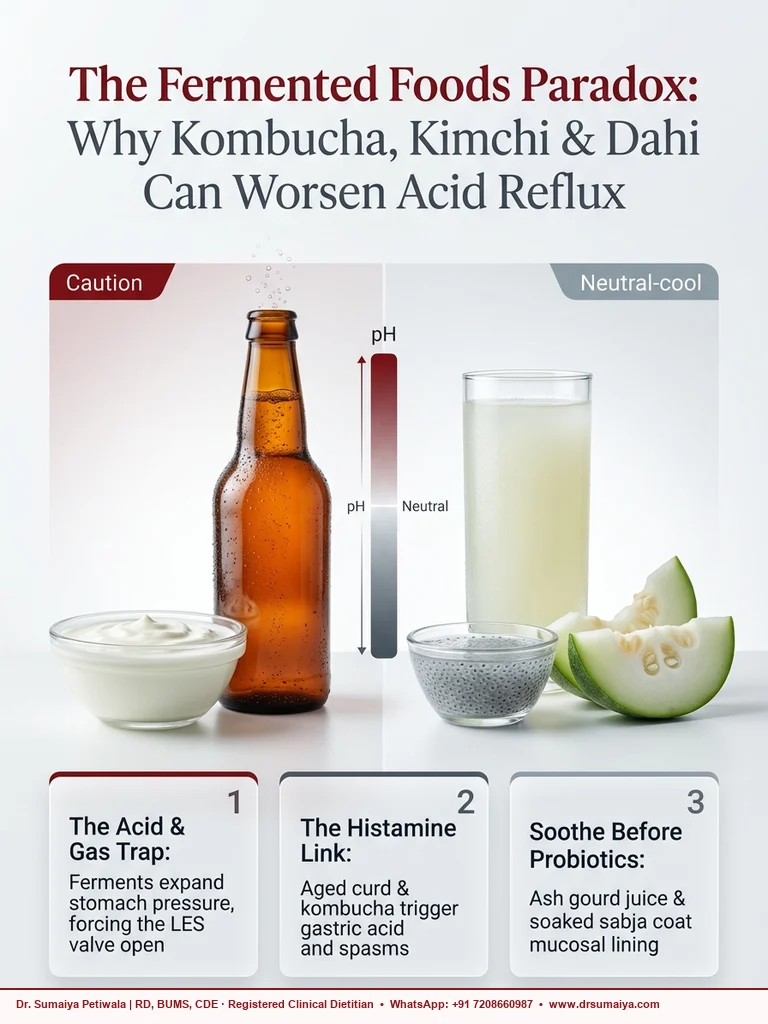
Why Kombucha, Sour Dahi & Kimchi Irritate Acid Reflux: evidence-based clinical protocols from Dr. Sumaiya NutriCare Clinic.
The Dual Pathophysiology: What October 2026 Clinical Updates Reveal About Reflux
An extensive clinical review updated in October 2026 by InnerBuddies on fermented foods and GERD highlights a dual physiological mechanism explaining why fermented items trigger reflux flare-ups:
1. Organic Acid Load & Lower Esophageal Sphincter (LES) Pressure: Fermented foods like kombucha, sauerkraut, and over-fermented dahi contain concentrated organic lactic and acetic acids, frequently possessing a caustic pH between 2.5 and 4.2. Simultaneously, active bacterial and yeast fermentation produces carbon dioxide in the stomach. This gas expansion increases intra-gastric and intra-abdominal pressure, mechanically forcing the lower esophageal sphincter (the muscular valve separating the stomach from the esophagus) to buckle open, allowing caustic acid and pepsin to surge upward.
2. Biogenic Amines & Histamine Irritation: The fermentation process naturally breaks down proteins into biogenic amines, predominantly histamine. In individuals with sluggish gut motility or impaired diamine oxidase (DAO) enzyme function, ingested histamine binds directly to H2 receptors on gastric parietal cells, stimulating additional gastric acid secretion while inducing mast cell activation and painful esophageal smooth muscle spasms.
3 Safe, Low-Acid Clinical Steps to Soothe Gut Inflammation Without Triggering GERD
1. Temporarily Eliminate High-Acid, High-Histamine Ferments During Acute Flares
During an active reflux episode, stop all commercial kombucha, apple cider vinegar shots, mature kimchi, sauerkraut, and over-fermented (sour) idli and dosa batter. In Indian kitchens, pay particular attention to curd: when dahi sits in the refrigerator for two or three days, its lactic acid concentration spikes dramatically. If your esophageal lining is inflamed, pause aged curd completely until mucosal integrity is restored.
2. Soothe the Mucosal Barrier Using Demulcent, Alkaline Whole Foods
Before introducing probiotic microbes, you must physically coat and protect the irritated esophageal and gastric lining. Utilize natural demulcent foods [substances that form a soothing, viscous protective film over mucous membranes]. First thing in the morning, consume 100 ml of freshly extracted ash gourd (safed petha) juice, which has a naturally cooling, neutral-to-alkaline pH. Alternatively, drink water infused with soaked sabja (sweet basil) seeds, which swell to create a mucilaginous protective gel that shields sensitive tissues from gastric acid.
3. Reintroduce Probiotics Through Fresh, Low-Lactic Vehicles at Lunchtime
Once acute esophageal inflammation subsides, probiotics can be reintroduced safely without provoking reflux. The golden clinical rule is freshness and timing: consume only mild, freshly set homemade curd prepared the same morning (consumed within 4 to 6 hours of setting, before sour lactic acid builds up). Always consume curd at lunchtime accompanied by soluble fiber (such as steamed gourd or cooked whole moong), and never consume curd at dinner, as delayed nighttime gastric emptying promotes nocturnal acid regurgitation.
The Diagnostic Gap: Why GERD Is Rarely Just an ‘Excess Stomach Acid’ Problem
The standard medical reflex to acid reflux is prescribing lifelong Proton Pump Inhibitors (PPIs) to extinguish stomach acid production. However, in our clinical experience, severe reflux is frequently caused by hypochlorhydria [insufficient stomach acid], Small Intestinal Bacterial Overgrowth (SIBO), or hiatal hernia rather than excess acid. When stomach acid is too low, food stagnates in the stomach, fermenting into gas that drives reflux upward.
Treating chronic GERD requires clinical detective work: identifying whether your symptoms stem from SIBO gas pressure, histamine intolerance, bile reflux, or structural sphincter laxity. Over-the-counter antacids and indiscriminate fermented foods only mask symptoms while perpetuating tissue irritation. True gut healing requires a staged, individualized clinical nutrition protocol.
Free “GERD vs. SIBO vs. Histamine” Root-Cause Gut Assessment
Uncover the true physiological trigger of your reflux in 2 minutes. Unlock the low-acid gut soothing grocery list, the 3-phase probiotic reintroduction schedule, and the mucosal healing protocol.
- Reflux Phenotyping Guide: Distinguish acid hypersecretion from hypochlorhydria, SIBO gas pressure, and histamine intolerance.
- Demulcent Mucosal Soothers: How to prepare fresh ash gourd, soaked sabja seeds, and slippery elm for instant tissue coating.
- The Fresh Curd Rulebook: Exact timing and fermentation guidelines to enjoy curd without triggering sour regurgitation.
- Medication Weaning Safety: Dietary transition strategies to support digestion without rebound acid hypersecretion.
Frequently asked questions
Why does curd or yogurt trigger chest burning and sour burps?
When curd sits for more than 12 to 24 hours, lactic acid-producing bacteria continue converting lactose into lactic acid, dropping its pH below 4.4. This acidity directly irritates an inflamed or eroded esophageal mucosa. Additionally, eating curd at dinner delays gastric emptying, promoting nighttime acid regurgitation.
Can fermented foods worsen acid reflux if I already have GERD?
Yes. Active microbial cultures produce carbon dioxide and volatile organic acids in the stomach. This gas expansion increases intra-gastric pressure, forcing the lower esophageal sphincter (LES) to transiently relax and allowing stomach acid and pepsin to backflow into the vulnerable esophagus.
What is the connection between histamine intolerance and acid reflux?
Fermented foods (kimchi, sauerkraut, kombucha, mature cheeses) accumulate high levels of biogenic amines, particularly histamine. In individuals with low diamine oxidase (DAO) enzyme activity, dietary histamine stimulates H2 receptors in gastric parietal cells, triggering heightened stomach acid release and esophageal smooth muscle spasm.
How can I heal my gut lining without drinking acidic ferments?
Focus on alkaline and demulcent whole foods that coat and protect epithelial tissue without provoking acid secretion. Highly effective options include fresh ash gourd (safed petha) juice, water infused with soaked sabja (basil) seeds, deglycyrrhizinated licorice (DGL), and zinc-carnosine under clinical supervision.
What should I eat when experiencing an acute acid reflux flare-up?
During an acute flare-up, consume warm, soothing, low-acid meals such as thin moong dal khichdi cooked with mild cumin and bottle gourd (lauki), steamed ridge gourd (turai), and soaked chia seeds in almond milk. Avoid all raw sour fruits, tomatoes, vinegars, coffee, mint, and fermented dishes.
Sources: InnerBuddies Clinical Review: Are Fermented Foods Good for GERD? Mechanism of Lactic Acid & Histamine Esophageal Irritation (October 2026). American College of Gastroenterology (ACG) Clinical Guidelines for the Management of Gastroesophageal Reflux Disease. World Gastroenterology Organisation (WGO) Global Guidelines: Probiotics and Prebiotics in Gastrointestinal Disorders.
🌟 Transform Your Health Today
Takes only 60 seconds to send a booking enquiry.
"Lost 4kgs in one month... plans are simple and effective! She
responds to queries promptly."
– Payal J.
About this guide
This guide provides general health information. Your own care depends on your medical history and circumstances. Speak with your treating clinician before changing medicines or treatment.