

A holiday should leave you feeling refreshed. It should not cause gut pain, belly bloating, or food guilt. Yet for millions of Indians with insulin resistance (when your cells struggle to absorb glucose, raising blood sugar), fatty liver (fat buildup inside liver cells), or PCOS (polycystic ovary syndrome, a hormonal condition), travel feels stressful. You face airport fast food, highway dhabas, and rich hotel buffets.
Travel disrupts your normal daily routine. Long flights shift your body clock. Irregular meal times slow your digestion. This can lead to constipation, acid reflux, and sharp blood sugar spikes. High-salt restaurant meals also cause fluid retention and fatigue.
🩺 Quick Clinical Verdict: Healthy Eating on Vacation
Healthy eating on vacation relies on smart plate balance rather than strict dieting. Start every morning with 20 grams of protein. Follow the fiber-first eating order at meals. Stay well-hydrated with fluids like salted buttermilk. Take a brisk 15-minute walk after meals to keep blood sugar steady.
Why Travel Disrupts Your Digestion and Metabolism
When you travel, your body experiences shifts that affect hunger, gut health, and energy storage. Knowing these triggers helps you make confident, mindful choices without feeling deprived.
- Body Clock Shifts and Slow Digestion: Your gut follows a strict 24-hour rhythm. Changing time zones or late dinners slows digestive juices. This leads to gas, bloating, and sluggish bowels.
- Stress and Craving Triggers: Travel rush, flight delays, and poor sleep raise cortisol. High cortisol promotes visceral fat (deep belly fat surrounding internal organs) and drives cravings for refined carbs.
- Sugar Spikes from Hidden Syrups: Restaurant gravies often hide cornstarch, excess fats, and sugar. These cause an insulin spike (a sudden surge in blood sugar and insulin) followed by an energy crash.
- Fluid Loss and Body Puffiness: Dry airplane air and warm sightseeing weather pull water from your body. Low water intake slows waste removal and causes water retention.
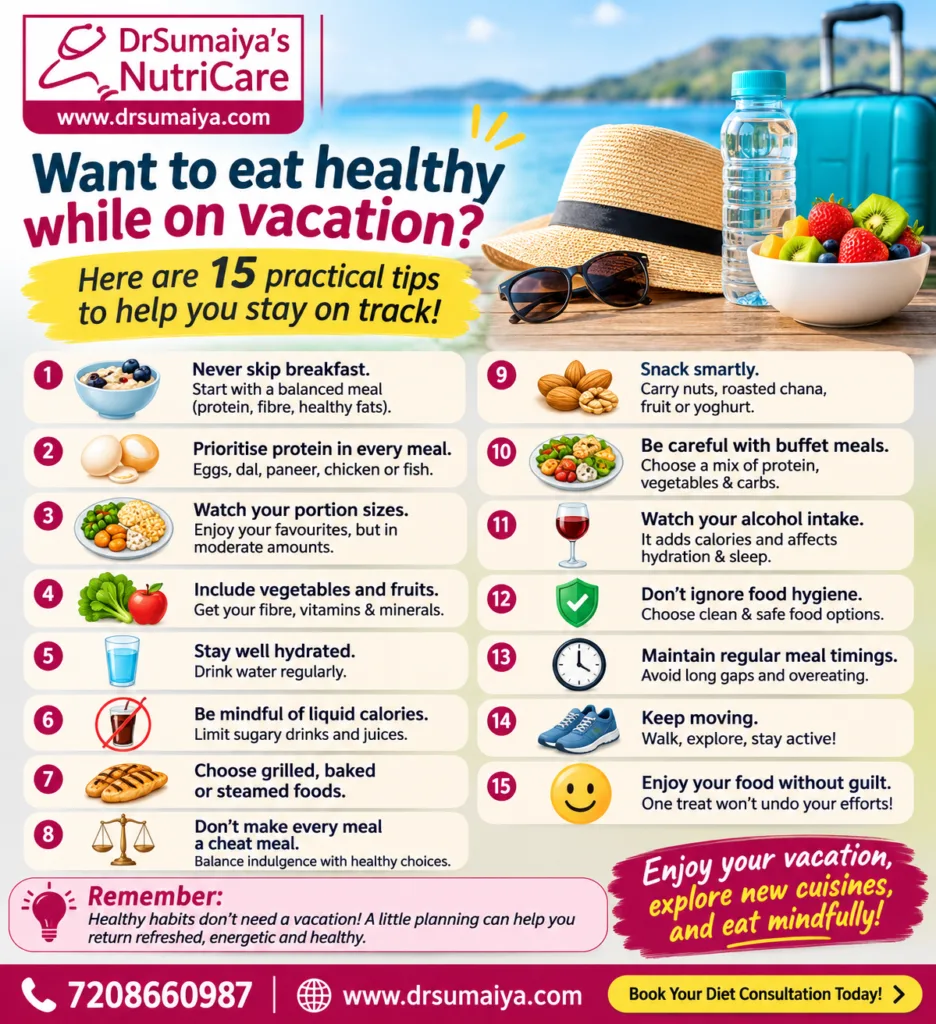
📊 Clinical Infographic: 15 Practical Travel Nutrition Tips for Sustained Energy, Balanced Blood Sugar, and Optimal Digestion.
Pillar 1: Transit Day Nutrition (Airports, Flights & Road Trips)
Your trip starts the moment you leave home. Transit days are when unplanned food choices happen most often.
1. Pack an Emergency Fiber and Protein Snack Kit
Never travel without whole, home-packed snacks. Airport shops and railway stalls sell fried chips, biscuits, and sugary drinks. Instead, carry roasted chana, roasted makhana, unsalted almonds, and walnuts. These supply clean plant protein and fiber. They keep hunger stable for hours.
2. Order Wisely at Highway Dhabas
When stopping on the highway, skip deep-fried pakoras, bhaturas, and oily puri sabzi. Choose yellow dal tadka, tandoori roti, and dry bhindi or gobi sabzi. Tandoori cooking uses dry heat rather than deep oil baths. Ask the chef to serve your roti plain without butter.
3. Skip the Liquid Sugar Trap
Bottled iced teas, packaged fruit juices, and cold coffees pack 30 to 45 grams of sugar. These drinks push fat storage in your liver. Drink clean water, unsweetened tea, or salted jeera chaas (buttermilk). Buttermilk aids gut microbes and replenishes electrolytes naturally.
Pillar 2: Hotel Buffets and Restaurant Meals
Hotel meals do not have to hurt your health. A calm plan lets you taste local food safely.
4. Never Skip a Protein-Rich Breakfast
Sugary bakery items or refined pastries spark daytime hunger swings. Anchor your breakfast with 20 to 25 grams of protein. Choose a two-egg vegetable omelette, boiled eggs, moong dal cheela, or besan chilla. With South Indian food, pair steamed idlis with extra sambar rather than excess coconut chutney.
5. Follow the “Fiber-First” Eating Order
The order of eating food changes postprandial (after-meal) blood sugar curves. Start every lunch and dinner with a bowl of cucumber and tomato salad or steamed veggies. Eat your dal, paneer, fish, or chicken second. Eat your roti or rice last. This sequence slows carb breakdown.
6. Take a Quick 2-Minute Scan of the Buffet
Do not pick up a plate right away. Walk past the entire buffet spread first. Pick the two regional dishes you truly want to enjoy. Fill half your plate with salad and protein first. Then place your chosen treat on the rest of the plate.
7. Pick Tandoori, Grilled, and Steamed Dishes
Rich restaurant gravies often rely on heavy nut pastes and refined oils. Look for dishes marked tandoori, tikka, grilled, steamed, or broiled. These foods keep their natural nutrients without soaking in grease.
8. Use the “Three-Bite Rule” for Local Desserts
Depriving yourself completely can backfire and cause binge eating later. When tasting local sweets, use the mindful three-bite rule. Take one bite to enjoy the taste. Take a second bite to savor the texture. Take a third bite to finish. You enjoy the flavor without overloading your blood sugar.
| Travel Dining Scenario | Common High-Risk Choice | Clinical Doctor-Approved Swap | Metabolic Advantage |
|---|---|---|---|
| Airport Terminal Breakfast | Croissant, chocolate muffin, or commercial sandwich | Vegetable omelette with phulka or moong dal cheela | Supplies 20g clean protein, preventing mid-flight fatigue |
| Highway Road Trip Stop | Fried samosas, pakoras, or sweet lassi | Tandoori roti, yellow dal tadka, and salted chaas | Minimizes heavy fats, promotes smooth digestion |
| Hotel Dinner Buffet | Creamy gravies, butter naan, multiple desserts | Tandoori paneer or chicken, mixed green salad, 1 phulka | Flattens the overnight blood glucose curve |
| Sightseeing Midday Snack | Packaged potato chips or sweet ice cream cone | Roasted chana, tender coconut water, or fresh fruit | Rehydrates cells with potassium and stable fiber |
Pillar 3: Protecting Gut Health, Hydration & Food Safety
Changes in cooking oils, spices, and water can cause inflammation (the body’s internal swelling and immune response) in your gut.
9. Avoid Travel Constipation with Water and Soluble Fiber
Sitting for long hours and drinking less water dry out your bowels. Drink at least 2.5 liters of clean water daily. Carry isabgol (psyllium husk) or soaked chia seeds. Soluble fiber holds water in your gut and helps easy morning bowel clearance.
10. Keep Regular Meal Timings
Sightseeing can tempt you to skip lunch. You then reach dinner feeling ravenous. Long meal gaps spark intense food cravings. Eat simple meals or snacks every four hours to keep your energy steady.
11. Follow Safe Street Food Habits
Taste local foods safely. Pick busy food stalls where dishes are cooked fresh on high heat right before you. Avoid raw salads or pre-cut fruits left in the open. Avoid roadside raw chutneys mixed with unfiltered water, and skip ice cubes.
12. Set Simple Rules on Alcohol and Drinks
Alcohol stresses your liver and disturbs sleep. Never drink alcohol on an empty stomach, as this drops your blood sugar fast. Pair every glass of wine or drink with a full glass of water. Choose plain soda with lime rather than sugary cocktails.
Pillar 4: Post-Meal Movement and Mindset
Your mindset on holiday matters just as much as what sits on your plate.
13. Take a 15-Minute Walk After Meals
Walking while sightseeing helps your body manage blood sugar naturally. A relaxed 15-minute stroll after lunch or dinner moves sugar from your blood into muscle cells. This lowers the workload on your pancreas.
14. Stop Punishing Fasting and Post-Holiday Guilt
If you eat a rich feast, do not starve yourself the next day. Harsh fasting triggers extreme hunger and slows your resting calorie burn. Calmly return to your balanced plate of dal, roti, sabzi, and curd at your next meal.
15. Carry Your Prescribed Medicines and Tools
Keep your daily health medicines in your carry-on bag with extra backup doses. Traveling across zones shifts your routine. Carry your home glucometer so you can check fasting levels whenever you need reassurance.
📋 Need a Tailored Medical Travel Plan?
Whether you are planning a family holiday, work trip, or managing metabolic health on the move, get a doctor-led nutrition plan made for your body.
🌟 Transform Your Health Today
Takes only 60 seconds to send a booking enquiry.
"Lost 4kgs in one month... plans are simple and effective! She
responds to queries promptly."
– Payal J.
Frequently Asked Questions (FAQs)
About this guide
This guide provides general health information. Your own care depends on your medical history and circumstances. Speak with your treating clinician before changing medicines or treatment.